
5 Unexpected Reasons Retirees Regret Moving To Beach Towns
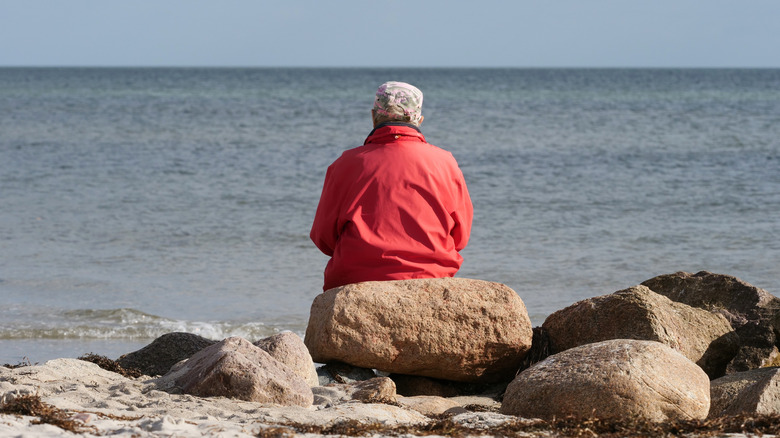
Surely the most cliched version of the perfect retirement is spending the rest of your days on a beach. Maybe you picture yourself sitting languorously in a sun chair, a parasol-speared drink in one hand, a Cuban in the other, mulling over the day's most important decision: to nap, or not to nap? Heavenly though that might seem, moving to the beach can come with unexpected frustrations, and not just the sand that finds a way of getting itself everywhere.
Despite the obvious allure of a beachbound retirement, some retirees who make the move discover it's not all sunshine and cocktails. Some of America's beach destinations are desperately hot and humid, which can trigger maladies like heatstroke. In the likes of Florida, where you'll find some of America's most dangerous beaches, you can add hurricanes and regular storms into the mix, causing home insurance premiums to spike. Because beach towns are desirable, the cost of living can be high, tourists tend to swarm them in the summer months, and, conversely, the winters can be isolating and miserable. Never mind that if you're somewhere really rural, amenities like transport and medical care will be fewer and further between.
Based on a survey by financial services company The Motley Fool, which sought to identify the best retirement locations in the U.S. for 2026, the most important factor for retirees was quality of life. The Motley Fool's analysis found that the two best destinations to retire in the U.S. were coastal Florida counties with access to the beach — Broward and St. Johns — which also had the highest quality of life scores. So perhaps the most important decision for a beach town retirement is simply choosing the right beach. The following five reasons retirees regret moving to beach towns should help inform your decision.
Severe weather
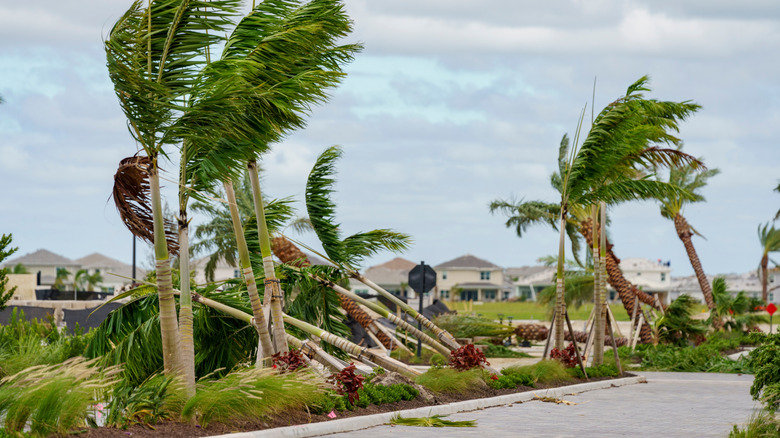
Half the point of moving to the beach is for the weather, but alongside days of radiant sunshine, expect a few where conditions are more challenging. Florida, America's best retirement state according to multiple rankings, is also the most hurricane-battered corner of the country. According to the National Oceanic and Atmospheric Administration (NOAA), 40% of all hurricanes in the U.S. hit Florida. Other states subjected to occasional hurricanes — Texas, Louisiana, Georgia, the Carolinas — also have beaches lining their Gulf or Atlantic coasts.
Some hurricanes wreak widespread destruction. Hurricane Katrina, which hit New Orleans and the Gulf Coast in 2005, killed over 1,800 people, left millions homeless, and caused roughly $160 billion in damage. Category 5 hurricanes — the strongest, most destructive category — aren't common; only four have made landfall in the U.S. since records began. But tropical storms and cyclones, usually a threat in summer and early fall, pose their own problems for beach town residents. Storm surges can raise the water level by 20-plus feet, damaging property and coastal habitats, and ruining critical infrastructure like roads, bridges, power grids, and pipelines.
Zippy and Alan Sandler, an elderly couple living in Fort Pierce, Florida, told AARP of the stress caused by hurricanes Helene and Milton in 2024. "People tell you afterwards, 'Call the insurance company. Take a lot of photos. Document everything.' But there's no cell or WIFI. And 'Make sure you're safe,'" said Zippy. "I don't know what that means. Does that mean water and plumbing? Cleaning up the glass in the dark? I'm 70 years old. How do I do this?" Unfortunately, things could get bleaker. Garrison Flood Control, a manufacturer of flood control systems, reckons 2.5 million Americans, in coastal areas throughout the country, will be at risk of severe flooding during storm season by 2050.
High cost of living
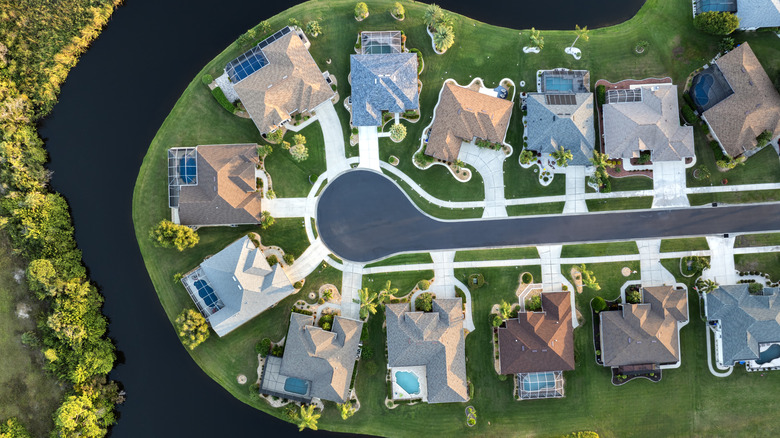
Based on Go Banking Rates' list of the most expensive places to buy a property in every state, many of the priciest locales are beach towns. If you're buying a house in Maine's Kennebunkport or Kennebunk, a charming town with delicious seafood and sandy beaches, expect to pay in excess of $1 million. In North Carolina's Wrightsville Beach, you'll be forking out double that. Hanalei, Hawaii, might be gorgeous, but the median house price of more than $4 million is less appealing. And in Florida's Jupiter Island, where many of the U.S.-based pro golfers live, the median home costs a truly eye-watering $9.5 million.
The high costs don't stop at the housing market. Because beach towns often see a good tourist trade — there are estimated to be 3.4 billion beach visits in America annually — prices rise commensurately. For residents of popular beach towns along the east coast, from Nantucket to Miami, the monthly day-to-day expenditure is often more than $2,000, while the overall cost of living, including mortgages, healthcare, taxes, and insurance premiums, could bump your outgoings to more than $10,000 per month. In a subreddit on retiring on the Oregon coast, users bemoaned the lack of accessible healthcare and the prohibitive cost of living. "Honestly, you aren't going to find much unless it's a mobile home, tiny home (if you don't mind small), or a rental," wrote one. "$3000 a month is doable if you budget properly which includes your health care."
Insurance premiums are another big cost. According to Bankrate, hurricane-prone Louisiana and Florida are the states with the second- and third-highest homeowners insurance rates, respectively. The average premium in Louisiana costs $6,274, and in Florida it's $5,838. Beach dwellers often require policy add-ons covering severe flood and hurricane insurance, which could add an extra $1,000 or more to your base fee.
Overtourism
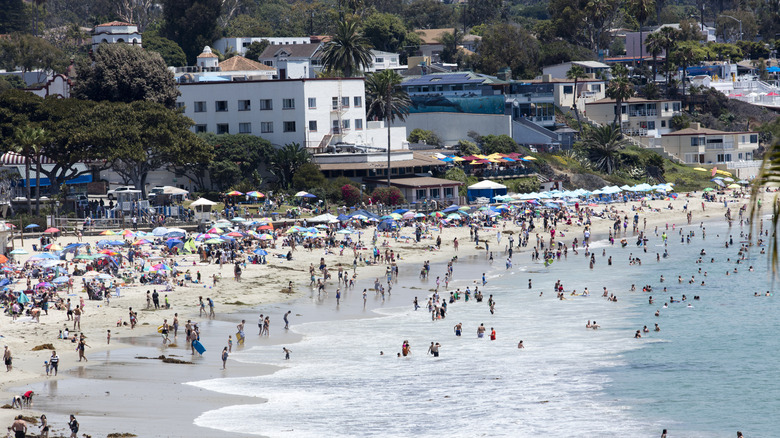
Beach destinations across the U.S. have suffered the effects of tourism for decades, whether it's overcrowding on the beach; logjam traffic in the streets; interminable restaurant waiting times; or the general noise, litter, drunkenness, ballooning prices, and environmental degradation that comes when large groups of people congregate in one place. Once again, this is not an isolated issue: Beach towns in Florida, Virginia, and the Carolinas, as well as California, Oregon, and Washington, bear scars from the tourist crowds.
Outsiders descending on a town can be more than a nuisance. If the number of arrivals exceeds the number the town is capable of accommodating, it stresses local infrastructure, like waste management, public transport, and emergency response. Though tourism brings an economic windfall, residents in many beach towns believe the negatives outweigh the positives. In Laguna Beach, California, locals have found adult toys and other miscellaneous rubbish on the beach and witnessed tourists wading into fragile tidepool habitats and lifeguards pulling more than 2,000 people from the water in a single holiday weekend.
Beach town residents in Florida, Maine, and Alaska have tried to limit the number of tourists. In Bar Harbor, Maine, a town with a population of around 5,500 and up to 4 million tourist visits annually, residents voted to reduce the number of daily cruise ship passenger arrivals to 1,000 during peak season. In the book "Overtourism: Lessons for a Better Future," an extract of which was published on Country & Town House, the authors noted, "A number of coastal, beach, and island destinations have used improved stewardship to build a 'culture' that controls overtourism," referencing U.S. destinations like Hanauma Bay in Hawaii, Cape Cod in Massachusetts, and California's Catalina Island. Such cases show that when the wherewithal is there, residents can effect change.
Isolation

For the most part, humans need community. Health researchers quoted in The Harvard Gazette went as far as putting social connection up there with food, shelter, and water as a basic human need. Catherine Dulac, a molecular biologist and neuroscientist at Harvard, told the Gazette, "Our discovery of similar neural circuit architectures to encode social need and physiological needs such as the needs for water, food, and sleep directly illustrates how fundamental social interactions are for healthy lives."
Missing out on those social connections can cause retirees to struggle after moving to a beach town. "Moved to the Grand Strand area a couple years ago with my spouse, optimistic, being newly retired. Absolutely love the beach, but it's way harder than expected to make friends, even after joining various meetup groups," said one Reddit user in a forum about life in Myrtle Beach. "Challenging to find a sense of community. Have never had difficulty making friends before, but I guess we don't neatly fit into any group."
In many beach towns, there's a mass exodus during fall and winter, as tourists and seasonal workers leave, and second-homers head back to their main house in the city. In Ocean City, Maryland, for example, the weekend summer population reaches 300,000, compared to the year-round residential population of fewer than 7,000. Colder temperatures and more hours of darkness also keep residents indoors, making family and friends feel even farther away. This feeling is often exacerbated by the limited medical care resources and public transportation access in rural towns. Fears over such isolation are why retirees so often choose retirement communities — in Florida you can even find ones that require little to no savings — where social connections are part of the package.
Unforeseen tax hikes
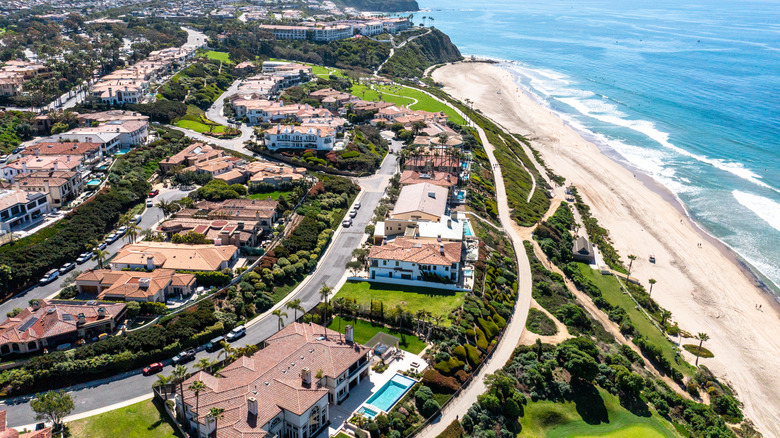
Some beachy states offer tax boons to residents: Florida famously has no income tax, although this is somewhat countered by the high cost of living and property prices. But beach towns can also be struck by unforeseen tax hikes. In Rhode Island, for example, residents may be subjected to what's known as the "Taylor Swift Tax." The pop star bought a home in the affluent Watch Hill neighborhood of Westerly back in 2013. A recently introduced levy has imposed surcharges on second homes in the state valued over $1 million, and those surcharges will work in addition to any other property taxes. Donna Krueger-Simmons, a local real estate agent, told CNBC that it was "a smack in the face" to people that already spend money there.
Swift isn't the only cause of skyrocketing taxes in beach communities. In Surf City, North Carolina, a property tax increase of 30% was approved in 2025 to help fund local emergency services (especially during extreme weather events), manage large projects, and invest in the future. This is comparatively paltry compared to the 87% property tax increase faced by residents of New York's Atlantic Beach. According to the (now former) mayor, George Pappas, the astronomical figure would help make up for the previous administration's costly accounting errors — even though Pappas had been in charge for more than a decade.
It's for reasons like these that anyone planning a post-retirement relocation should keep abreast of the local tax obligations and financial state of their new hometown before committing to the move. That said, you can't always account for the whims of celebrities or blunders of government officials, so having a cash buffer in the event that your tax costs jump is always a good idea.