
Washington's Lesser-Known Island In The San Juans Is A Secluded Escape With Scenic Trails And A Historic Lighthouse
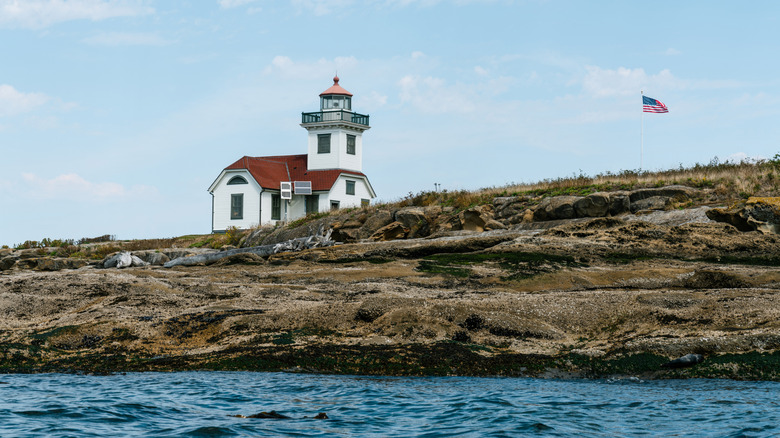
There's no electricity, no dock, no cell phone service, no drinking water, and no flush toilets. You won't even find a garbage can on Patos Island, let alone any tourist services. So what's the draw of this lesser-known destination in the San Juan archipelago? Unlike some islands off Washington's coast with fun, well-organized activities and stylish lodgings, Patos is rustic and off the beaten path. There's not much to do here beyond exploring its historic lighthouse and scenic trails — and its secluded character is key to its appeal.
Occupying just over 200 acres, Patos Island is a marine park managed by Washington State Parks. It's only accessible by boat, and there's no commercial ferry service: you can either arrive on your own watercraft or book a private charter with Outer Island Excursions. Or, if you're an especially strong kayaker who's comfortable navigating the tidal currents of the Salish Sea, paddle in from Orcas Island, about 5 miles away. For all other boats, the closest launches are between 11 and 24 miles away at Point Roberts Marina, Blaine Harbor, and Squallicum Harbor.
Once you arrive on the rocky shore of Patos Island, set out to explore its gorgeous natural landscapes on a 1.5-mile loop trail that leads through a native forest and up to the island's rocky cliffs overlooking Puget Sound. Continue towards the northwestern tip of the island, walking along a path lined with tall grasses, until you catch your first glimpse of the island's main attraction: a quaint working lighthouse that's listed on the National Register of Historic Places.
Discover the serene beauty of Patos Island
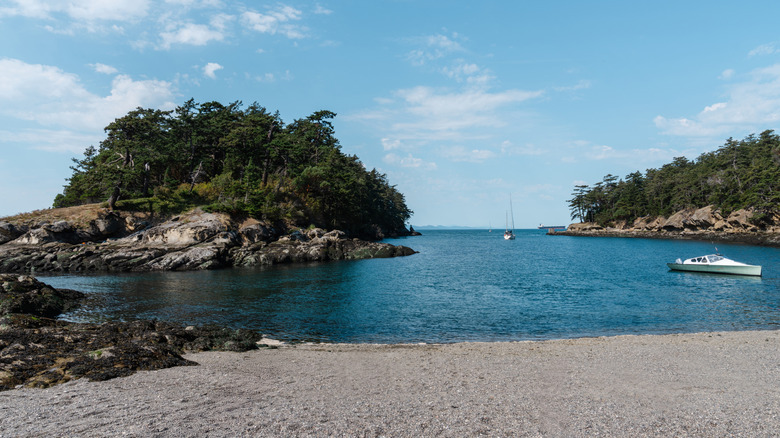
White and red with cheerful green trim, the Patos Island Lighthouse was first lit in 1908. Operated by the Bureau of Land Management, it's built of wood and weatherboard and runs on a solar-powered battery provided by the U.S. Coast Guard. During the summer (Memorial Day to Labor Day), volunteers from the Keepers of the Patos Light gladly open the lighthouse to visitors on request for guided tours and a chance to view exhibits on the lighthouse's history. Contact the organization before your visit, or look for a sign on the rocky beach in Active Cove, indicating that docents are available to open the landmark to visitors.
Take in views of the lighthouse and the water before following the trail along the sound, looking for seals and shorebirds on the rocks below as you walk. You'll end up back at the starting point, where you'll either get back on a boat or opt to stay the night at one of the island's first-come, first-served primitive campsites ($12 per night). Needless to say, you'll have to bring everything you need with you — which is true of any visit to the island — but past visitors say it's worth it. "It was an awesome trip," wrote one overnight camper on The Dyrt, a camping review website. "We camped right out in the open and watched the barges go past in the night. The stars and the sunsets were incredible."
Patos Island is open year-round, but visitors will likely have the best experience in warmer months, when the weather is better for hiking, and you have a chance of entering the lighthouse. Before you go, check this list of items you'll want for a quick and easy camping retreat. And if you're interested in visiting other uncrowded spots in the San Juan Islands, don't miss Sucia Island, a stunning and tourist-free marine park that's great for birdwatching and fishing.