
5 Remote Towns In America Worth Visiting That Are Only Accessible By Plane Or Boat
There's nothing quite like escaping on a beach holiday to a tropical island. The Caribbean archipelago has some of the world's top beach destinations for 2026, while Hawaii is always a favorite. Sun-seekers can sink into the sugary sand at Manini'owali Beach, boasting the clearest water in America, where fish dart between the coral and rocky shoals that frame the sunset. There are even islands to be found across the mainland United States, though they might not be tropical havens. Travelers on the East Coast can explore the barrier islands along the Outer Banks in North Carolina, while Midwestern river charm can be found on the shores of Sabula, Iowa's only island city.
While they might indeed be islands, seemingly remote destinations like the Outer Banks, Sabula, and even the Florida Keys can easily be reached by driving over scenic causeways stretched across the water. However, travelers craving a more unique experience might not realize that there are a few island towns in America that can only be accessed by either boat or plane.
From the winding streets of Mackinac Island in Michigan, where the clip-clop of horse-drawn carriages replaces the usual rumble of cars, to the far-flung woodlands and windswept beach dunes of Washington Island in Wisconsin, these lonely outcrops offer a refreshing escape away from the bustle of everyday life. Visitors can fly into the lonely Alaskan capital of Juneau to kayak around icebergs, or sail to Catalina Island to soak up the Mediterranean atmosphere on the sun-drenched beaches, while the cliffs along Block Island in Rhode Island offer a quiet New England getaway. Chosen based on the lack of direct roadway access from the mainland, the following five American towns are only accessible by boat or plane, but are absolutely worth a visit.
Mackinac Island, Michigan
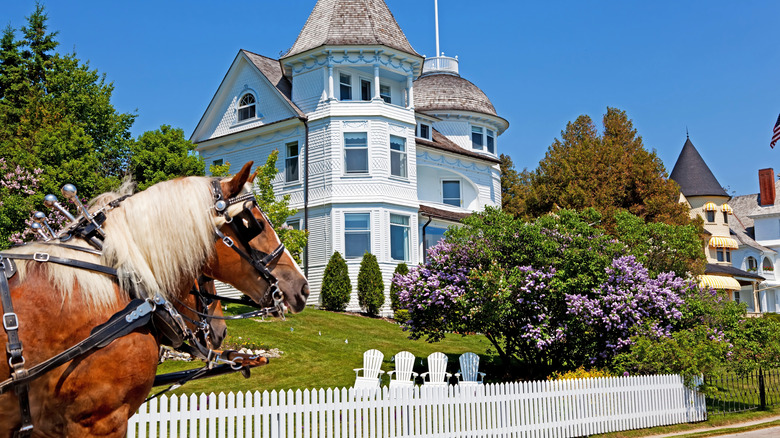
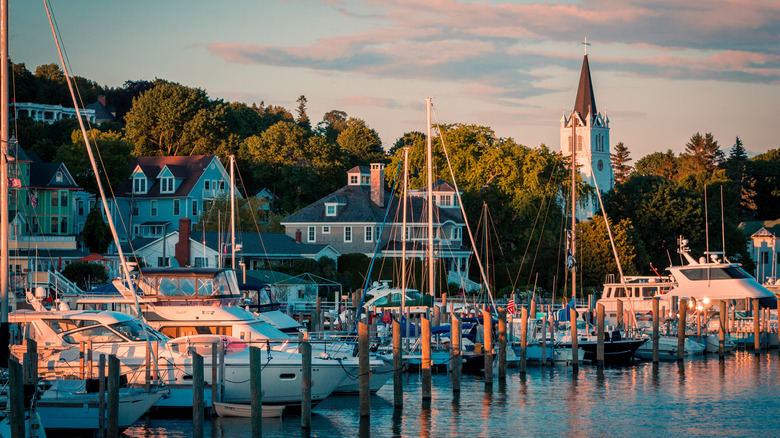
Tucked in a quiet northern cove of Lake Huron, smack dab between Michigan's twin peninsulas, is a petite outcrop called Mackinac Island. Confusingly, the name is pronounced "Mack-in-awe," and despite the island's proximity to Mackinaw City and St. Ignace, the shores are only reachable by ferry — or, when the lake has frozen from the frigid Midwestern winters, by plane. Mackinac Island first saw the arrival of European settlers in the 1630s, falling under the control of the French as a fur-trading hub, then eventually snatched by British troops as the American Revolution began, and this colonial heritage permeates the atmosphere.
Mackinac Island is unique among other island destinations for being completely free of cars. Instead, visitors can either take a stroll through the downtown streets, lined by quaint colonial and Old West architecture, or hop on a horse-drawn carriage taxi to get around. Guided carriage tours also whisk visitors on a sightseeing journey through the island's iconic landmarks like the Arch Rock, which was formed by erosion over thousands of years, along with Fort Mackinac, where history buffs can tour the former soldiers' barracks and attend a cannon-firing demonstration. Outdoorsy explorers can spend the day at Mackinac Island State Park to hike the trails and soak up views of the coastline.
Stately mansions overlooking the harbor downtown offer travelers a bed for the night. Try the Cloghaun Bed & Breakfast, which has been family-run since the 1880s, featuring guest rooms that feel like a step back in time. "We loved our stay!" a satisfied visitor shared in a Google review. Conveniently located on Mackinac's Main Street is the Lake View Hotel, where guests can relax after a day of exploring. Being only accessible by ferry makes a trip to Mackinac Island all the more worthwhile.
Juneau, Alaska
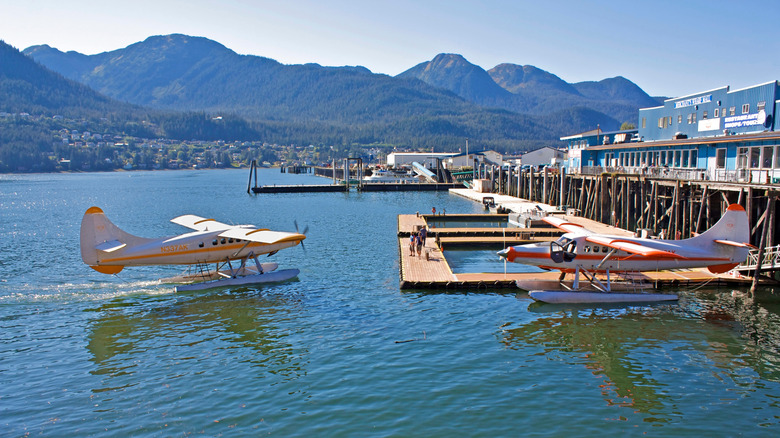
Hugging the southern coastline of Alaska is its lonely capital, Juneau. Framed on all sides by soaring peaks blanketed in pine groves, Juneau is isolated from the rest of the state. A harbor welcomes travelers arriving by ferry and cruise ships, while the Juneau airport is a hub for daily flights from the state's mainland. Despite the presence of cars around Juneau's streets, the Alaskan capital can't be reached by driving. Poised on the edge of windswept Arctic landscapes, Juneau is a haven for outdoor exploration.
Just north of town is Mendenhall Lake, which sits at the bottom of the rugged slopes of the Mendenhall Glacier. Rent kayaks to paddle the frigid waters and maneuver between icebergs, or follow the hiking trails that bring visitors to the brink of tumbling cascades. A number of overlook platforms along the lakeshore offer panoramic views of the craggy peaks rising across the horizon. "It is well worth the drive out from Juneau," wrote a previous visitor in a Google review. Closer to town is the Glacier Gardens Rainforest Adventure, where more laid-back travelers can take guided golf cart tours of fragrant botanical gardens and meander beneath the swaying canopies of Tongass National Forest.
History fiends can spend the day at the Alaska State Museum, where the exhibits range from displays of ancient indigenous artifacts to military memorabilia. More fascinating artifacts can be seen at the Juneau Douglas City Museum, a "[w]onderful little place to learn about the history and progress of Juneau," according to one visitor. Retreat for restful slumber at the Juneau Hotel near the harbor, or book a night at Alaska's Capital Inn Bed & Breakfast, a rustic mansion dating to Juneau's early-1900s gold rush.
Catalina Island, California
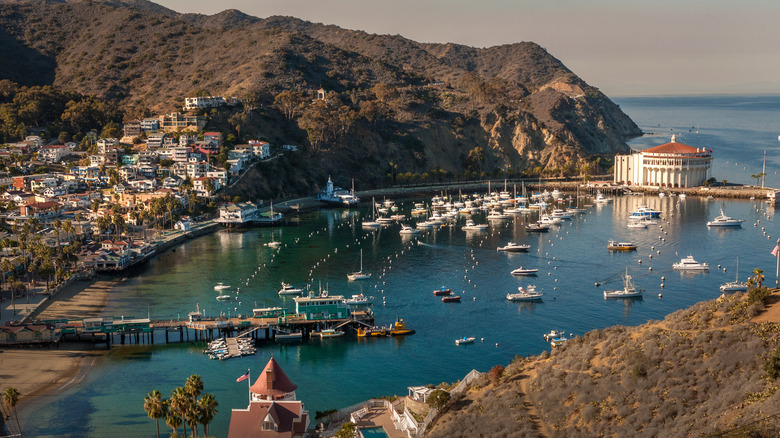
Travelers seeking the warmer weather of the Italian coast or the south of France forget that just an hour's ferry ride from Los Angeles are the balmy shores of Catalina Island. As is fitting for an idyllic oasis rising from the sea, most boats to Catalina Island make landfall in Avalon, named for the mystical isle from Arthurian legend. Tucked along the sweeping curve of Avalon Bay, where boats bob in the harbor against a backdrop of sun-browned slopes, Catalina Island offers a Mediterranean getaway without having to stray too far from home.
Unlike the French or British influence seen in many other parts of the United States, the Spanish were the first to arrive on Catalina Island. A stroll around Avalon today reveals the vestiges of this Iberian heritage, particularly the bell tower clinging to the mountain precipice, which chimes over the harbor every quarter of the hour. Culture fiends can also spend the day browsing the exhibitions to learn more about the island's past at the Catalina Museum for Art & History in downtown Avalon.
For beachgoers, a trip to Catalina Island means jumping into emerald green waters so transparent you can see the bottom and soaking up the sunshine from the viewpoint at Lover's Cove. Adrenaline junkies can strap themselves to a pulley to zoom down the mountainside and enjoy the island from a bird's-eye view with the Catalina Island Zipline Eco Tour. For memorable photos, head up to the Buena Vista Point Scenic Overlook to gaze out across Avalon Bay, where the green sweep of the mountain ridges stretches into the distance. Accommodations ranging from rustic vacation rentals and historic villas to the sprawling Glenmore Plaza Hotel invite travelers to spend at least a weekend enjoying everything the island has to offer.
Block Island, Rhode Island
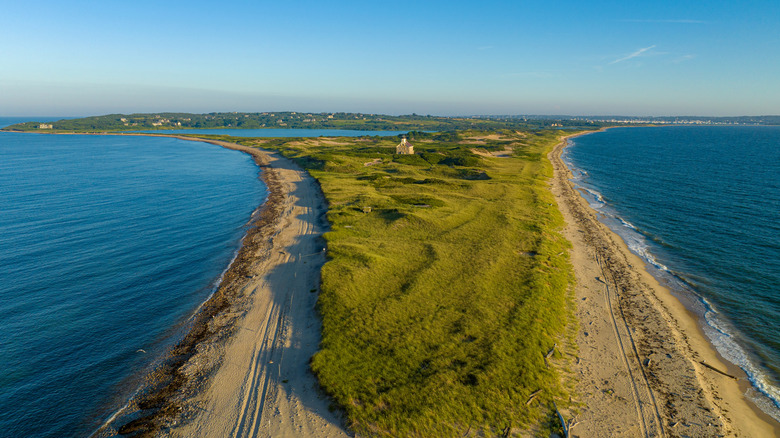
Though the state of Rhode Island isn't actually an island, there is a minuscule outcrop of rock a few miles offshore that is most certainly an island. Pebbly beaches rush to meet the edges of green, windswept ridges where a lighthouse stands as a sentinel over the bay, making Block Island a remote yet picturesque oasis for a New England adventure. No roads cross the Block Island Sound from Newport, nor is there an underground tunnel to drive through; the only way to reach these shores is by hopping on a flight with New England Airlines or Fly The Whale, or by ferry from various ports in Rhode Island, Connecticut, and New York.
As soon as you set foot on Block Island, sightseeing awaits. Take a pleasant stroll around the idyllic streets of New Shoreham, considered one of America's tiniest towns, or explore the exhibits of Native American and colonial artifacts at the Block Island Historical Society museum, called "a treasure trove of history about Block Island" in a Google review. At the northern tip of the island is Settler's Rock, which commemorates the arrival of Europeans. From there, a walking path curving along the shoreline brings visitors to the North Lighthouse, a stone lighthouse dating to the 19th century, which makes a fantastic photo spot.
Just beyond the lighthouse is the North Light Beach, where travelers can lounge in the sand while soaking up the view. South of the island are the Mohegan Bluffs, where rocky cliffs tumble down to meet the crashing surf. A steep staircase brings beachgoers to the sandy shores below. Coastal inns dotted all across the island invite travelers to extend their stay, while local eateries around the harbor offer a relaxed atmosphere to refuel while exploring.
Washington Island, Wisconsin
You wouldn't think Wisconsin has any islands, but it does. Flung across the convergence of the Green Bay and Lake Michigan is Washington Island, which can only be reached by ferry from the Northport Pier at the tip of Wisconsin's peninsula. Passengers can drive vehicles onto the ferry or take a plane straight to Washington Island Airport. Swathed in dense woodlands opening up to sandy shorelines, Washington Island is an oasis for exploring the outdoors. Travelers can even hop on another ferry to nearby Rock Island and explore the remote wilderness of Rock Island State Park.
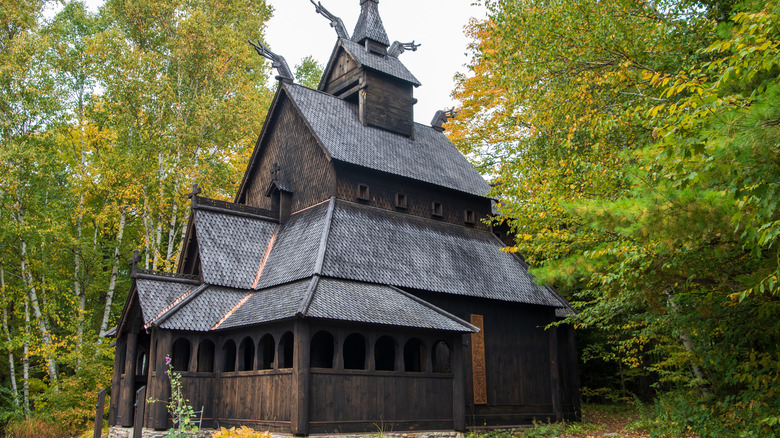
Before the arrival of Europeans, the Potawatomi peoples established themselves on what is now Washington Island, while settlers from Scandinavia and Iceland arrived in the late 19th century. Sightseers can enjoy the vestiges of this Nordic heritage with a visit to the Washington Island Stavkirke, a tiered wooden edifice that recreates the original structure built in Norway in 1150 AD. "Worth the stop if you're going to the island," wrote a previous visitor. Meanwhile, sun-seekers can sink their toes into the sandy shores at Sand Dunes Park, where vibrant blue waters beckon for a dip.
Spending the night on the island is a must. Outdoorsy travelers can pitch a tent at the Washington Island Campground, while rustic log cabins set amidst overgrown woodlands offer a touch of upscale living. Meanwhile, the Hotel Washington is tucked along the island's main harbor, where guests can lounge on the grassy lawns beneath the shade of trees or enjoy a hearty meal at the hotel restaurant. "Can't wait to go back on our next trip," a previous visitor shared in a Google review. A handful of smaller motels dotted across the island give travelers more options for a relaxed evening on Washington Island.