
5 Code Phrases You Never Want To Hear On A Cruise Ship
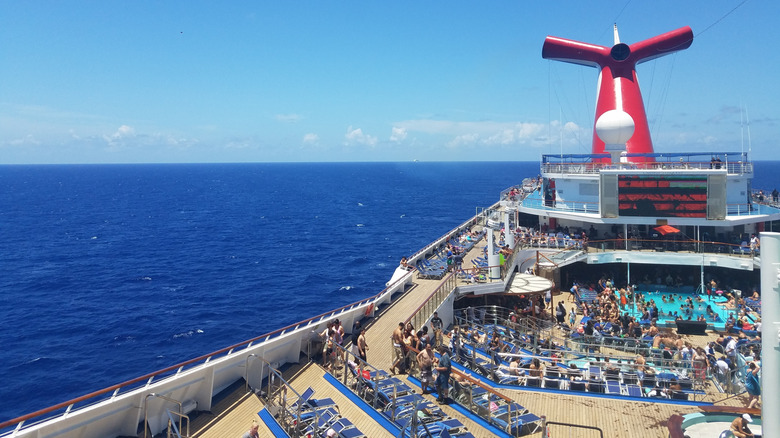
Cruising the high seas is a dream for many travelers. You can visit several ports in one trip without ever having to unpack. There are pools, dinners, activities of all sorts, and often amenities like spas and gyms right on the ship. Everything is provided, and you don't have a care in the world.
Still, emergencies do occur at sea. According to Cruise Hive, cruise ships often carry around 3,000 passengers, with crews of roughly 800 to 1,200, though some mega cruise ships can exceed 5,000 guests. With that many people aboard, medical emergencies, security incidents, fires, severe weather, and even deaths are possible. In a confined environment, mass panic can quickly escalate, so ships rely on codes to communicate discreetly and prevent unnecessary alarm. If you're on a cruise, you may hear the code "Bravo" for a fire, "Charlie" for a security threat, "Oscar" for someone overboard, "Echo" for a possible collision, or "Alpha" for a medical emergency.
Codes can vary by cruise line and are not standardized across the industry. In the United States, the United States Coast Guard regulates safety drills and emergency procedures, but it does not mandate specific onboard code words. Even so, some commonly used phrases can give you an idea of what's going on while you drift across the ocean.
Code Bravo
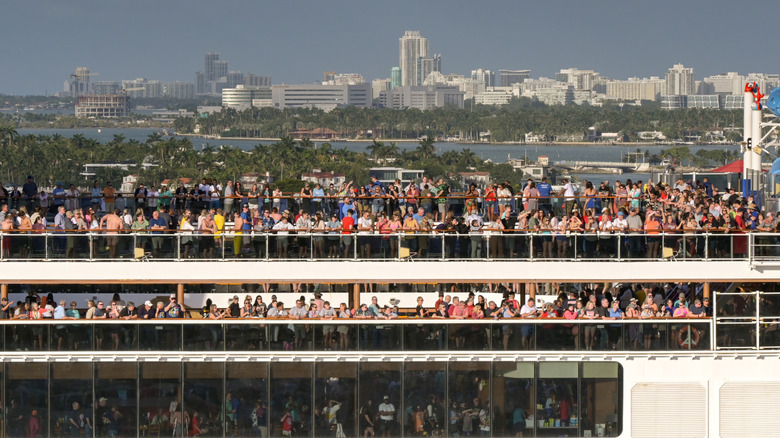
One code you definitely don't want to hear broadcast over a loudspeaker is "Bravo." On many cruise lines, it signals a fire on board. While shipboard fires are relatively rare, they're definitely not unheard of. Platforms like Cruise Junkie have reported several cruise ship fires worldwide over the years, typically ranging from a handful to about half a dozen annually, depending on how incidents are defined. On Reddit, someone who worked for Royal Caribbean saw a fire break out after someone put a lit cigarette in a garbage can. Other people confirmed that the code used was "Bravo." In r/NCL (for Norwegian Cruise Line), a guest recalled a time there was a fire in the laundry, calling it a "real-world code Bravo."
In a YouTube short, user @ProfMelissa shared her experience with a small fire breaking out in a pizza restaurant on a Carnival cruise ship. She showed how the sprinkler system and fire alarm activated, and how the crew responded quickly. She also showed the fire doors that help them isolate the fire wherever it is. You may also hear variations such as "Red Party" or "Red Parties" on some lines, per Reader's Digest and The Independent. No matter which code is used, if you hear an alarm, comply with crew member instructions so they can keep you safe.
Code Charlie
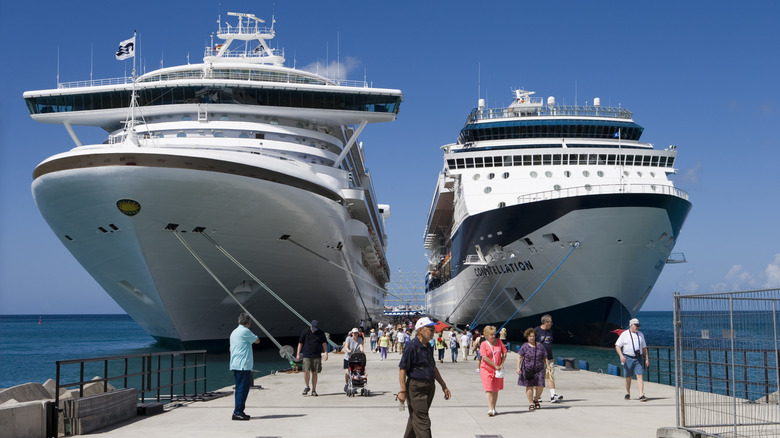
Another code you might hear when you're out at sea is "Charlie, Charlie, Charlie." If this is broadcast over the loudspeaker, it often indicates a security threat. According to Reader's Digest, that could mean a bomb threat or a violent passenger. In that case, you may also hear a location given afterward to indicate where it is, like a fight on a specific deck. ProfCruise notes that in rare cases, the security threat could even be pirates. On some ships, however, "Charlie, Charlie, Charlie" can also indicate a weather event.
Whether it's a storm, an unruly passenger, or something worse, it's important to stay alert. If the crew instructs you to do anything, do so immediately. It may be for an incident a single extra security person can handle, but trust that the crew knows more than you do. As with other codes, though, some announcements may also be part of internal drills.
Code Oscar
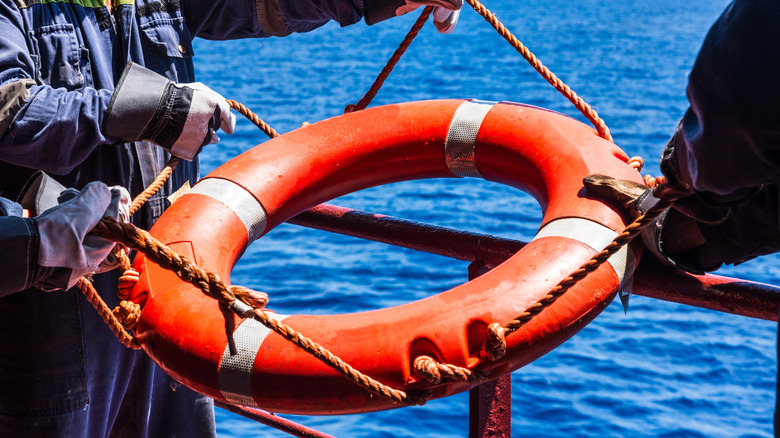
If you hear the code "Oscar," often followed by "portside" or "starboard side," someone is in a serious predicament. This code indicates that someone has fallen overboard. Of course, that doesn't mean you should run toward the railings or create congestion. However, if you're by the edge and you see someone in the water, let a crew member know immediately. In fact, Brittany Howk, a vocalist who has worked on a number of cruise lines, told Reader's Digest, "If you do hear this one and happen to be on deck, always keep your eyes peeled, and if you see someone, point and yell. Never take your eyes off of them —you could save their life!" You may also hear the code "Mr. Mob" in this situation, or the international maritime term, "man overboard."
According to Cruise Critic, it happens about 20 times a year. If someone does go overboard, the ship will stop or turn around, and you may see search and rescue efforts from the crew. There might also be meetings to alert passengers to any changes like delays or other shifts if needed.
Code Echo
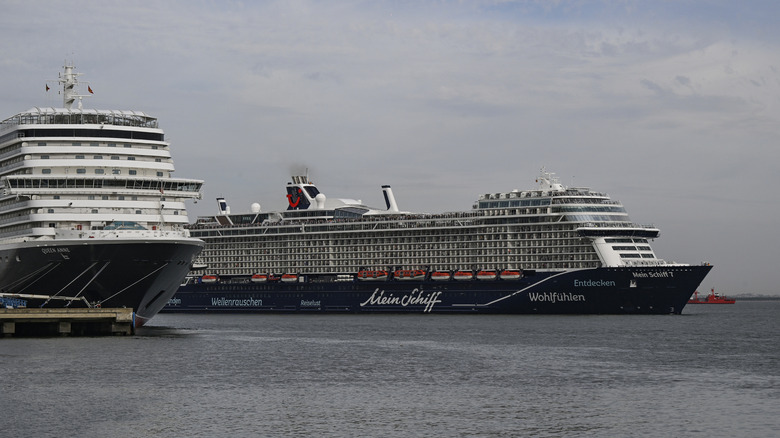
If you're enjoying a cocktail on deck when you hear the code "Echo," that may mean the ship is drifting due to an engine failure or some other issue — one of the worst things to happen on a cruise ship. It can also mean that the ship is in danger of a collision with another ship or an object like a pier. Cody Candee, CEO of travel luggage firm Bounce.com, explained in an interview with The Independent, "Normally repeated three times, 'echo, echo, echo' can mean 'brace for collision' ... This could indicate an impact with another ship or land, as well as dangers posed by strong winds or drifting while in port." In some cases, you might also hear a ship location, such as "stern" or "port side," included in the announcement.
According to the London Maritime Academy, cruise ship collisions aren't common. However, they do note that drills for the crew are thorough. As with any emergency signal, keep your eyes and ears open, and listen to and comply with crew instructions.
Code Alpha, and other variations
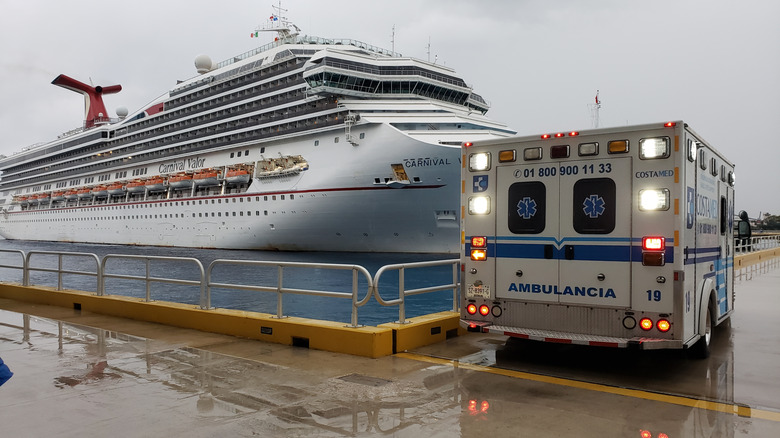
Finally, you may hear "Code Alpha" while on board a cruise ship. If you do, a passenger or crew member is having a medical emergency. Some cruise lines use alternatives such as "Star Code," "Code Mike," or "Operation Bright Star" for similar situations.
There are times when the ship may have to turn back to port for medical attention, though that's not always the case. You may also hear a location, like a deck or side of the ship, mentioned. One poster on r/royalcaribbean mentions that they heard a "Code Alpha" and found out it was their grandfather who had experienced a seizure. They praised the crew's quick response, saying, "I was shocked considering how full the ship was."
You may also hear phrases such as "Rising Star" or "Operation Rising Star," which generally indicate that a death has occurred on board. Candee told The Independent, "If you hear Operation Rising Star, there is no need to be alarmed. The cruise staff will have already informed who the deceased was traveling with before making an official announcement to the rest of the passengers." As grim as it sounds, this is why cruise ships are required by law to have morgues on board. The odds are that you'll never hear any of these codes on your vacation. But knowing what they mean can help you stay calm — and respond appropriately — if you ever do.