
5 Once-Thriving Commercial Airlines That No Longer Exist
Being in the business of flying isn't easy. Just ask any of the airlines that, despite once thriving, eventually met their demise. According to the Official Aviation Guide, as of February 2026, there are 718 airlines operating across the globe. From small regional carriers to low-cost airlines and global giants, these airlines shape the way we travel. But for all the current airlines on the market, there are many more that have fallen by the wayside.
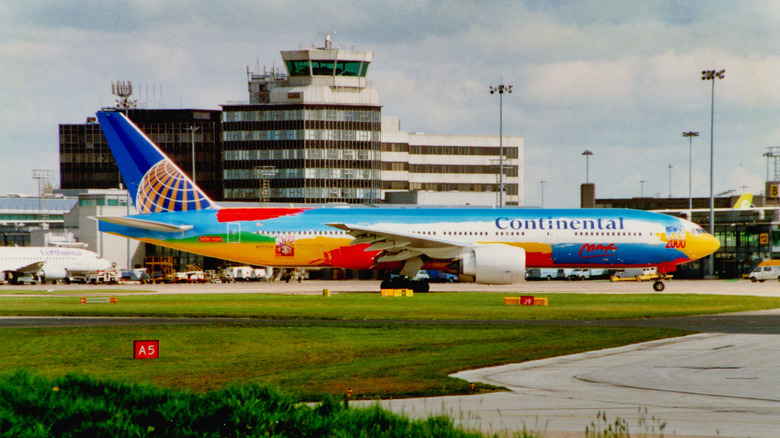
Whether plagued by poor financial planning that led to bankruptcy or succumbing to outside forces that put pressure on the travel industry, each airline on this list once soared to spectacular heights, only to see things end poorly. Some, like Continental, managed to save themselves with a merger, even if they no longer fly under their name, while others, like Pan Am, live on as a distant memory of the golden age of travel when passengers were served multi-course meals (along with other once-popular airline foods you can't get anymore) and mingled in airplane lounges.
And still others, like Wow Air and Thomas Cook Airlines, are more recent failures that made a splash by leaving their customers stranded. Let's dive in and take a look at what made each of these carriers successful and what, ultimately, caused them to cease operations and remain permanently grounded.
Pan Am, 1927 - 1991
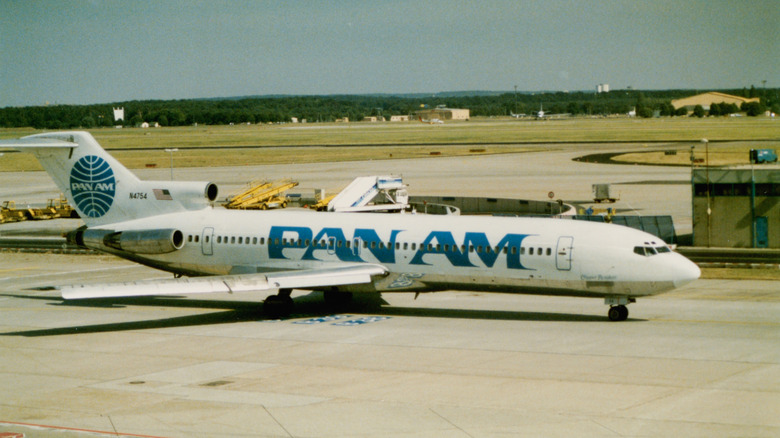
No list of failed airlines would be complete without one of the most famous companies to meet its demise. Pan American World Airways, better known as Pan Am, revolutionized aviation as the only American airline running international flights until after World War II. The airline came to symbolize the glamour of early air travel and was a trailblazer in the industry, using everything from the Martin M-130 China Clipper to shuttle small groups of passengers over the Pacific to Boeing 314 flying boats to complete transatlantic flights.
These early triumphs in the 1930s were followed by big changes as World War II came to a close. Though the airline had worked to build up the world's runways, its monopoly on international travel came to an end when the United States opened up international routes to domestic airlines. While TWA and other airlines became competition, Pan Am held on and introduced overseas travel on the Boeing 707 in the late 1950s. The airline also ushered in affordable international flights when it began using the Boeing 747 in 1970, making traveling abroad something not only available to the upper class.
After surviving for so long, what was Pan Am's downfall? Up until 1978, the American government regulated airlines via the Civil Aeronautics Board. Then, laws changed so that carriers could organize their own routes and decide their own fares. This increased pressure, coupled with a costly merger with National Airlines in order to have domestic routes, proved fatal. The airline never recovered from its peak, when it was shuttling passengers between 86 countries. Pan Am was already in a precarious financial position when the fatal 1988 terrorist attack on its flight over Lockerbie, Scotland, pushed it over the edge. Mired in bad publicity and legal woes, Pan Am declared bankruptcy in 1991, closing an important chapter in aviation history.
Continental Airlines, 1934 - 2012
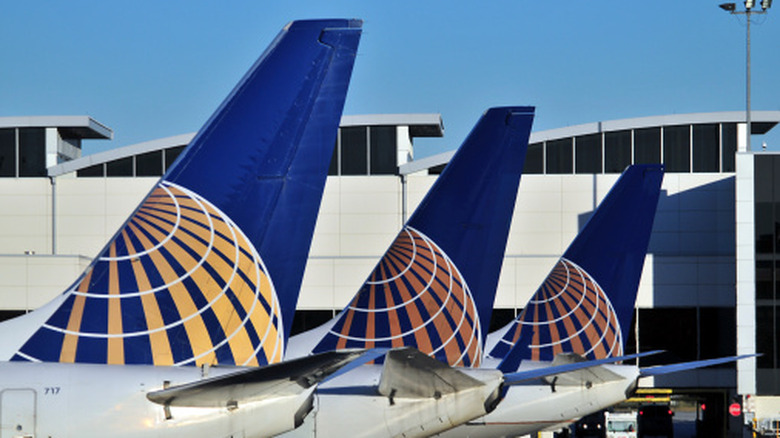
Once one of the United States' major carriers, Continental Airlines had humble beginnings, as it started as a mail carrier based in El Paso, Texas in 1934. A few years later, it moved its headquarters to Denver and rebranded as Continental, and by 1957 it served 36 cities, mainly in the West and Midwest. The following year, it introduced its first jet and purchased Pioneer Airlines, which expanded its offerings in the Southwest.
Continental Airlines has several firsts to its name, including being the first airline in the United States to use digital boarding passes (2007). Throughout the 1970s and 1980s the airline was known for its customer-forward initiatives, including affordable fares, and luxury entertainment lounges in some planes, where passengers could mingle, sip drinks, and play electronic games. Unfortunately, none of it was enough to save the company. Like Pan Am, Continental struggled in a post-regulation world where competitors could slash their airfares.
High labor costs and steep competition plunged Continental into debt, and it was bought out by Texas Air Corporation in 1981. The buyout led to restructuring that helped it work its way out of bankruptcy but led to labor disputes. For a time, Continental expanded, but the rising fuel costs of the late 1980s, as well as declining passengers, meant that it had to sell off many of its assets. After several other bankruptcies, a buyout by Air Canada, and a successful turnaround thanks to former Boeing executive Gordon Bethune — who was CEO of the airline for a decade – Continental merged with United Airlines in 2010, in part to help pull it out of a slump brought on by the 2008 recession. The airline's last independent flight ran in March 2012, ending Continental's roller coaster history.
Swissair, 1931 - 2002
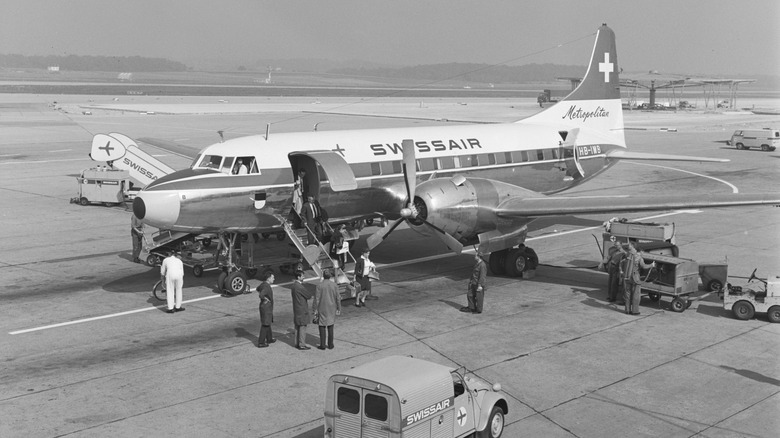
Switzerland's national carrier Swissair proudly took to the skies for 71 years before shuttering in 2002. Founded in 1931 after two smaller Swiss carriers merged, the airline found great success after World War II thanks to Switzerland's neutrality in the war and the extensive network it had built prior to the war. Known for using the latest models of airplanes, Swissair made its first transatlantic flight in 1947 when it flew from Geneva to New York. It was also innovative in its hiring practices, as Swissair was the first European carrier to hire female flight attendants to assist customers in the skies.
Throughout the 1960s, Swissair was prosperous, earning it the nickname "the flying bank" for its profitability and financial stability. Unfortunately, the following decade was a stark contrast, with difficulties like the 1973 oil crisis coupled with a series of terrible crashes. In 1970, a Swissair flight heading for Tel Aviv exploded shortly after takeoff after a bomb went off in the cargo hold, killing all 47 passengers and crew in a terrorist act. Nine years later, a Swissair plane overshot the runway in Athens, causing it to break apart and resulting in the death of 14 passengers.
While Swissair forged ahead, it continued to be plagued by missteps, including an expansion program in the 1990s that stretched its finances beyond repair. Its reputation also took a big hit with another accident in 1998, when a flight from New York to Geneva crashed into the Atlantic due to a fire caused by bad wiring in the on-board entertainment system. Unfortunately, none of the 229 people on the plane survived. The decline in air travel post-9/11 pushed Swissair over the edge, and it shuttered operations in 2001. After a brief revival thanks to government funding, it closed for good in 2002. Shortly after, Swiss was formed, taking the torch as Switzerland's national carrier.
Wow Air, 2011 - 2019
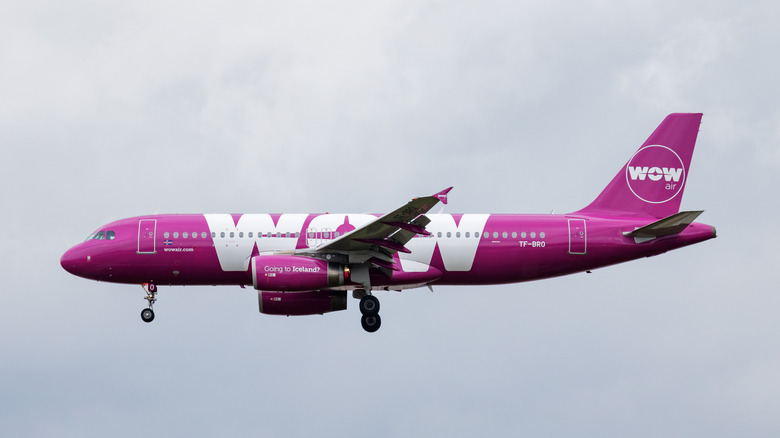
The rise of low-cost airlines in the 2000s opened up travel to a wider market, but not all budget carriers were built to last. Nothing exemplifies this more than the short rise and spectacular fall from grace of Iceland's Wow Air. Founded by Skúli Mogensen, an entrepreneur who made his fortune in communications, the budget airline made a splash by offering transatlantic flights starting at just $99.
Affordable prices, great marketing, and punctual flights helped Wow blossom, with Mogensen being named Iceland's Businessman of the Year in 2011 and 2016. By 2018, the airline was flying 3.5 million passengers a year to more than 35 different cities. But just a short time later, not only had the airline stopped growing, it crashed in a way that no one would have expected. So what happened? Signs of trouble became public when the airline reported big losses between July 2017 and July 2018. This was followed by news that Wow owed the state-run agency that runs Iceland's airports an eye-popping 2 billion Icelandic krona (about $16.3 million at today's exchange rate) in landing fees.
These issues, coupled with skyrocketing fuel costs and the rise of competitors, forced the airline to scale back its flights. After negotiations for a bailout by Icelandair (Europe's "most punctual airline") failed, and private investment money fell through, the airline was left scrambling. Alas, nothing came through to save it from bankruptcy, and it ceased operation in March 2019, leaving 4,000 passengers stranded. It was a sad end to an airline that had a seemingly bright future, with Mogensen writing in an email at the time (per The Guardian): "I will never forgive myself for not acting sooner. Wow was clearly an incredible airline and we were on the path to do amazing things again."
Thomas Cook Airlines, 2007 - 2019
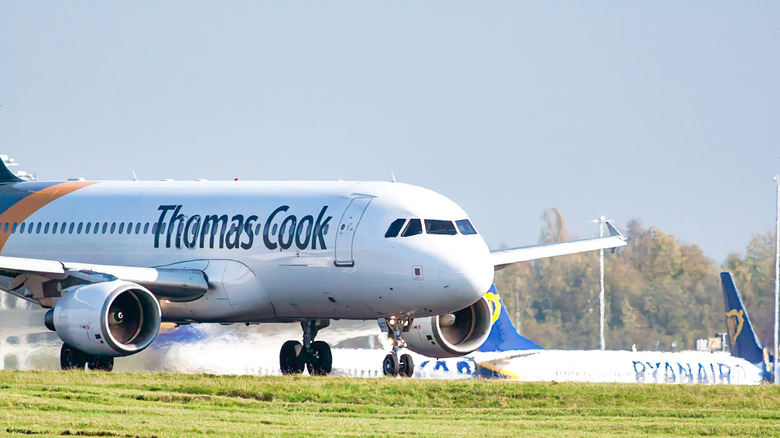
Wow Air wasn't the only carrier to disappear from the skies in 2019. Unfortunately, another once-popular airline met a similar fate. Thomas Cook Airlines was a seemingly brilliant idea by a historic travel company. Thomas Cook's roots go back to 1841, with the British company known for organizing package holidays. In part to service these needs, Thomas Cook Airlines was created during a 2007 merger and served to fly customers as part of its holiday package.
At its height, the airlines flew to 82 destinations around the world, but the changing face of travel would soon hinder its success. In an increasingly digital world, travelers turned away from the traditional travel agent model and moved to booking online. The rise of low-cost airlines and easy access to digital booking meant that travelers were booking their vacations independently, moving away from the pre-packaged model that had served Thomas Cook for over 170 years.
This transformation in travel was also coupled with bad financial decisions by the Thomas Cook Group. After the 2007 merger, it continued with another expensive acquisition in 2010 that put it under increasing financial pressure without bringing about the innovation that might save the company. These decisions, coupled with poor business diversification, placed the company's debt at £1.6 billion (over $2 billion) in 2017. The uncertainty around Brexit also didn't help the British company, and after last-minute scrambling to help it overcome its debt — including a plea to the U.K. government for a bailout — the company declared bankruptcy in September 2019. This sparked Operation Matterhorn, said to be the largest peacetime repatriation effort in British history, to bring over 150,000 holidaymakers who were left stranded abroad back home.