
5 RV Essentials You Need For Cold Weather Camping
We may receive a commission on purchases made from links.
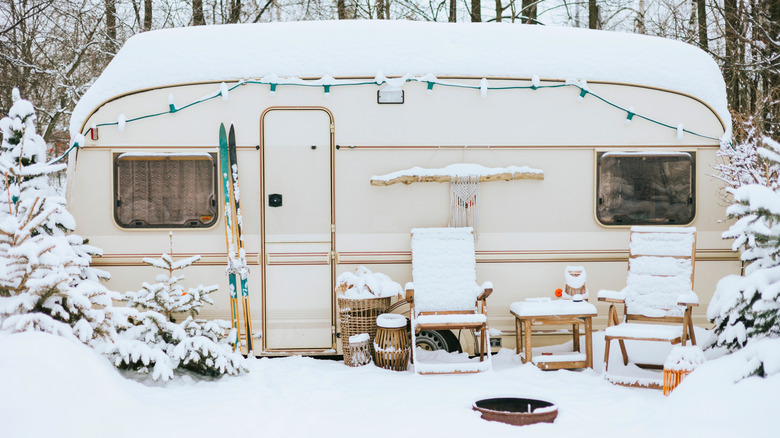
From fewer crowds to no bugs, there are a ton of reasons why winter camping is worth it. Campfires feel cozier, you could also enjoy off-season discounts or lower costs, and you may even get to experience some winter sports along the way. That said, camping in cold weather isn't for the faint of heart. But doing it in an RV can make it just a little bit nicer. Many campers and RVs are designed for use during spring through fall, so your particular unit may not have the insulation or the features to keep you warm if you didn't opt for a four-season one.
Fortunately, there are some RV essentials to keep warm during your nomadic winter adventures. These five essentials aren't the only things that you should bring for cold-weather camping, but they do address some of the biggest challenges that you might face. There are many budget-friendly secrets to keep your RV warm, and keep in mind that many of these options require a hookup to electricity (or solar power).
As someone who has experienced both rising and dropping temperatures during RV travel, this list was developed through my personal expertise, as well as tips mentioned on camping blogs like Roamly and Outdoorsy. Additionally, recommendations from experienced winter RVers across multiple forums were used, such as MyGrandRV and Reddit.
Antifreeze and heated hoses
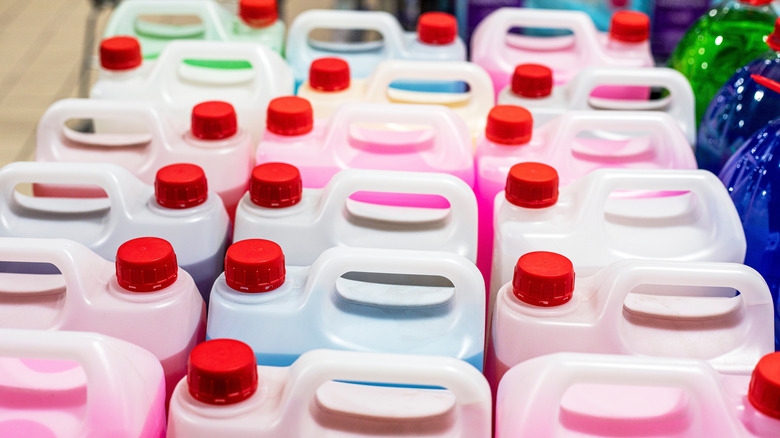
RVs often need a little extra help to make sure waterlines and tanks don't freeze, and many people on Reddit choose to just "dry" camp by not using any of their faucets, tanks, or hoses altogether. Antifreeze is a huge help to keep these facilities from collecting frost. But pause before you run out and buy the first jug off the shelf. Many automotive antifreezes are toxic to you and the environment, so be sure to grab one that is made specifically for RV use. These are made from propylene glycol, which is safe to use on your travels for showers and washing your hands, as long as you don't drink it. For drinking water, plan to bring water bottles or jugs.
Even if you use antifreeze, your hoses may freeze if they're not heated. For that reason, some winter campers from Reddit recommend getting a heated hose if you're planning to be somewhere too cold. These often come with several layers of insulation and a heating cable to ensure that everything flows smoothly. Plug it in, and you're good to go — just make sure that the one you buy won't overwhelm your power system.
RV skirts to keep the belly warm
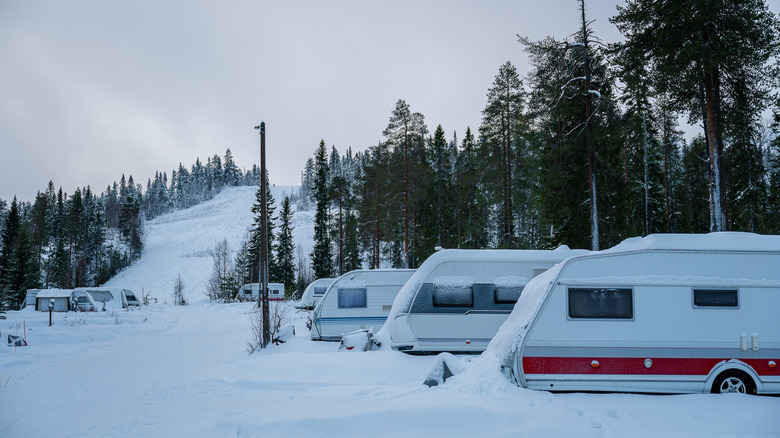
Another thing that will help keep you from freezing is keeping the underside of your RV nice and toasty. Many people don't realize that cold air can seep through the floor, which can freeze you and your pipes. Redditors recommend an RV skirt, which will give your rig an added measure of insulation around the base.
There are a couple of different kinds of RV skirts, and depending on your model, one might work better than another. Heavy-duty vinyl skirts are pretty lightweight, weather-resistant, and often easy to install, so they are a popular option for those who like convenience. One Redditor comments, "We have done foam board and it works, but our favorite is vinyl skirting because it is so reusable. ... Just keep heat tape on your dump valves, a work light in your water center and of course use a heated hose." However, they may not be enough to withstand extra frigid temperatures.
Foam board skirting is also popular, but it can be hard to transport since it isn't really compact or convenient — plus, it is single-use. In my humble opinion, inflatable air skirting is the best of both worlds. These are easy to set up and compact to store, but they often cost more and have a risk of puncturing. If you choose to go with a less insulating option in a super cold environment, consider using an underbelly heater in addition to a skirt to keep everything warm.
Window shades and thermal door covers
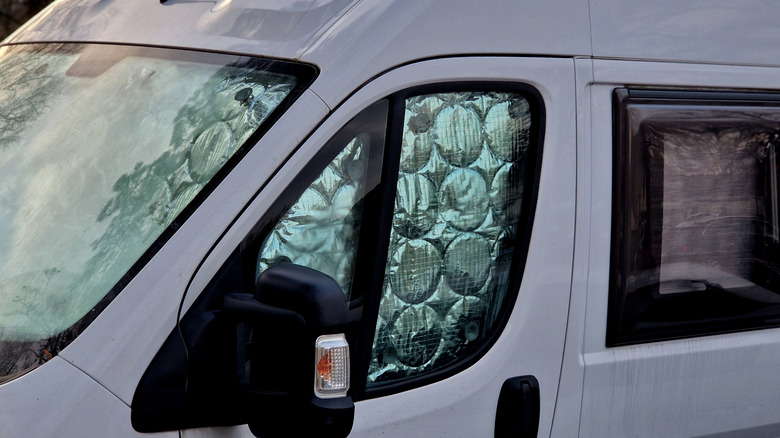
After you take care of the underside, it's time to tackle the windows and doors. Cold air can seep into your rig from all the little cracks, so Redditors say that investing in thermal window and door covers can really make a difference. Of course, this means that you may need to sacrifice some natural light, but if you're in 20-degree-Fahrenheit weather, it'll be worth it. Just make sure to have a plan for dehumidifying your space, too, in case drops of water start to condense on your windows.
Amazon has plenty of magnetic thermal curtains to help keep the cold out, including this RV Insulated Door Cover from Esudnt. These can be great in the summertime, too, if you have trouble keeping your rig cool. These curtains stick to the doorframe in your RV, with a magnetic slit down the center that pulls back together so you can exit and enter as you please. Window covers often have the same material: heavy cotton and windproof fabrics with a frame that sticks around the edge. Measure each window and doorway in your rig to find the right size. For a more affordable option, you can also use bubble wrap to insulate your RV during winter.
Oil-filled radiator and mattress pads
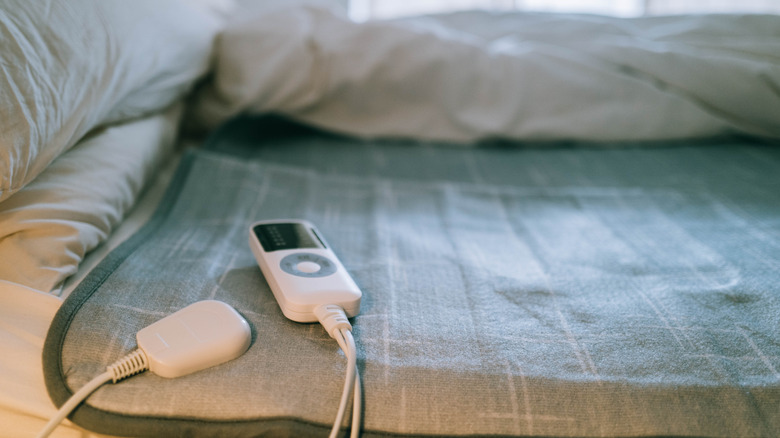
When the temperatures start to drop, you might be tempted to run out and grab a space heater. However, many of the options on the market have safety concerns, like carbon monoxide emissions or fire hazards. You can't go to sleep with an ignited, propane-fueled heater, but these aren't your only options. Oil-filled electric radiators are a great alternative with no risk of carbon monoxide poisoning. Since there's no open flame, they are considered by many on forums like MyGrandRV to be safer than other kinds of heating, although they do take a while to heat up. One commentor writes, "We would start it before we came in and we turned in for the night. But once it started heating it did a great job."
If using a space heater is too risky for your situation, you can always try a heated blanket or mattress pad to keep yourself warm during the night. These RV essentials are perfect for cold weather and come in a variety of fabrics and colors, adding an extra assurance of warmth so you won't wake up chattering your teeth at 2 a.m. While you can dedicate a heated blanket to your mattress, it's also good to keep it handy for when you're lounging during the day, as well.
Winter safety equipment
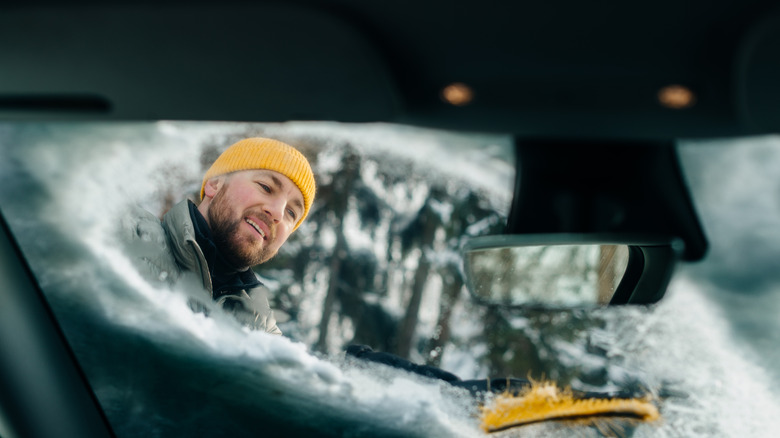
Before you embark on your winter wonderland adventure, you'll want to pack extras of pretty much everything. From warm clothes to blankets, extra snacks to emergency kits, your best bet for braving the cold is to be prepared. This includes any safety equipment, like tire chains for icy roads and an extra ice scraper, or even a collapsible snow shovel, just in case. If your rig uses propane, many RVers like Josh from Outdoorsy recommend bringing some extra. It can never hurt.
It's bad enough to slip off the road in a normally-sized vehicle, so play it safe with tire chains. Tire chains should always be placed on your drive wheels for extra traction on slippery roads. You won't be able to go above 25 or 30 miles per hour while wearing chains, so expect delays. Keep an eye on all official channels and weather conditions for your route, because that will give you an idea of what might be ahead, as well as warn you of any areas where chains could be mandatory.
Other tools, like ice scrapers, will be invaluable. CNN's favorite ice scraper for this winter season is the Subzero 60-inch Ice Scraper and Snow Broom, which has an extendable handle that will help in reaching the entire windshield. It comes with a broom and a squeegee, as well as an ice chipper. As for a collapsible shovel, you'll want to try something like the Yukon Charlie's Collapsible Snow Shovel. This shovel is perfect for digging you out of the snowbanks while still being compact enough to pack easily.