
Illinois Hides A Once-Thriving Historic Town, Forgotten By Time And Protected By The National Park Service
Some places are worth visiting for their historical significance alone, like Gettysburg, an open field that is one of America's most-visited destinations. Similarly, there's an open field in Pike County, just outside Barry, Illinois, that wasn't a battlefield but a town. Now abandoned, New Philadelphia National Historic Site was the first town in America founded by a free African American, Frank McWorter. New Philadelphia was also noteworthy because, from its inception, well before the Emancipation Proclamation, the town welcomed people of all races. After a peak of about 100 residents, only a few families remained through the years. When the school closed after World War II, there was just one family in New Philadelphia in the 1950s. The town was abandoned, but descendants, historians, and archaeologists didn't forget it. With their petitions, New Philadelphia joined the National Park Service at the end of 2022, becoming the New Philadelphia National Historic Site.
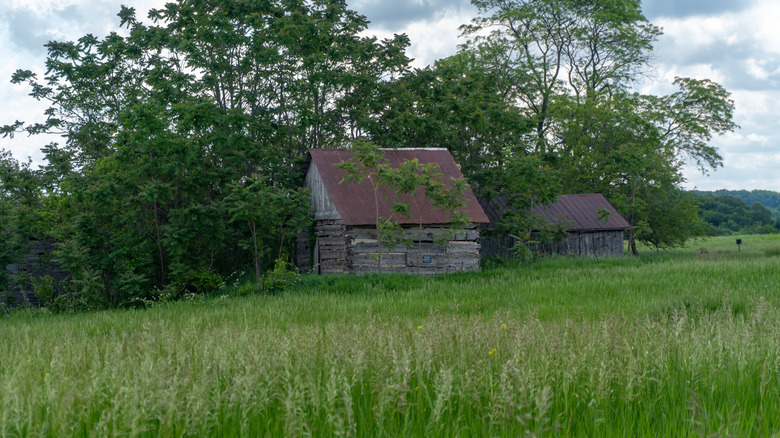
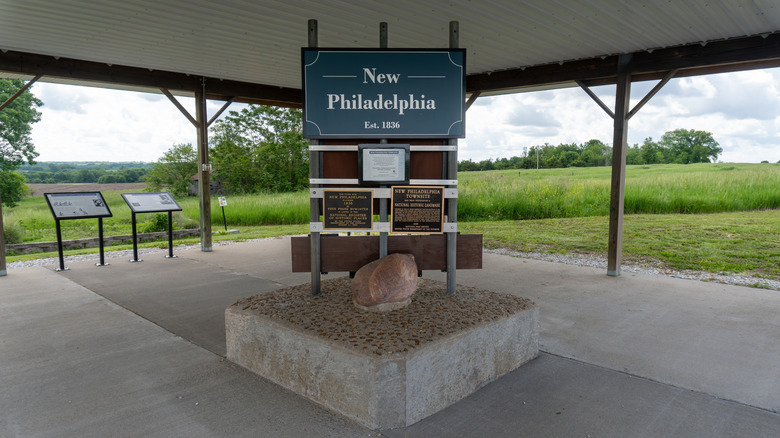
Visitors today will see historic cabins and a house managed by the National Park Service, but not open to the public. Because the site is largely an empty field with some structures that the public can't enter, the National Park Service has created signage that explains the importance of New Philadelphia. To engage people further, visitors can scan QR codes on site that show what life was like here in the mid-1800s. It's also possible to download an app and, when on site, scan QR codes that layer animations over the landscape. This augmented reality helps bring this historic place to life.
The history of New Philadelphia, Illinois
It was a long journey to receive recognition for this historic site. Multiple state universities and the Illinois State Museum worked for more than a decade to gather evidence to support a nomination for New Philadelphia as a site of national importance. Throughout the process, researchers collected 150,000 artifacts relating to the town as well as oral histories. The site's significance today can be traced back to the story of its founder.
Frank McWorter was born in South Carolina in 1777 and moved to Kentucky with his enslaver in 1795. He founded New Philadelphia in 1836 by buying 80 acres for $100 in 1835 and dividing the land into 144 lots. Over time, he bought his freedom and that of 15 family members, spending the equivalent of more than $500,000 that he earned by working for pay for people in addition to his enslaver, and also by selling plots of land and his saltpeter mining operation. New Philadelphia was home to 15 families in its heyday, between 1855 and 1865.
Residents were both Black (30%) and White, and settled from nearby states as well as from New England. The town operated like other traditional 19th-century towns with a stagecoach stop and residents supporting the community in roles such as doctors, blacksmiths, merchants, teachers, and carpenters. McWorter helped others in their journeys to freedom as New Philadelphia was an Underground Railroad stop, with McWorter harboring individuals and his sons accompanying others to Canada. He died in New Philadelphia in 1854, so he didn't live to see the end of slavery.
After the end of the Civil War, New Philadelphia's economic prospects changed due to a railroad built in 1869 that bypassed the town. In the 19th century, railroads could make or break a town, and the Toledo, Peoria & Warsaw Railroad's bypass was a factor in its demise. Additionally, competition from larger area towns held better business opportunities. Today, New Philadelphia is a National Historic Landmark and is on the National Register of Historic Places, and continues to be preserved for its rare place in American history.