
5 Once-Popular Campgrounds That Have Faded Into Obscurity
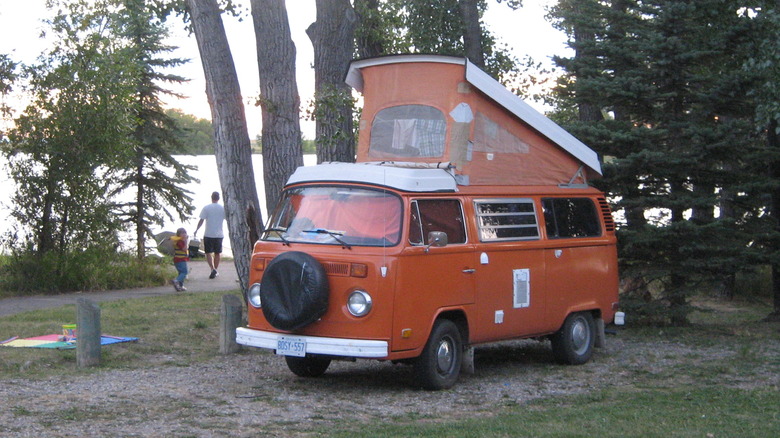
For many Americans, spending a few nights sleeping under a canopy of stars in a national park each summer was a childhood rite of passage. According to The Dyrt, a full 85% of American adults have camped at least once in their lifetime. But while immersing yourself in nature for a weekend isn't a uniquely American pastime, the act of hauling your tent or RV into the woods to roast s'mores over an open fire is deeply ingrained in the American psyche. (Fun fact: S'mores are an American invention and can be traced back to a 1927 Girl Scout cookbook).
While camping in the U.S. first started to gain traction as a recreational activity in the early 1900s — with the formation of the Boy Scouts of America, the Girl Scouts of the USA, and the National Park Service and U.S. Forest Service — it made major popularity gains in the 1950s, as car ownership grew and more Americans gained the ability to travel to the great outdoors.
Today, nostalgic U.S. citizens can visit many of the campsites they frequented as children, bringing their own children or grandchildren with them to share in the joys of jumping off that old wooden pier or fishing in that hidden creek. However, a number of camps that once entertained hundreds of scouts or sheltered weary Route 66 travelers have closed, fading into obscurity and remembered only by those who knew them well. Below are several of the most famous examples of once-popular campgrounds that are no more.
Leeds Civilian Conservation Corps Camp
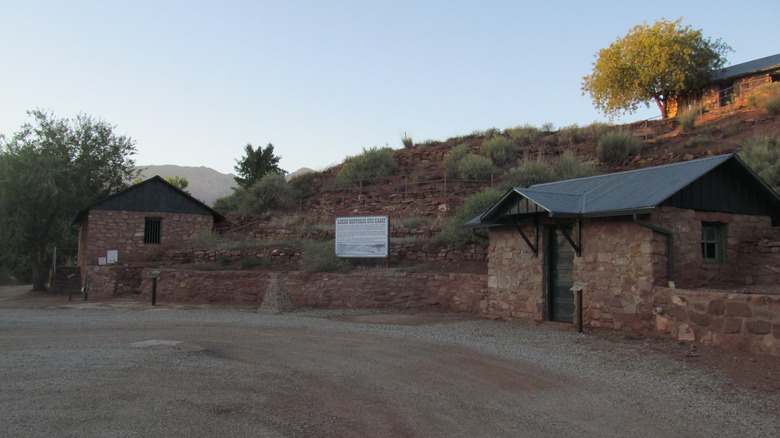
If your father or grandfather was among the more than three million American men who lived and worked in a Civilian Conservation Corps (CCC) camp in the 1930s, you may be interested in checking out the remains of a CCC camp in Leeds, Utah. The Leeds Civilian Conservation Corps Camp, which is about a 15-minute drive from Zion National Park, is the only CCC camp in Utah that you can still visit.
CCC camps like this one existed all over the United States during the Great Depression. Managed by the U.S. Forest Service and National Park Service, they employed young men to help build campsites, clear roads, fight forest fires, and plant trees. More than 3.5 billion trees were planted during the nine years the program was active.
The workers at the Leeds camp, which opened in 1933, helped build a local road and campground. While the camp once spanned 20 acres and had several buildings, including a barracks, a dining hall, and a library, after the camp closed in 1942, many of the buildings were torn down. Today, only four admin buildings remain standing: an infirmary, a supply facility, a blacksmith shop, and the camp commander's headquarters.
Camp Beechwood in Sodus, New York
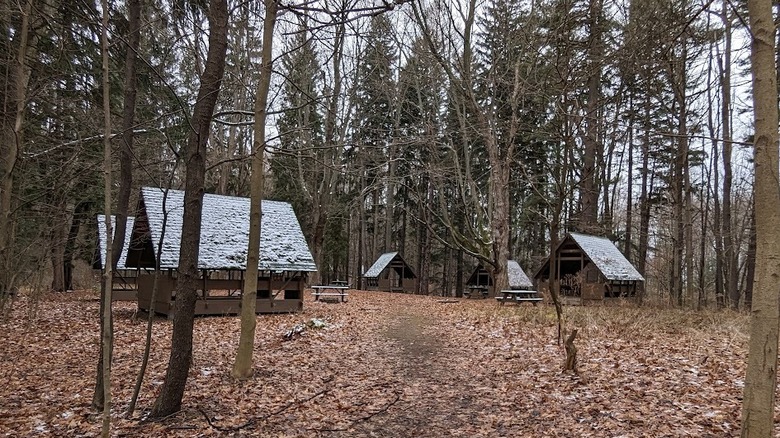
Those who were Girl Scouts in upstate New York in the 1970s or 1980s might have fond memories of going camping and making crafts at Camp Beechwood on Lake Ontario. A popular Girl Scouts camp, Camp Beechwood opened in 1929, about 35 miles away from Rochester, where the Girl Scouts organization was first formed ten years prior in 1919. The roughly 150-acre camp had a wooded area and a large beach where Girl Scouts gathered throughout the year to hike, canoe, and cook over an open fire.
The camp closed in 1996, and two years later, it was purchased by the state of New York and renamed Beechwood State Park. While some of the camp's older structures, which once included a dining hall, a trading post, a swimming pool, and an admin center, have been reclaimed by nature, many of them remain, including several lean-to cabins and the camp's Pioneer Lodge. You can explore the camp's eerie remains the next time you're in the Rochester area, a city that has reinvented its downtown as a walkable and exciting destination in its own right.
John's Modern Cabins, Doolittle, Missouri
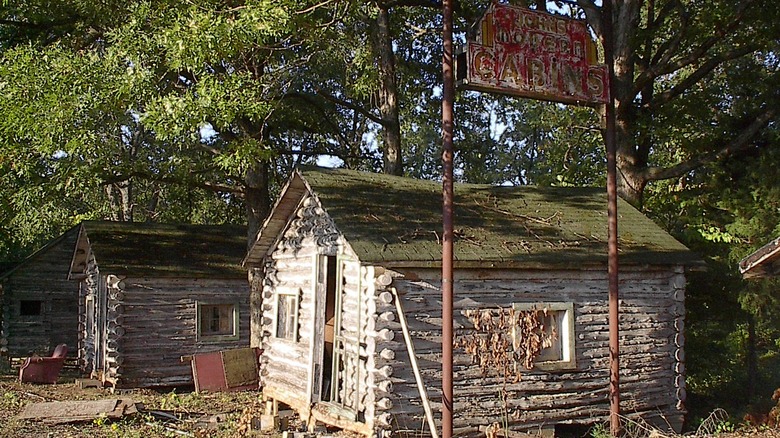
If you drove down Route 66 in the 1940s or '50s, you may have seen the campsites and lodges that cropped up along the highway to accommodate the flood of freshly minted automobile owners exploring the United States. One such accommodation was John's Modern Cabins, which was located about 10 minutes outside of Newburg, Missouri.
The six cabins and roadhouse that made up the campsite were built in 1931. In 1950, they were sold to a man named John Dausch, who renamed the campsite John's Modern Cabins. While the name suggested that they were "modern cabins," they were, in actuality, simple constructions made from logs with few amenities; visitors even had to use an outhouse when nature called. But, as with any business, location was what mattered, and John's Modern Cabins' spot along the famed highway meant they remained in operation for several decades.
While the campsite closed after Dausch died in 1971, the cabins remain, decaying on the side of the road. As the decades passed, Route 66 tourists stopped to explore and photograph the cabins. Today, unfortunately, few of the cabins remain standing, as most of them were demolished in 2018. The property's current owners hope to one day transform it into an RV park.
Enchanted Forest Campground, Turner, Oregon
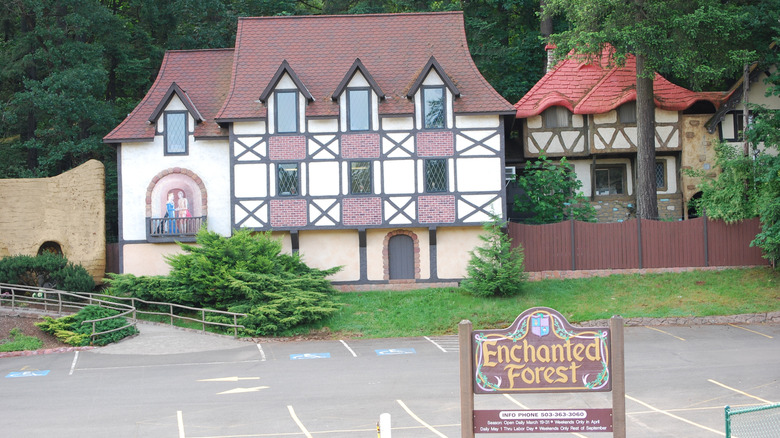
For anyone who enjoys a good whimsical theme, a stop at this kitschy-but-endearing theme park might have been a must-visit while traveling up the coast to Seattle in the 1970s. The Enchanted Forest, which continues to operate today, is a 20-acre fairytale-themed outdoor amusement park located in a forest setting just 15 minutes outside of Salem, Oregon. The family-owned and operated park, which has a log ride, a storybook lane, a rollercoaster, and a haunted house, has been a cherished part of the small community of Turner since it first opened in 1971.
While The Enchanted Forest theme park still operates on a seasonal basis, the nearby campsite is permanently closed. The now-shuttered campgrounds were within walking distance of the park and were popular with travelers road tripping along the Pacific Coast Highway. Families would sleep in their tents or RVs under the shade trees and spend their days riding the park's carousel, bumper boats, and other rides.
Pixieland, Otis Junction, Oregon
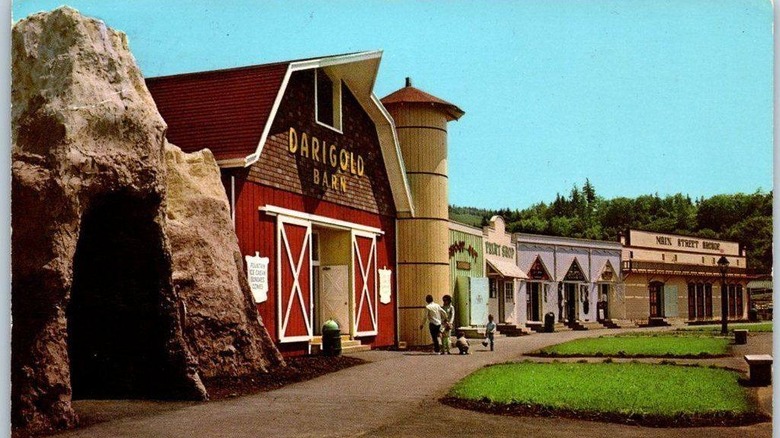
If you lived in Oregon in the early 1970s or happened to road trip up the West Coast at that time, you may have run across Pixieland, a combination amusement park and campground. When Pixieland first opened on the Central Oregon coast in 1968, it was riding on the coattails of Knott's Berry Farm and Disneyland, both of which had seen success over the previous decade about 1,000 miles south in Southern California. Like its competitors, the park had a log flume, a train ride, and an arcade. However, people could also camp at Pixieland, as the theme park featured an RV campsite with an indoor pool and laundry facilities.
Though the owners had high hopes for the park, it closed in 1975. The economy had taken a downturn, and the park's owners faced pressures by conservationists to transform the land back to its original 54-acre wildlife habitat. In 1980, the park sat abandoned, the buildings pictured above empty and overgrown with weeds. Eventually, the park and campground were turned into the Wetlands Restoration Project, and Pixieland was given the title of the "Forgotten Disneyland of the Oregon Coast."