
Major Global Airports Close, Leaving Travelers Stranded As Middle East Conflict Intensifies
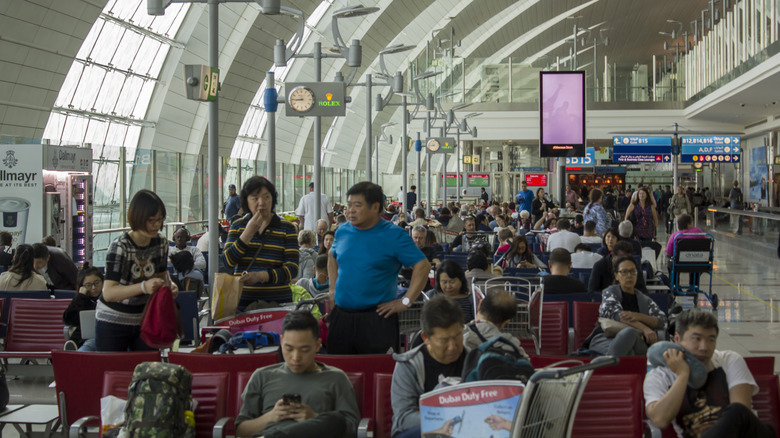
The ongoing conflict in Iran continues to disrupt air travel in the Middle East, with some of the world's busiest airports closing and leaving thousands of travelers stranded. In the United Arab Emirates (UAE), both Zayed International Airport in Abu Dhabi and Dubai International Airport shut down early this week after Iranian counterattacks to U.S. and Israeli strikes had targeted the airports and their surrounding areas, according to the BBC. In Qatar, the Doha Hamad International Airport and the entire Qatari airspace have closed, with many countries, including the U.S., telling stranded travelers to shelter and not travel.
While Emirates and Etihad Airways are starting to resume limited flights out of the UAE, Qatar's airspace and airport remain closed. Despite some flights resuming, these few days of closures have resulted in the UAE needing to provide food and accommodation for over 20,000 stranded travelers. Dubai International Airport is the world's busiest according to OAG, servicing almost 5 million people a month from all over the globe. So these unexpected attacks and closures have caused some of the biggest aviation disruptions in recent times.
Many travelers have bunkered down in hotels or airports while missile strikes have carried on around them. "We're in the hotel room, we are not leaving it, so you're not going to give it up until we know we have a flight out of here," Pittsburgh local, Louise Herrle, said to AP News while she waited with her husband for a flight back to America. Elsewhere in the Middle East, Israel's biggest airport, Ben Gurion International, has been closed and will operate limited flights. It was also the target of one of the top five worst cyberattacks to ever hit airports, handling around 3 million potentially coordinated cyberattacks a day during 2019.
How the U.S. is advising travelers in the Middle East
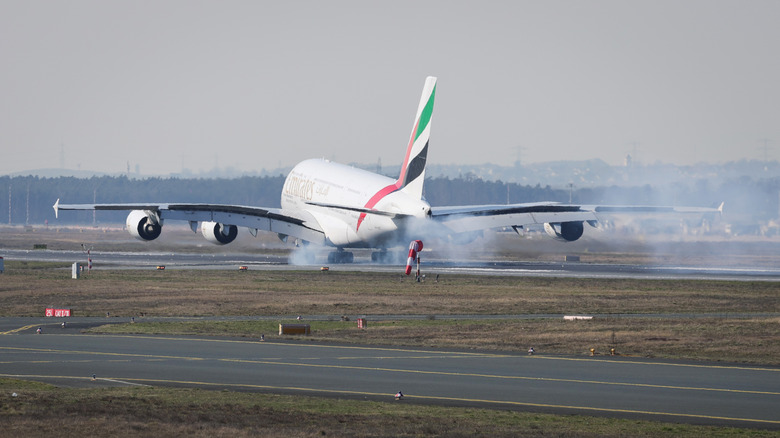
Although some hubs are starting to resume flights, disruptions are expected to continue during what is an extremely unprecedented shutdown of airports and airspaces in the Middle East. Even when these airspaces and airports reopen, airlines will need time to properly resume flights with many planes and crews grounded. "It's the sheer volume of people and the complexity," explained John Strickland, a UK-based aviation analyst, to Reuters. "It is not only customers, it is the crews and aircraft all over the place." This includes major carriers like Air France, Air India, and KLM Royal Dutch Airlines, which have suspended flights to and from the region.
The U.S. State Department is advising American travelers to reconsider travel to the UAE and Qatar due to the ongoing threat of armed conflict and terrorism. Those travelers currently stuck in the UAE are being advised to have emergency evacuation plans in place and to join the Smart Traveler Enrollment Program (STEP), but to also not rely on U.S. government help. Anyone stuck in Qatar is being advised to shelter in place, use commercial transport (if possible) to leave, or have emergency departure plans. Travelers should also stay as informed as possible, which was Samantha Brown's secret for checking airport delays amid the government shutdown, but also applies to the current situation.
The U.S. is also urging its citizens to reconsider traveling to many other regions in the Middle East while the conflict is ongoing. The U.S. State Department is urging Americans to leave Lebanon, Kuwait, Bahrain, Iraq, and Oman while flights are still available. Travelers in Saudi Arabia, meanwhile, are being urged to shelter in place by the U.S. Embassy. Despite this, it's expected that some tourists will still willingly travel to these high-risk destinations due to "dark tourism" trends.