
Why There's Simply No Need To Rent A Car In Italy

With old-school road trips trending among U.S.-based vacationers, car rentals are a hot commodity when planning a holiday. A travel survey by Enterprise Mobility showed that 23% of U.S. travelers planned to rent cars for their next getaway. With wide roads and the vast landscapes of Americana to discover, the freedom, convenience, and comfort of making detours and pit stops along the roads makes U.S. road trips a class of their own. Europe is another story. And if you're Italy-bound, here's a top-tier hack you need to know: car-free is the way to go.
From ancient monument-studded city centers like Rome to the labyrinthine canals and bridges of Venice (which famously doesn't allow cars), renting a vehicle ends up more of a hassle than a convenience. Take it from the experts: Italian tour guide Untold Italy and seasoned traveler Rick Steves suggest skipping the wheels when visiting major Italian cities like Rome, Florence, Naples, Milan, or Palermo in favor of Italy's robust and reliable Italian public transportation system.
The country's network of high-speed and regional trains, buses, trams, and shared bike systems easily connect travelers and locals from points A to B. Italy fiercely protects its historic infrastructure with strict regulations that discourage the use of cars in urban centers. Suffice to say, the last thing 2,000-year-old roads and city centers need are cars. And let's not forget just how delightfully walkable Italy is. Eight Italian cities made it to GuruWalk's list of 100 best walking cities in 2025, including popular tourist destinations Rome, Florence, Milan, and Bologna.
The hassles of driving in Italy's tourist destinations
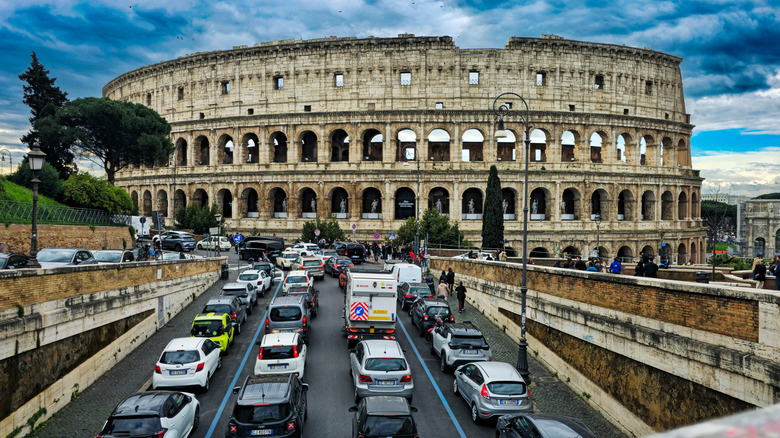
Popular tourist spots like Rome or Florence have ZTL zones (Zona a Traffico Limitato), a restricted traffic zone that can be accessed with special permits (think residents or public transport). With an untrained eye and language barriers, tourists with car rentals can easily miss the signs announcing these restricted zones. Since automated cameras capture unauthorized license plates wandering into ZTL zones could result in a dreaded ticket courtesy of your car rental company — that's an $80 to $300 dent in your wallet you're better off without.
For Americans used to the roomy, grid-pattern system of American streets, Italian roads can be quite a culture shock. The U.S. Department of State warns potential drivers of Italy's narrow streets, lack of guardrails on rural roads, and changing speed limits. Paid parking is expensive, cramped, and hard to come by. Certain districts in Milan charge an eye-watering $9 per hour for parking. For the uninitiated, Italy's confusing one-way streets and roundabouts take some getting used to, especially when local drivers take the liberty of helping themselves to the maximum speed limit. Throw in a jumble of motorbikes, bikes, and pedestrians, and you can expect a white-knuckle driving experience — added stress that doesn't exactly jibe with la dolce vita.
So unless you're exploring off-grid spots in the Italian countryside, best leave your driver's license at home. "In general, a car in Europe is unnecessary. In Italy, it is a liability," shared one Redditor, who deemed Rome, Venice, and Florence "totally walkable." Even without a car, you can explore Europe by train. For example, an easy but worthwhile jaunt from Italy would be into neighboring Switzerland for Europe's most scenic train rides.