
Travelers Beware: These US States Are Raising Toll Prices In 2026
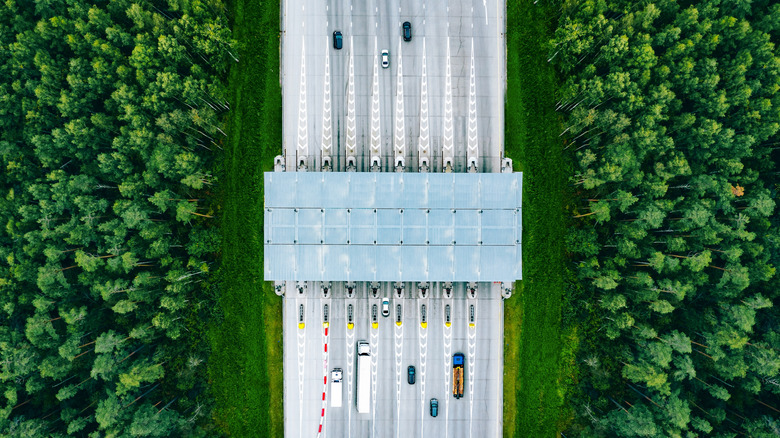
We live in a world where it feels like things are getting more expensive by the day, and almost every moment of daily life seems to be caught in inflation and the affordability squeeze. Rent, mortgages, groceries, eating out, utilities, gasoline, new cars, public transport, and toll booths have all witnessed significant price hikes in recent years. Toll costs are among the most egregious. As The Economist noted at the end of last year, in the past politicians had to be sneaky to introduce tolls, like calling part of a highway a "bridge" to justify charging drivers a fee. But now quietly increasing toll prices is popular among policymakers on both sides of the aisle.
At least eight states have confirmed toll price hikes in 2026: Pennsylvania, Colorado, Virginia, Ohio, California, Texas, New Jersey, and New York. New toll roads or express lane extensions are also being introduced in Virginia, which already has the most expensive toll roads in the country, as well as in Texas, Kansas, and Washington. The exact price increase varies from state to state and highway to highway, but it's unwelcome news for drivers already facing the toll road ultimatum: Find an alternative, more circuitous route, or fork out for the extra costs.
America has a reputation for well-trodden toll-filled routes, like this one connecting Chicago and New York, which can hit drivers for hundreds of dollars per journey. The New York metro area and the Delaware River crossing, both laden with tolls, are seeing some of the most significant price increases in 2026 and the years ahead. Drivers in other parts of the country are witnessing mostly smaller hikes, but ones that could still be impactful for those who rely on toll roads for their daily commute.
Where are the toll price hikes being introduced?
On the Pennsylvania Turnpike, a once-abandoned railroad that's now a highway crossing the entire state, a 4 percent toll increase has been introduced, effective January 4th. More worryingly, drivers crossing from Pennsylvania into New Jersey (or vice versa) across the Delaware River face price increases of between 33 and 87 percent, depending on whether they're holders of an E-Z Pass, an electronic toll collection tag.
E-Z Pass holders in New York and New Jersey will also see their off-peak discounts on tunnels and bridges governed by Port Authority whittled down by $0.50 each year until 2030, at which point they'll be phased out entirely. The same drivers will experience increases on the Gov. Mario M. Cuomo Bridge to the tune of $0.50 each year until 2027 — a bridge that already costs drivers nearly $8 per crossing — and a smaller 3 percent increase on the New Jersey Turnpike. Additionally, New York's Metropolitan Transportation Authority (MTA) recently approved a 7.5 percent increase at all of its toll facilities.
Drivers in Virginia have seen toll hikes of between 3 and 6 percent in the Downtown and Midtown tunnels this year. The Bay Area Toll Authority recently increased toll fees at seven state-owned bridges in California, which will jump by a further $0.50 per year until 2030. Colorado authorities are proposing a 3 percent increase on all express lanes, except those on the I-70 Mountain, to combat inflation. While drivers on the Ohio Turnpike (2.7 percent) and Texas's Fort Bend and Harris county toll roads (both 2 percent) will also experience small, but not inconsequential, price hikes.