
The 5 Hardest-Working Cities To Visit In The US, Per A 2026 Study
Hard work: It's one of the pillars of American life. We embrace long hours, problem-solving, and dogged perseverance. Puritan settlers were obsessed with their work ethic, and America has long claimed pride in its status as a meritocracy. Working hard doesn't always lead to social mobility, and it's always better when we enjoy what we do, but if there's one thing most Americans respect, it's workplace discipline. We love to see images of earnest farmers stacking hay bales, laborers driving rivets into steel beams, and goggled factory workers near geysers of sparks. And it can make for a great visit.
You may wonder, then, where people work "hardest" in the U.S. The finance company WalletHub researched the "Hardest-Working Cities in America" and published findings on their website in 2026. The study examined average workweek hours, employment rates, average commute time, and the share of workers with multiple jobs, among other factors. The WalletHub study then listed 116 cities in rank order, from the hardest-working to least-hardest.
You may wonder why anyone would want to visit a place full of workaholics. For many, travel means vacation, which means the opposite of work. Yet millions of people travel for work, and others are drawn to communities on the move, where locals put particular value in discipline and a competitive spirit. Working hard often means that there's work to be done — local industries and a thriving economy — which can be worth witnessing, whether you yourself are on the clock or not. In short, WalletHub identified these as the hardest-working cities, along with some strong motivations for visiting there.
Cheyenne, Wyoming
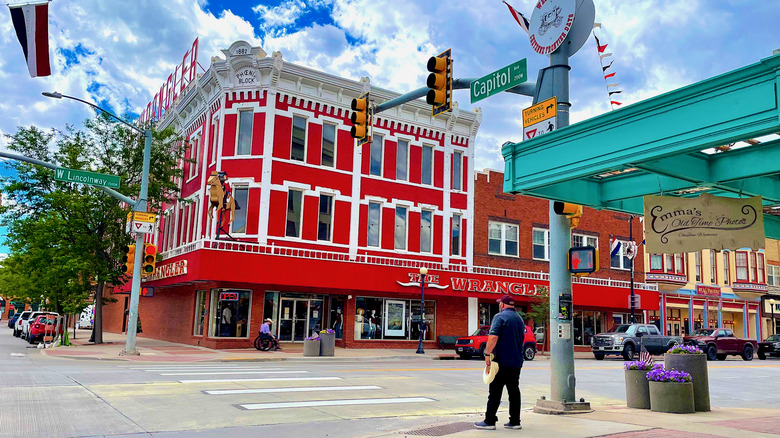
The capital of Wyoming really embraces its cowboy origin story in countless ways: Here you'll find quality steakhouses, Country music concerts, and Frontier Days, an annual celebration held in July since 1897. The town was founded right after the Civil War, and its nickname is The Magic City of the Plains, owing to the frantic growth of its population. The people who came here were tough and enterprising, and they weren't afraid to get their hands dirty. Today, Cheyenne is the largest city in the Equality State, and the region is still famous for its agricultural economy. You can view Western herd animals up close at the Terry Bison Ranch or shop for "ranch wear" at The Wrangler, a 13,000-square-foot clothier that has outfitted customers in the same beautiful brick building since 1943. All around Cheyenne, mining and manufacturing are also major industries.
Small wonder Cheyenne was named the number-one hardest working city in the United States. Jobs on farms and factories can be demanding, as Cheyenne demonstrates; according to WalletHub, workers in Cheyenne have the longest workweek in the U.S., with an average of 40.7 hours. A significant percentage of the workforce also has a second job, although it's hard to say whether this is from opportunity, necessity, or both. The report adds this: "[Cheyenne residents] have a much lower amount of leisure time compared to people in most cities, the third-least in the nation." Wyomingites can still make the most of their limited free time, though: The world's largest outdoor rodeo is a legendary Cheyenne attraction.
Anchorage, Alaska
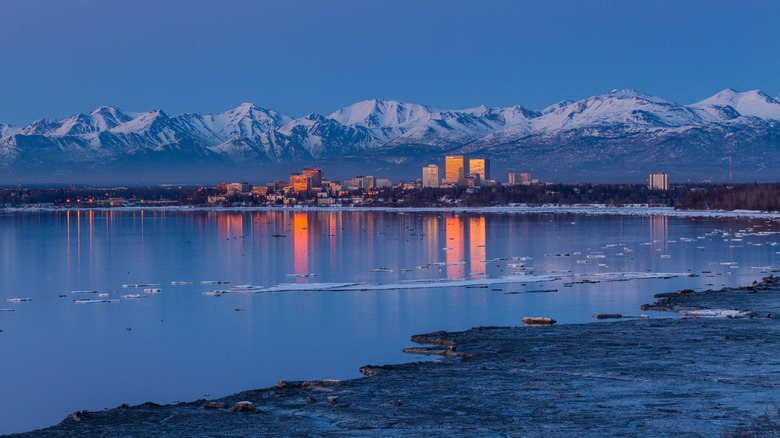
Alaska is huge and spectacular, and there's a lot to see in its largest city, including the multimedia Alaska Native Heritage Center, the art-infused Alaska Botanical Garden, and an impressive fine dining scene, but no one ever said living there was easy. The state's largest city has a population of nearly 300,000, and the biggest local industries are oil and gas, construction, and healthcare. Jobs in these sectors tend to be physical, demanding, and precise, and it's no wonder that many residents in Anchorage work more than 40 hours per work. WalletHub also reports that 96 percent of locals are employed, and 6 percent of them moonlight at second jobs.
This makes sense, as Alaska imports many of its everyday products and is considered one of the most expensive states in the U.S. to live in. Half the year can also be daunting, as studies have found Anchorage to be the most depressing U.S. city during winter. Yet there are many advantages to living in Alaska's "big city," and travelers benefit from a high volume of hotels, services, and medical care that are hard to find elsewhere in the state. The smaller population and need for labor can also be a boon for job-seekers. As S.J. Klein put it in a 2024 op-ed for the Anchorage Daily News: "If you can show up for work on time, ready for work, and have some basic skills, you can write your own ticket in this town. It's a great time to be on the job market in Alaska."
Washington, D.C.
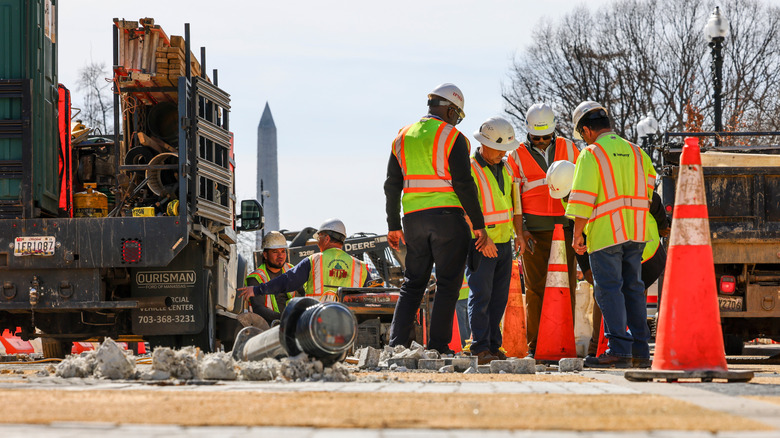
Washington, D.C. is one of the most visitable cities in the United States, thanks to the Smithsonian Institute's 21 (free) museums, the easy-to-use MetroRail system, and the hundreds of famous landmarks — from the White House to the Vietnam Veterans Memorial — that cluster around the National Mall. Yet when insiders talk about "Beltway Culture," they don't mean carefree nightlife and historical encounters; the nation's capital is a magnet for ambitious professionals striving to make a name for themselves in politics, business, or journalism. This is the land of frantic Senate pages, relentless lobbying, and government offices that essentially never close, especially in times of crisis. Not everyone in D.C. is a high-powered lawyer or member of the military, but the city's services are designed around their round-the-clock work schedules.
WalletHub asserts that D.C. workers are accustomed to commutes of 30 minutes or longer, and 64 percent of the local workforce ends the year with unused vacation days. Tourists may not experience any of this intensity during their visits, as D.C. seems to keep pretty reasonable hours. Most Smithsonian museums are open from 10 a.m. to 5:30 p.m., and the Metro subway system stops running at midnight on most nights (or 2 a.m. on Friday and Saturday). Much of the conversation you'll hear in local bars and restaurants revolves around politics and government work; night owls will appreciate a last call of 2 a.m. on weeknights and 3 a.m. on weekends. All those suits have to blow off steam somehow.
Sioux Falls, SD
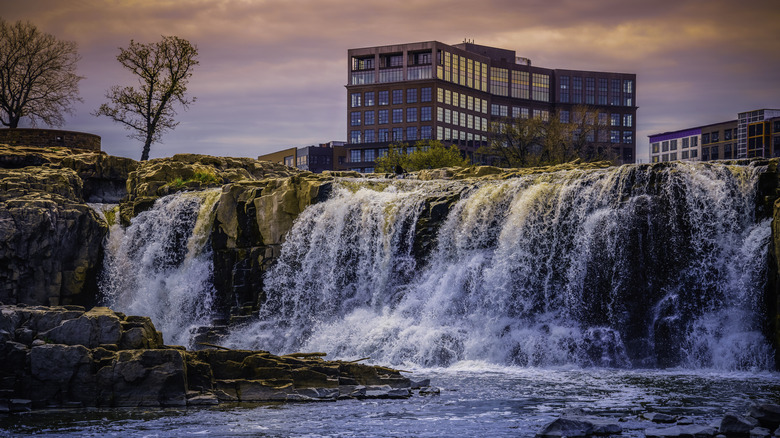
Sioux Falls is named after its dramatic series of waterfalls, where the Big Sioux River pours over cliffs into rock-framed pools. Falls Park is magnificent to behold, and it blends tastefully with the bridges and high rises nearby. Like the 7,400 gallons of water that flow through here every second, Sioux Falls is always on the go, thanks to its robust medical centers and dynamic retail and financial sectors. Many cross-country travelers will overlook this community of 225,000 residents as they beeline to major tourist hubs like Wall Drug and Badlands National Park. Yet South Dakota's largest city has the ever-changing public art of SculptureWalk, the illuminating exhibits of the South Dakota African American History Museum, and the vintage Orpheum Theatre in its historic downtown.
Folks here do put in the effort: WalletHub ranked Sioux Falls the fourth-hardest-working city in the U.S., although author Adam McCann didn't go into detail as to why. Like the other places on the WalletHub list, the results probably stem from long work weeks, a noticeable tendency toward second jobs, and limited or skipped vacation time. Interestingly, South Dakota is considered one of the "least stressed" states in the U.S., according to another WalletHub study also written by McCann. Folks in South Dakota are among the least worried about money, and they are the least concerned about family-related stresses of any state in America.
Irving, TX
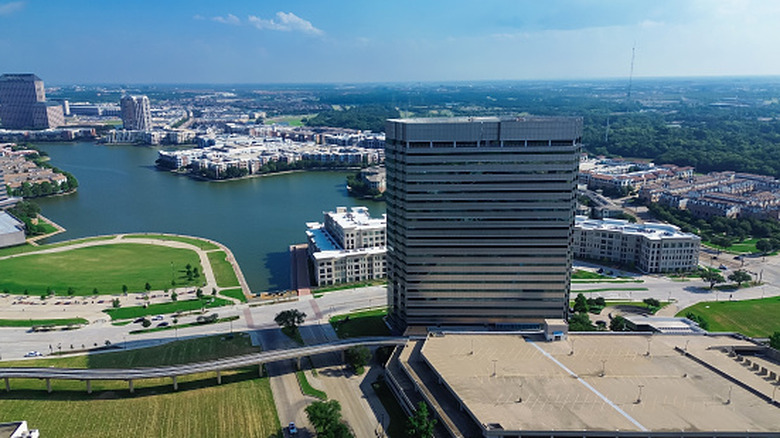
Irving is wedged between Dallas and Arlington, and less than 10 miles from Dallas-Fort Worth International Airport. With more than 250,000 residents, Irving looks on a map like your standard bedroom community. Yet the lifestyle website Niche describes the city as an "urban suburban mix," with high ratings for diversity, nightlife, and family living. The area boasts a wide range of restaurants, lots of hotels — with expedient airport access — and an active arts and culture scene. The neighborhood of Las Colinas is renowned for its walkability and Gondola Adventures, qualities that have earned it the moniker "most romantic city in Texas." The Fossil Rim Wildlife Center is like a safari driving experience through terrain similar to sub-Saharan Africa.
WalletHub named Irving the fifth most-hard-working city in the U.S. The article didn't elaborate on Irving's ranking, but we can assume it's based on the total percentage of employed adults, average hours worked per week, and the fraction of the population with second or third jobs. Many may hear "Dallas suburb" and think of oil wells, but there's really a lot going on here. The Irving Chamber of Commerce lists technology, healthcare, aerospace, and manufacturing as some of the top industries in the municipality.
Methodology

"Hard work" can seem like a murky concept. Who really works hardest: a steel worker, a heart surgeon, or a mental health technician in a psychiatric ward? How do you quantify engagement, workplace dysfunction, or the relative pleasantness of a given task? And is "hard" work a meaningful virtue, compared with efficiency, satisfaction, and effective results? As workplaces evolve, the very idea of working harder — versus, say, "working smarter" — is facing constant evaluation.
But WalletHub used some clever parameters for its study, and they're worth understanding. The author of the resulting blog post, Adam McCann, describes the methods this way: "WalletHub analyzed the 116 largest cities using 11 key metrics. Our dataset includes factors ranging from the employment rate to average weekly work hours to the share of workers with multiple jobs." These were then tallied against a 100-point system. At the very top, Cheyenne scored 79.39 points, while Irving scored 74.37 points. For comparison's sake, Burlington, Vermont appeared at the very bottom, at 116th place, with a score of 31.72. We also backed up the data by looking at both the city's official websites as well as lifestyle website articles (think Niche.com) to paint a full picture of industriousness.
What's heartening about this list is that every place mentioned is a compelling place to visit, with history, attractions, and community events. If the phrase "hard work" conjures images of smog-choked mill towns or soulless office parks, none of these places fit that stereotype. The folks here may not take as much time off, but when they do, they have plenty of options — and so will visitors.