
Just Touching Your Phone At A Red Light Can Get You A Ticket In These Strict US States
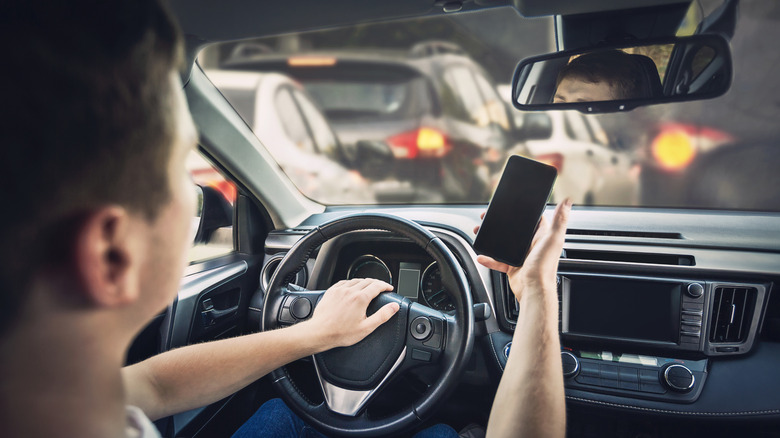
We've all seen them on the road — those darn distracted drivers. They're texting, they're scrolling — they may even be streaming a show while in traffic. Distracted driving has gotten so dangerous (and ludicrous) that the majority of states now ban even touching cellphones while driving, unless they're secured on a mounted holder. So, before you embark on your stunning, storied U.S. road trip this summer, you should bone up on state driving laws.
According to the Governors Highway Safety Association (GHSA), 33 states (plus DC and several territories) currently ban handheld cellphone use while driving with what are sometimes called "no touch laws." That means that if you're driving, including at a red light or a stop sign, you can't touch your cellphone unless it's mounted to your dash or windshield. Some states also prohibit a single swipe or tap. The goal is to keep your hands firmly on the steering wheel and your focus on the road — ya know, the basics of driving — to prevent crashes.
In 2023, distracted driving caused a whopping 3,275 deaths and more than 320,000 injuries, per the National Highway Traffic Safety Administration. What is distracted driving? It's something we've all done while we're at the wheel, such as eating, drinking, tuning the radio, and grooming. But today's biggest culprits are texting and talking on handheld devices. Another NHTSA research note found that on a typical day, more than 460,000 drivers are visibly fiddling with their cellphones. What's also troubling is that distracted drivers are more likely to engage in reckless behaviors, such as speeding or frequent lane changes, per the National Center for Biotechnology Information.
Police officers will pull you over for violating hand-held device laws
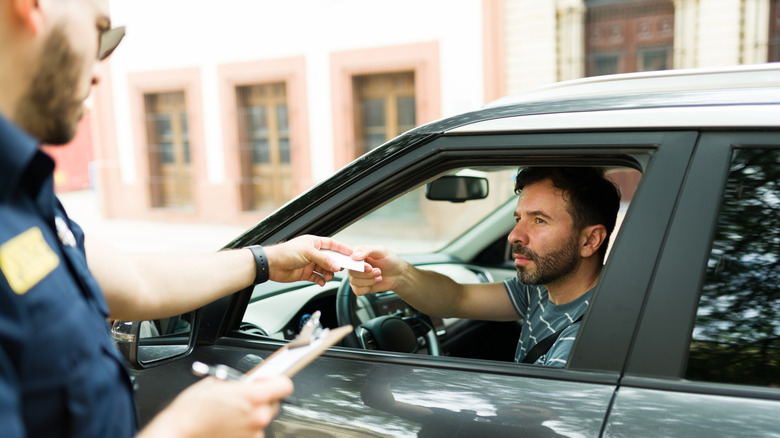
States such as Arizona, California, Hawaii, Illinois, Massachusetts, Maine, Michigan, New York, and Oregon, as well as Washington D.C., have enacted bans on handheld cellphone use while driving. In most of these states, you can be pulled over for the offense even if you're not doing anything else wrong. Some have even more stringent rules for those aged under 18. Texting bans are in place everywhere except Montana.
In most of these states, officers can pull you over for the offense, but enforcement is uneven. Some posters on a Reddit for California ticket advice complain that they received tickets for simply plugging their phone into a charger or holding a phone that was not on. Massachusetts drivers on Reddit, meanwhile, have said they've been pulled over, but usually issued a warning. Fines vary by state. In Wisconsin, fines range from $20 to $400, while the first offense will cost you $250 in Maine or as much as $1,000 in Oregon, per Insured Better. Fines are higher for repeat offenders, and some states may tack on points for moving violations. Too many of these, and your license may be suspended.
So far, the rules seem to have had a positive impact. In the first three months following the laws' enactment, distracted driving fell by 6.6% in Ohio, Alabama, Michigan, and Missouri, per a report issued by the GHSA and Cambridge Mobile Telematics. It may surprise some that such a widespread problem can be mitigated. The report likens the effect to the introduction of state seatbelt laws. Designed to spur motorists to buckle up, the percentage of seat belt users has increased in the last 30 years from 58% to 91% today.
Tips to reduce distracted driving
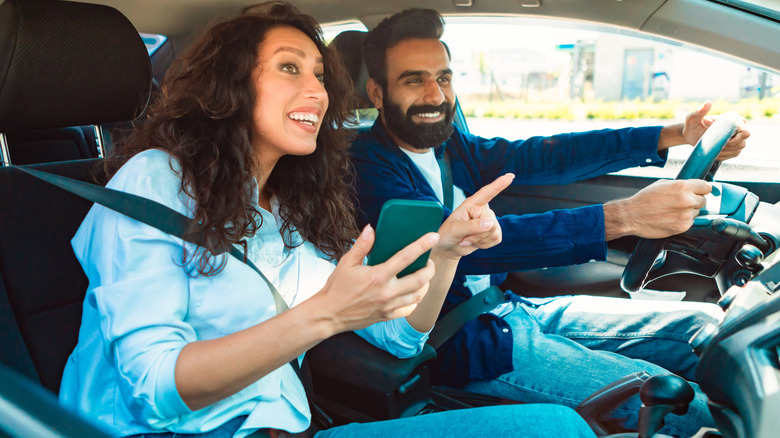
For even the most addicted motorists, there are ways to reduce distractions and stay safe while exploring those open highways. Set up your GPS instructions in advance, whether your phone is on a mounted display or if you're using Apple's CarPlay. Be sure your Apple phone has the latest iOS 26 update before your next road trip, because it includes new navigation features. Another suggestion is to turn off those notifications by silencing your phone or by using Driving Focus mode, and thereby removing any temptations to reach for it. Many drivers even keep their phone in a purse or backpack in the back seat.
Also, you can always put your co-pilot to work if you're traveling with friends or family. Have that person help you with directions. Your passenger can be the DJ, overseeing the tunes of your vacation or prepping a road trip playlist (which should include these one-hit wonders from the 90s). If you have to use your phone, pull over to the side of the road. Whether your state has hands-free laws or not, implementing these tips can help minimize driving risks. There are other bad habits that can also put a dent in your plans, so after you've packed up the car and stocked up on snacks, be sure to steer clear of these reckless mistakes when hitting the road.