
Here's What Happens To Leftover Airplane Food
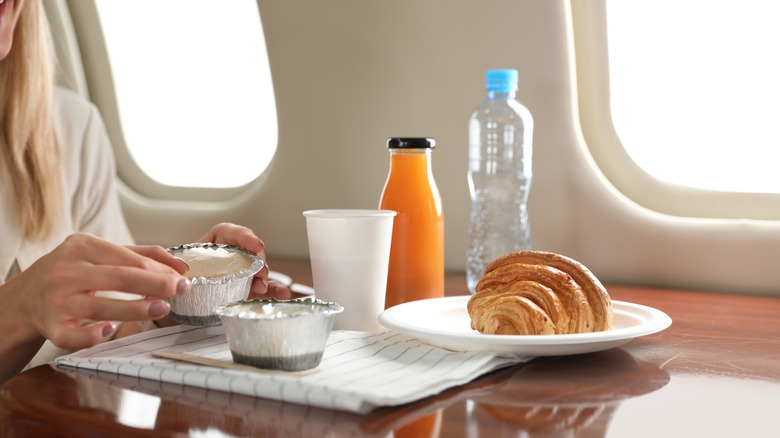
If you've flown recently, and you were lucky enough to get a meal on your flight (or unlucky enough to have to purchase one), you may have wondered about airplane food. Far beyond the ubiquitous jokes about the quality, or grumbles about how you have to pay for meals on domestic flights if you're in coach, there is far more to it. Perhaps you've wondered about the companies that make the food you eat at 30,000 feet. Maybe you've heard stories about why food tastes different on planes and mused about the science of it all. However, one thing that you may not have considered is what happens to leftover airplane food after the passengers have disembarked and headed out to their final destinations.
According to Simple Flying, the bulk of opened in-flight food is sent to landfills, which is sad if you care about the environment and wasted nutrition at all. (At least some of it may end up composted, and unopened items like sugar packets and chips may be reused.) Unfortunately, you cannot reuse or donate food once it's opened, as it can spread food-borne illnesses. However, there is more to the story than this, and there are ways that some airlines are trying to reduce waste from in-flight meals.
How airlines handle in-flight food waste and how things are changing
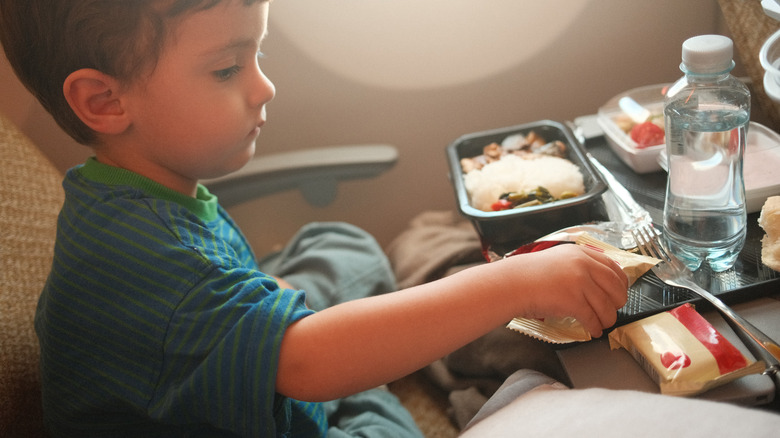
According to the International Air Transport Association (IATA)'s Cabin Waste Handbook, over 20% of the 5.7 million tons of cabin waste that was produced in 2017 was from catering. Additionally, many countries have regulations about food waste on planes, and airlines have to adhere to them — which often means tossing leftovers in the trash for safety. However, steps are being taken to change how this all works.
First, some airlines, like Delta and Japan Airlines, have experimented with programs that allow you to skip meals in advance if you don't plan on eating. That way, each flight can pack less food. Others, like Qatar Airways and American Airlines (in business and first class) and United Airlines (all passengers, limited to certain flights) are beginning to allow people to order their meal of choice online before the flight.
Additionally, Swiss International Air Lines started working with mobile app Too Good to Go in 2021 to sell unsold fresh food for a discount. Other companies are looking to predict food trends and track items that aren't selling well or being eaten. It's at least a step in the right direction, as is a reduction in food packaging, including single-use plastics. Finally, if all of this talk about plane food piqued your interest, find out what flight attendants actually eat on a long flight.