
Illinois' Lakeside State Park Is A Scenic Fishing Getaway
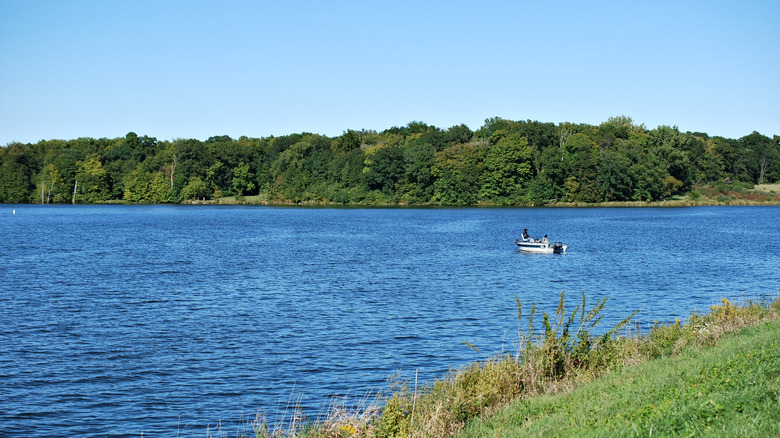
Tucked into the quiet farmland of northern Illinois, Shabbona Lake State Park feels like a secret retreat. The 318-acre lake is surrounded by more than 1,200 acres of woodlands, wetlands, and restored native prairie, offering standout fishing and opportunities for boating, hiking, camping, winter sports, and even hunting. Together, they make this rural gem an ideal weekend getaway from urban centers like Rockford, Illinois' "City of Gardens," just 50 miles north via Interstate 88, and Chicago, about 70 miles east.
Shabbona Lake State Park — officially Shabbona Lake State Recreation Area — is located in DeKalb County, roughly equidistant from DeKalb, a quaint college town and walkable gem with shops and restaurants, and historic Rochelle, a charming small town and train lover's paradise along the Lincoln Highway. Long before the park was established, this land was home to the Ottawa, Potawatomi, and Chippewa tribes. In the early 19th century, Potawatomi Chief Shab-eh-nay led efforts to maintain peaceful relations among tribes and with incoming settlers. In 1829, after he successfully warned settlers of potential attacks, a federal treaty granted Chief Shab-eh-nay and his band more than 1,200 acres of land. The U.S. government later seized it during the forced removal of Native Americans to the West.
Illinois began developing the park and created the lake in the 1960s and '70s, naming it Shabbona in honor of Chief Shab-eh-nay. In 2025, in a historic act of restitution, the state of Illinois returned the land to the Prairie Band Potawatomi Nation. Still in the transfer process as of this writing, today this lakeside getaway is free to visit for hiking, skiing, fishing, picnicking, snowmobiling, hunting, and wildflower viewing (don't miss the summertime sunflower fields), with campsites and boat rentals available and a seasonal dockside café overlooking the water.
Shabbona Lake offers year-round activities
The Shabbona Lake campground is a popular summertime destination for suburbanites and city dwellers seeking an overnight escape. The 150 campsites (90 reservable) each include an electrical hookup, a picnic table, and a fire ring, with shared facilities that include flush toilets and hot showers, as well as sand volleyball courts and horseshoe pits. Two six-person cabins are also available from May through October, and the on-site camp store is stocked with camping necessities such as firewood, medical supplies, and snacks.
Beyond the campground, hunting is another seasonal draw. Archery deer, special permit firearm deer, spring turkey, waterfowl, and dove hunting are permitted across over 700 acres of pine groves, sloughs, prairie, and dormant agricultural fields — be sure to check current regulations before visiting. In addition, three picnic shelters accommodate group gatherings and 8 miles of hiking trails wind through open fields and forested areas, transforming into cross-country skiing routes in winter. A dedicated 7-mile snowmobile trail opens seasonally, and the park's hills and slopes provide opportunities for sledding.
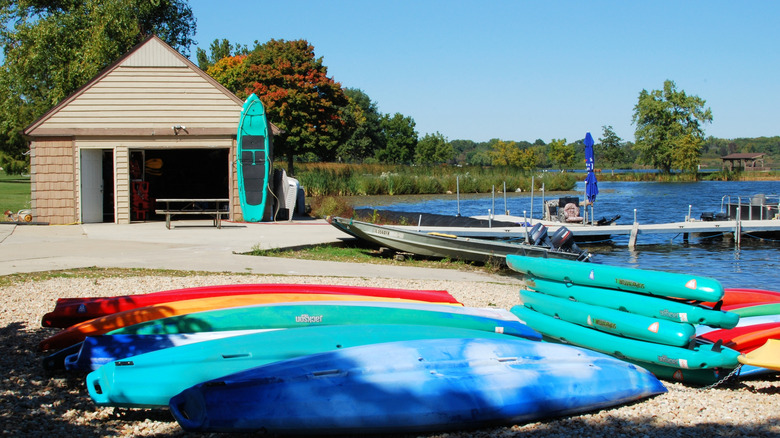
Arguably, the park's pièce de résistance is the artificial lake. While swimming and wading are prohibited, it is well stocked with large bass, smallmouth bass, bluegill, crappie, walleye, perch, and muskie. In fact, it's known as the "Muskie Capital of Illinois," thanks to record-size catches pulled from its depths. Visitors can fish from the pier or shoreline, or launch their own boats from the paved boat ramp. From April through October, pontoons, paddleboats, kayaks, and fishing boats are available to rent at Boondock Supply, which also sells bait and tackle. The entire lake is no-wake, making it ideal for a peaceful cruise, leisurely fishing, or even birdwatching. Cap the day with a burger and milkshake at Pokanoka's Dockside Café overlooking the lake, open during warm seasons.