
New Mexico's Once-Thriving Mining Town Now Sits Abandoned
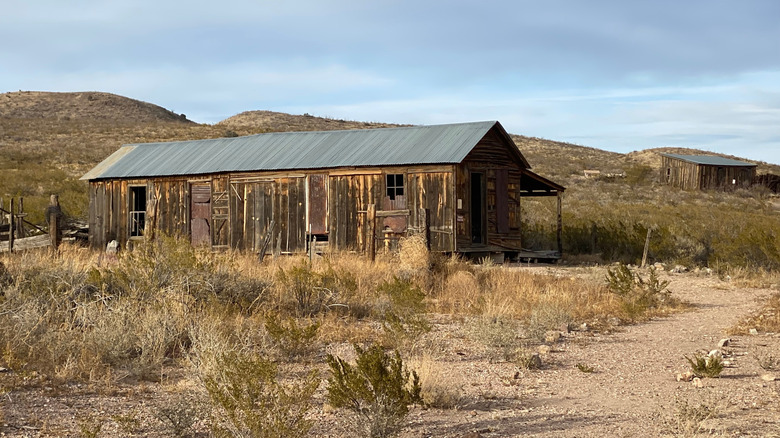
While you may think of ghost towns in relation to the American West, they actually exist all over the United States. Some stand on private property, and you're only allowed to see their crumbling buildings from a distance, like Colorado's once-thriving mountain town between Grand Junction and Denver. Others stand on public land, open to any hiker who happens to be passing through, like West Virginia's abandoned mining town hidden in New River Gorge National Park. Many are so ruined or isolated that they're not worth the hassle; there may be a good reason the residents decided to pick up and leave, and access roads may well have deteriorated.
However, the Lake Valley Historic Townsite in New Mexico has two qualities tourists want from a ghost town: You can visit for free, and the buildings are well-preserved. The site stands right off of Highway 27, a well-maintained motor route. Lake Valley is overseen by the Bureau of Land Management (BLM), which gives visitors a certain amount of freedom. The BLM permits self-guided tours, which means you can poke around the remains without velvet ropes or the watchful eye of museum guards. At the same time, a restroom and drinking water are available near the old schoolhouse — both life-saving amenities this deep into the desert. Lake Valley requires some planning and patience (and a full gas tank), but for history buffs, it's well worth the drive.
The rise and fall of Lake Valley (and what to do there)
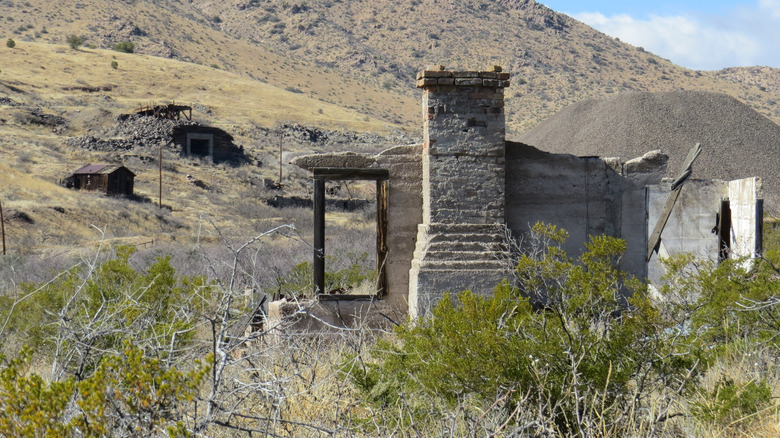
The story of Lake Valley is a classic Western tale, but instead of prospectors converging here in search of gold, they came for silver. The precious metal was discovered here in 1876, and workers flocked to this patch of ground at the foot of the Black Range. The site they dug was known as the Bridal Chamber, and over the next two decades, some 2.5 million troy ounces (equivalent to nearly 86 tons) of silver was extracted. The supply eventually ran out, and after the "Silver Panic" of 1893, the town began a slow decline. The closing of the local post office in 1954 signaled Lake Valley's final collapse.
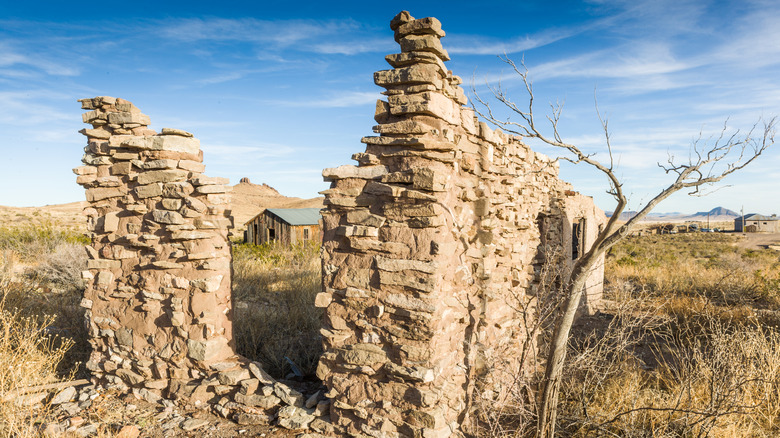
However, the town itself remains largely intact, thanks to dry conditions and an apparent lack of local vandalism. Many buildings still stand, albeit in various states of disrepair. You can step inside a local school, which looks like it could still function as an elementary classroom, since it has a blackboard and furniture. A local chapel also contains wooden pews and an upright piano. Many artifacts, including bottles, have been carefully maintained, along with potbellied stoves and the rusting hulks of vintage cars. Residents may have long abandoned the place, but the BLM has taken good care of the premises; parts feel more like a living museum than a ghost town.
That said, Lake Valley was once home to 4,000 people, and this barren basin was a busy boomtown full of saloons and blacksmith shops. It's hard to imagine the full vitality of this community at its height, now that only a handful of structures remain. The BLM has actually stabilized much of the surviving architecture to prevent it from simply falling over. Without these modest preservation efforts, it's possible the town would have reverted into rubble.
Getting to Lake Valley and where to stay
Lake Valley is a long way from any major city: You'll have to drive about three hours from Albuquerque or four hours from Tucson. There's no mass transit out this way, and summer drivers should make sure their air conditioning works. There are some well-known towns less than two hours away, though, including Silver City and Truth or Consequences. Additionally, the picturesque Elephant Butte reservoir is about 75 minutes away by car, and the eponymous Lake Valley Backcountry Byway has become an established tourist route. If you have a fondness for this kind of archaeological site, New Mexico has at least five once-thriving locales that are now abandoned ghost towns — and together, they make for a striking road trip.
There aren't many places to stay nearby, and you'll have to drive at least 35 minutes to the nearest hotel. However, adventurous road trippers may put that tent to good use. Dispersed camping is not allowed on the historic site, but you can stay at the Iron Creek Campground or Kingston Campground. Just know that these locations are still a decent drive away, at 60 minutes and 35 minutes, respectively. They're also primitive accommodations, and Kingston Campground only has space for two tents or RVs. Whether you camp or not, make sure to bring adequate supplies. Cell service can be very patchy this far out, and temperatures can be extreme year-round.