
Tucked Away In The Heart Of Detroit Is Michigan's Under-The-Radar State Park With Walkable Trails
The history of Detroit, Michigan is kind of like the transformation from caterpillar to butterfly: The city spent much of the 20th century as an automotive boomtown, churning out cars and earning the nickname "Motor City." Detroit's economic decline from 1960s onward led to a mass exodus, and more than half of its 2 million residents abandoned the troubled factory town. After decades of poverty and urban blight, a less-crowded Detroit has become a testing ground for urban gardens, landmark preservation, and adaptive reuse — using old architecture for new purposes.
A shining example is Milliken State Park, a walkable waterfront greenspace that lies less than 2 miles from the center of Detroit. Not only can you reasonably stroll here from, say, Grand Circus Park, but you can see all the skyscrapers of the Detroit skyline from Milliken's spacious lawns. What's more, the Milliken grounds are integrated into The Riverwalk, a vibrant Midwest gem with scenic views and family-friendly fun. Both systems should also become part of the larger Joe Louis Greenway, a planned 29-mile circuit around Detroit's metro area.
At the same time, many visitors may overlook this little park on their way to more famous locations, such as Comerica Park or "The Fist" Joe Louis monument. Milliken Park may be accessible, but some would say it's hidden in plain sight. You might catch a concert at the Aretha Franklin Amphitheatre and not even realize Milliken is right next door.
Milliken State Park's background and what to do there
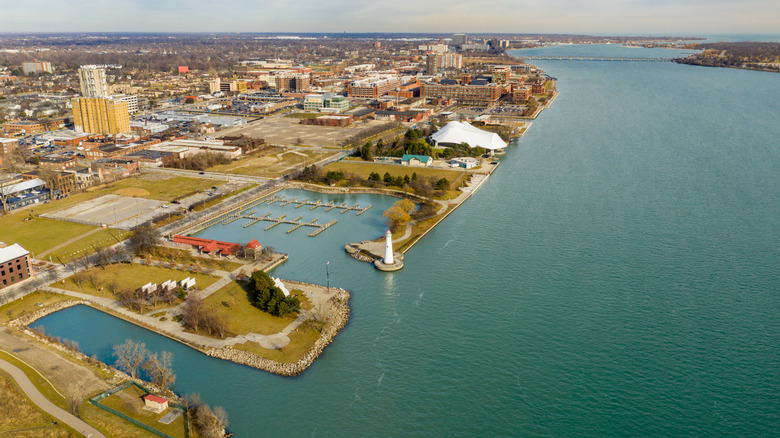
Like so much of the so-called Rust Belt, this parcel of land used to be a "brownfield," where old industrial structures were left behind and the soil was polluted. It's hard to imagine the city letting such prime waterfront go fallow, but forgotten properties like this have haunted Detroit for years. Luckily, the city started redeveloping these 31 acres in the early 2000s, transforming a toxic wasteland into a recreational lynchpin; it also has the distinction of being the first urban state park in Michigan. Opened as Tri-Centennial Park in 2004, the site was eventually renamed in honor of the late Governor William Milliken (1922-2019), who was well known for his environmental advocacy.
Visitors will find vast stretches of grass and trees, with multi-use paths running throughout. The area is popular with walkers, joggers, and cyclists, and in the warmer months, the Detroit River attracts all kinds of boaters. The concrete trails form a ring around Milliken Harbor, with its 52-slip marina. In the middle of the park stands Ze Mound, an artificial hill created from excavated dirt; the hill isn't very tall, but it definitely stands out in a flat city like Detroit.
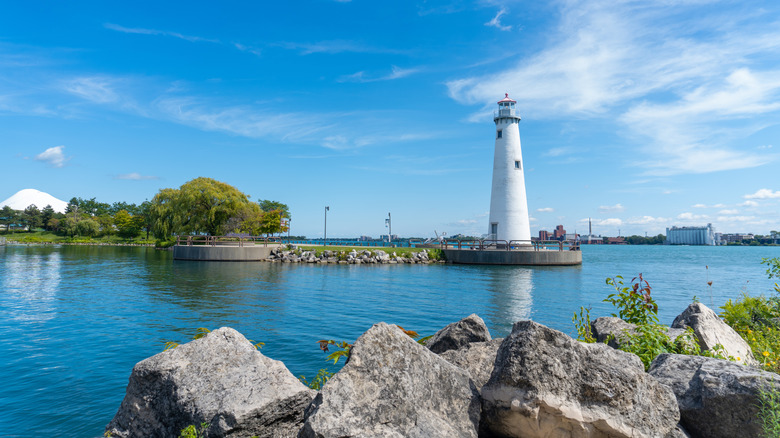
Milliken's centerpiece is its lighthouse, a 63-foot whitewashed tower that rises over a prim peninsula (pictured in above photos). This lighthouse would look perfectly at home on the Atlantic coast, and you might assume it's stood here since the 19th century, but it's actually quite new: The lighthouse was built in the early 2000s as part of the development of the new park. As this Midwest spot vies for the title of best new art city — thanks to its affordability — little touches like the lighthouse are showcasing Detroit's revitalizing spirit.
How to get to Milliken State Park and where to stay nearby
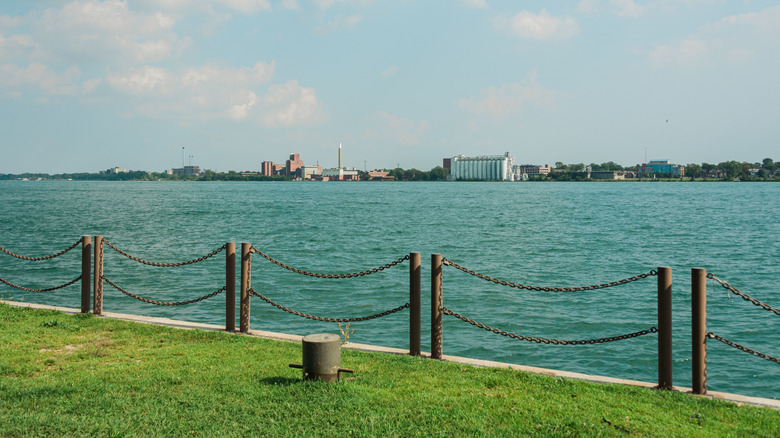
Detroit was basically designed for cars, so you can drive from downtown to Milliken State Park in less than 10 minutes along E. Jefferson Avenue. Yet a car isn't necessary, especially in the warmer months: A walk along the Riverwalk is blissful, and it's a great way to acquaint yourself with the city and its community; roughly the same route should take less than a half-hour each way. Perhaps the best way to get around modern Detroit is by bicycle. MoGo is an app-based bike-share system with stations all over the city. Downtown streets are level and easy to navigate, and Milliken State Park is a great place to pedal around.
The vast majority of Detroit's hotels are located downtown, inside the city's beltway. Staying around here can cost anywhere from $100 to $300 per night. There's a growing dining and nightlife scene, and the inner city is shaking off its reputation for blight and crime. All of these amenities are close to Milliken, along with the city's many other attractions. Our advice: Stay near Greektown, Detroit's most vibrant neighborhood and entertainment hub with great cuisine and historic streets. It's only a mile from the park.