
'The Texas Of Canada' Is A Scenic Prairie Province With Mountains And A Landscape Shaped By Oil
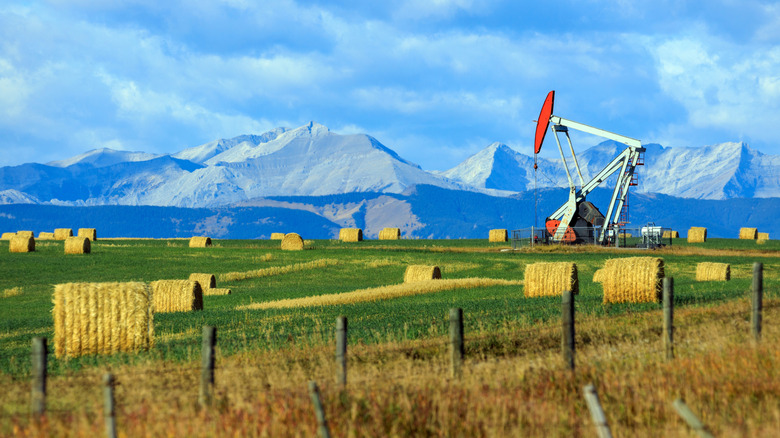
When one pictures the landscapes of Canada, Texas probably isn't the first comparison that comes to mind. But with its sprawling plains and cowboy culture, one province has been considered the "Texas of Canada" for decades: Alberta. While some make the association based on politics, it actually has more to do with Alberta's prairies and pastures, shaped by natural oil and gas resources, as well as its iconic cowboy culture, a result of the provinces' plentiful ranches.
In 1951, Time Magazine declared Alberta the "Texas of the North," due to a massive discovery of oil in 1947 that was quickly transforming the province from rural countryside to a Texas-style oil-rich area with high rises popping up in its cities. In fact, Alberta is Canada's largest producer of crude oil and natural gas, a title that Texas also holds in the United States. Alberta's massive stretch of oil sands is currently the fourth-largest oil reserve in the world, after Venezuela, Saudi Arabia, and Iran. In the mid-20th century, oil fields and towns emerged around Alberta's capital, Edmonton, while Calgary has retained that cowboy spirit with its world-famous rodeo and country music scene.
Read on to discover more similarities between Texas and Alberta and how to experience them on your next trip to Canada, from learning to lasso at dude ranches to exploring the Canadian Badlands.
Experiencing cowboy culture in Alberta
Due to its relationship with oil, Calgary has long been known as the "Houston of Canada," and is also the sister city of its Texan counterpart. But arguably, the real similarity between the two is their legendary rodeos. While the Houston Rodeo is the largest in the world, the Calgary Stampede is actually 20 years older, the largest in Canada, and touts itself as "the greatest outdoor show on earth." Every July for 10 days, Calgary transforms into a full-on cowboy city, as folks flock to its rodeo, evening shows, and Nashville North concert series.
For a different experience of Alberta's cowboy culture, head to one of its many ranches. Alberta's prairies and pastures have made it the lead producer of cattle in Canada (a title it shares with Texas), providing almost half of the country's beef supply. Bar U Ranch National Historic Site was the largest ranch in Canada and is known for its association with the Sundance Kid, who broke horses here in the 1800s. Now, visitors can learn to lasso or enjoy a cup of cowboy coffee around a campfire here. You can also stay at a ranch, like the Three Bars Guest Ranch, a decades-old western-style accommodation between Banff and Glacier National Park that has 4.8 stars on Tripadvisor and 5 stars on Google.
The Canadian Badlands offer both Texan-style landscapes and more cowboy culture in an area that runs east and south from Drumheller to the borders of Saskatchewan and the U.S. Visitors will love discovering the 70-million-year-old Horseshoe Canyon, which evokes Texas' Palo Duro Canyon with fossils and whimsical hoodoos.
Where to discover mountains and prairies in Alberta
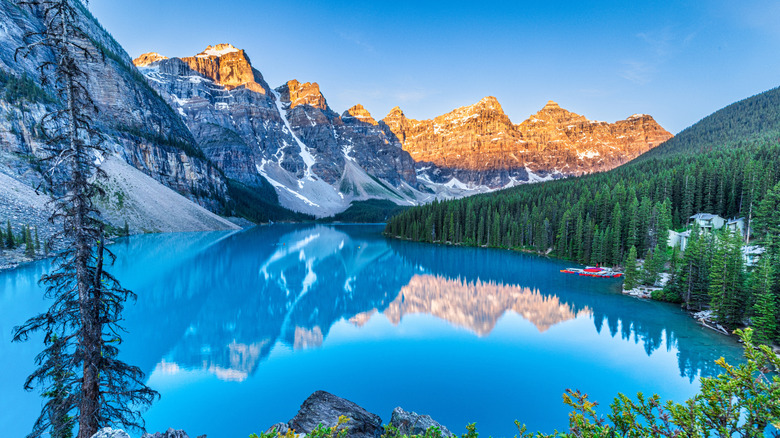
Alberta and Texas don't just share cowboy culture and oil boom histories. Despite differences in their landscapes, they do share some similarities when it comes to geography. While Texas may not be able to compete with Alberta when it comes to spectacular mountain scenery, places like Guadalupe Mountains National Park are home to the state's tallest peak. Bordering the southwestern part of the province, Alberta's Rockies are home to Banff, Canada's national park that's famous for majestic mountains and vibrant blue waters. It also happens to be Canada's oldest national park, as well as its most-visited.
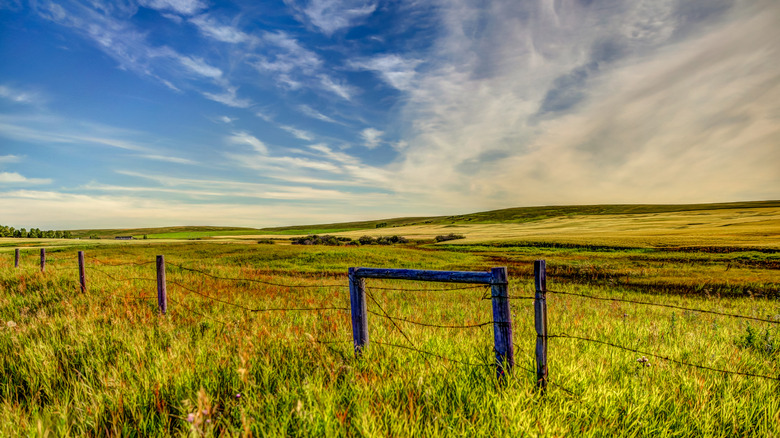
Additionally, both regions have vast prairies to explore. One of the best ways to experience Alberta's Texas-style landscape is to drive the "Cowboy Trail," a 435-mile scenic stretch of Highway 22 that runs from the foothills of the Rockies to the province's prairies. These thousands of acres of prairies in the central part of the province not only evoke the open expanses that are characteristic of Texas, but have also turned Alberta into Canada's second-largest wheat producer. Along the way, enjoy rodeos, ranch stays, and cowboy-style cooking on this trail that takes you into the heart of Canada's cowboy country.
Getting to Alberta is a breeze, as it has three international airports. Calgary International Airport and Edmonton International Airport are the main ones, while Fort McMurray International Airport has more limited service. If you'd prefer to drive from the U.S. instead, you can cross through five border points in Montana via Carway, Del Bonita, Sweet Grass, Aden, and Wild Horse.