
Major Downsides And Things To Look Out For When Buying A Vintage RV Or Camper
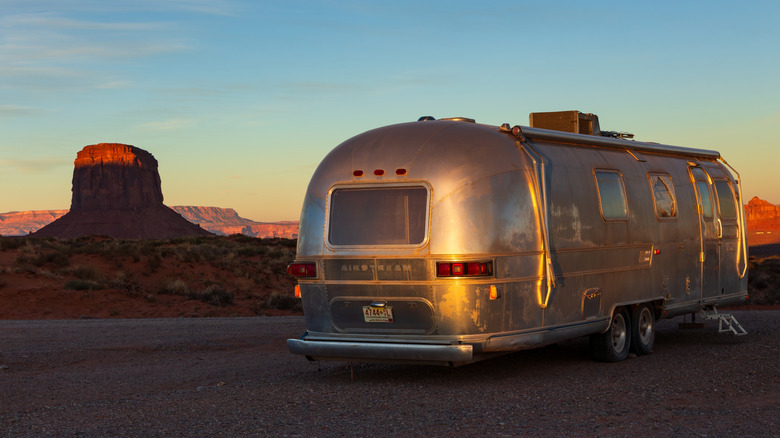
These days, road tripping, camping, and living in RVs have become all the rage. People are eager to immerse themselves in the country's natural beauty, whether for a temporary or a long-term lifestyle. Moreover, some are opting for vintage models rather than newer ones — and who can blame them? Many feature a sleek aesthetic (like the Airstream, just one of several RV campers that were big in the 1970s) that looks straight out of a glossy retro magazine. As Anthony Nalli, host and producer of "The RVers," explained to Islands, "Every time an RV enters a campground, all eyes are on it. So when your RV doesn't look like everyone else's (in a good way!), then you're likely going to get curious admirers coming to visit."
Nalli, whose series airs on the Discovery Channel and other platforms, chronicles the experiences of those who live and travel on the road. Speaking exclusively to Islands, he shared that the appeal of vintage RVs goes beyond their attention-grabbing exterior. "Vintage RVs can have unique floor plans and amenities no longer available in modern RVs due to cost or other manufacturing issues," he said.
Plus, as Nalli notes, buyers may be able to find them at a bargain. Vintage RVs and campers can be easy on the eyes — and possibly easy on the wallet as well. Still, Nalli has advice and potential downfalls to consider before you make that purchase and ride off into the sunset.
Beware of accumulating costs and water damage
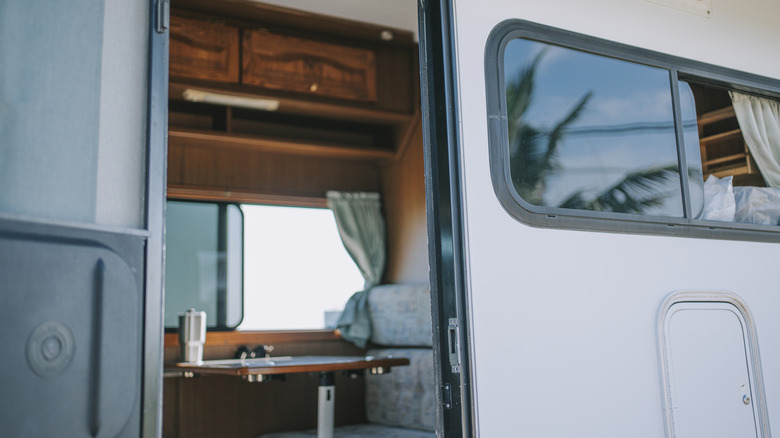
When shopping for a vintage RV or camper, it's easy to get carried away by the initial low price and its potential. After all, most people buy these models with the intent to upgrade them to their liking while maintaining — or even elevating — their retro flair. It can be a creative process, one that may span several months. However, Nalli warns that the costs of modernizing a vintage RV or camper can quickly accumulate. You might, for instance, need to add heating, outlets, or update lighting, among several other things. Something else to think about? Given that the RV or camper is vintage, replacing original components can be difficult.
Above all, Anthony Nalli says to remain vigilant when looking at vintage models you're interested in purchasing. He told Islands, "A years or decades old RV has been lived in many, many times, and very possibly by many, many people. Little details can give an indication of the level of overall upkeep, but probably the biggest thing to watch out for is water damage."
Water damage can lead to mold, though this might be the least of your problems."Water is like cancer to an RV and can rot away the main 'house structure," added Nalli. Unfortunately, water damage caused by faulty windows and other structural issues is not uncommon in vintage RVs and campers. Even so, this doesn't necessarily have to be the end of your vintage dreams.
Do your due diligence before purchasing a vintage RV or camper
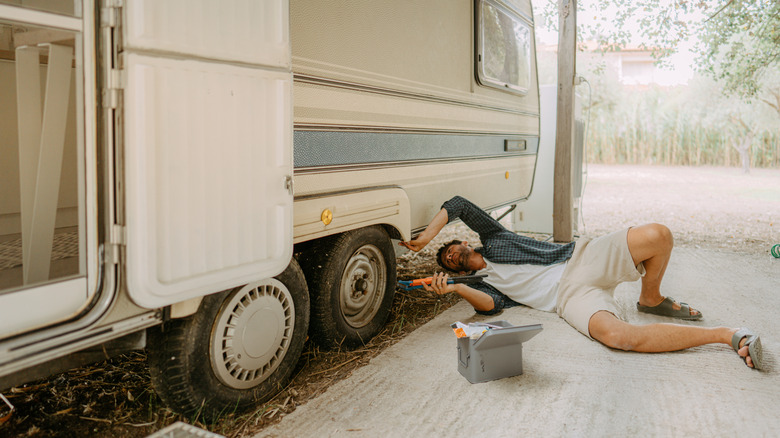
Musty smells, distorted walls, and damaged surfaces are all signs that a vintage RV or camper may have water damage. If you overlook these, Anthony Nalli says, "Water damage can often be fixed, but such repairs can almost be a reconstruction, which can get very costly." Be sure to carefully assess any vintage RV or camper you're considering. However, these are not the only things to look out for. "If purchasing a drivable RV (such as a class A, B, or C, as opposed to a trailer or fifth-wheel), don't ignore the chassis components, including the engine and transmission, even tires," he advises.
For reference, the chassis is the vehicle's frame. Nalli added, "Vintage RVs that are drivable are obviously built on a very old chassis, so look at those the same way you'd look at buying a vintage car or truck." For additional assistance, consider bringing an expert or experienced buyer with you — something Nalli recommends. If you don't know anyone who fits the bill, you could always find an RV inspector online. Although this can set you back a couple of hundred dollars or more, they may catch something you missed and ultimately save you money in the long run.
It goes without saying that buying a vintage RV or camper can require a significant investment. That said, you can cut costs by tackling easy and essential DIY upgrades. And if you're unsure whether this lifestyle is the right fit, there are always groovy retro-styled RVs (with modern amenities) that offer nostalgic camping vibes without the same risks.