
Hidden In Dry Tortugas National Park Is A Once-Thriving Florida Fort That's Now A Popular Snorkeling Destination
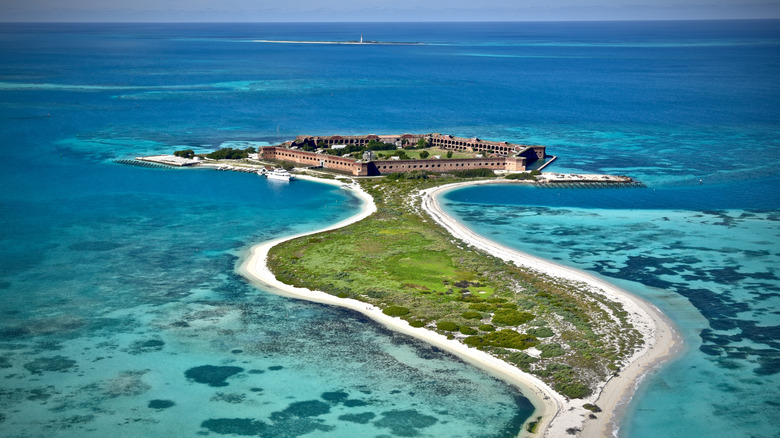
Florida is known for its old forts and diverse marine life, but to experience both in the same place is rare. Hidden offshore in Florida's tropical waters is Fort Jefferson — a remote military outpost sitting on a tiny island in one of America's least-visited national parks. Fort Jefferson might be a surprising location for some of the nation's best snorkeling, but it makes a great day out for nature lovers and history buffs looking to experience something a bit different.
The once-thriving fort is located on Garden Key, one of the seven small islands in Dry Tortugas National Park. You can stroll around this island stronghold, absorbing the military history and soaking up the far-reaching ocean views from the upper levels. The archipelago is also part of the world's third-largest coral reef system, where turtles and tropical fish glide through the shallow water, making it a popular spot for snorkeling right beneath the fortress walls. This unique combination of heritage and nature makes Fort Jefferson one of the most spectacular destinations in Florida.
Fort Jefferson lies 70 miles west of Florida's Key West. The isolated location means that a visit requires a bit of planning, with access only possible by boat or seaplane. For a day trip by boat, the Yankee Freedom Ferry runs between Key West and Fort Jefferson, with tickets including a tour of the fort and rental of snorkeling equipment. It takes around 2 hours and 15 minutes to get there. To see Fort Jefferson and the islands from the air, 40-minute narrated seaplane tours are a scenic way to reach Garden Key. The national park entrance fee is included in your ferry or seaplane ticket, unless you have a National Park Pass, in which case entry is free. You will still need to pay for your transport.
Exploring Florida's military heritage at Fort Jefferson
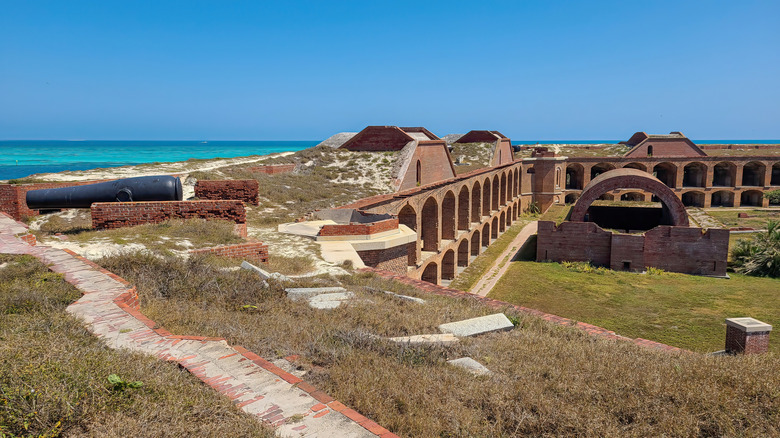
In the mid-19th century, Fort Jefferson was built on Garden Key in Florida's Dry Tortugas National Park to defend shipping channels around the entrance to the Gulf of Mexico (renamed the Gulf of America in 2025 by U.S. President Donald Trump). Sprawling across much of the tiny islet, this once-thriving hexagonal stronghold was home to almost 2,000 inhabitants in its 1860s heyday, and was known as the Western Hemisphere's largest masonry fort.
Despite being designed for military purposes, Fort Jefferson also served as a prison for Union deserters during the American Civil War, with inmates being used as labor to finish the construction. Building materials had to be shipped in from the mainland, including 16 million bricks, the weight of which caused parts of the fort to sink. To preserve what was already there, construction was eventually halted, and the fort was never fully completed. No longer serving its original purpose, the island became a bird reserve in 1908 and today is a popular visitor attraction for travelers looking to combine history with birdwatching and underwater exploration.
Begin your explorations with a stroll around the parade grounds, where you'll find the unfinished gunpowder house. Then head inside the fort and admire the photogenic brick archways separating the casemates, which were rooms used to store artillery equipment like cannons. You can see some of the original shells and cannonballs in the visitor center. For the best views, you can climb to the highest level of the fort using the spiral bastion staircases and soak up the island scenery and sweeping ocean panoramas. You'll come across some of the historic cannons on this level, still facing out to sea as they would have done in the 19th century. Before leaving the fort, it's also worth walking along the moat wall for close-up photos of the exterior.
Snorkeling at Fort Jefferson in Dry Tortugas National Park
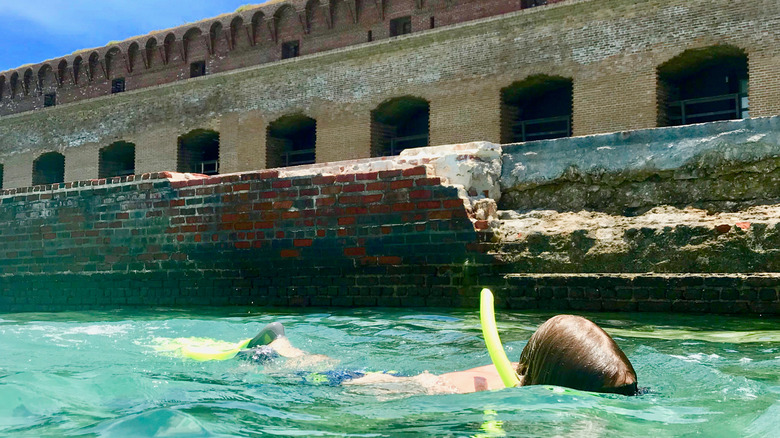
After exploring the fort, head down to the sand and dive into the inviting warm waters that surround the island. Fort Jefferson has one of the best beaches in Florida for snorkeling, thanks to its gently sloping shores and shallow water. Hidden beneath the turquoise waves is a vibrant marine ecosystem teeming with colorful fish, swaying seagrass, and a coral reef that stretches all the way to Miami. The best time of year for snorkeling at Fort Jefferson is from May to August, when the water is warm and calm in Dry Tortugas National Park.
There are several key snorkeling spots around Fort Jefferson, each offering unique opportunities for aquatic encounters. Just off the beach where the reef begins, brightly colored parrotfish and yellowtail snappers flit about the coral, while groupers lurk in shady crevices. As you snorkel over the reef, keep an eye out for starfish, anemones, and queen conches on the seabed too. Along the outer edge of the fort's moat wall, reef squid and hogfish are often spotted, while over by the old pier pilings, you might see larger fish like barracudas, tarpon, or even a shark. Dry Tortugas is also a thriving turtle nesting sanctuary, so you may meet the park's namesake as you snorkel beside the fort, especially if you visit between June and August. There are five species here: the loggerhead, leatherback, green, Kemp's ridley, and hawksbill turtles.
It's not just marine life that lies beneath the waves in Dry Tortugas National Park. In the 17th and 18th centuries, the waters around Fort Jefferson were the haunt of pirates, who preyed on Spanish treasure galleons, relieving many of them of their precious cargo. Rumor has it that some sunken treasure remains to be found, so keep your eyes peeled while you're snorkeling over the reef.