
What To Do If A Deer Approaches While You're Hiking
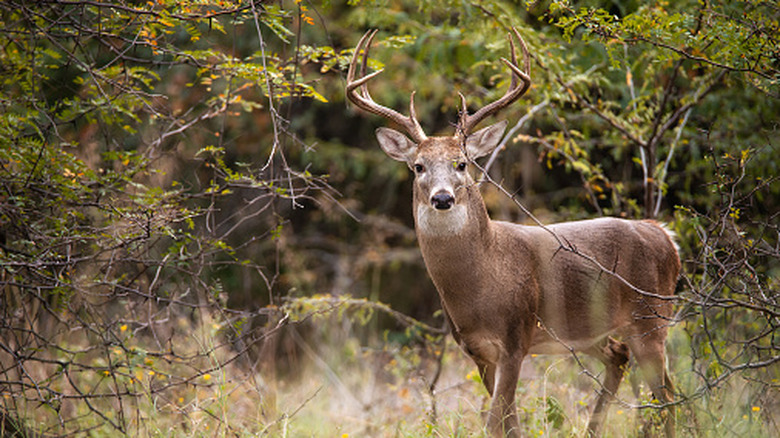
Hiking in the wilderness is a fun way to escape the cold concrete and hustle of human habitats. But, in the excitement of preparing for the next trek, some hikers forget that they aren't alone in the wild. Remember, when you venture into the woods or embark on a hiking expedition in one of the 63 National Parks in the U.S., you're stepping into wild animal territory. That means the responsibility to keep yourself, your environment, and the native wildlife safe is on you. Seasoned hikers are aware of the dangers posed by animal encounters, such as crossing paths with bears on a camping trip or accidentally stumbling into big cat territory. But the animal you're most likely to come across isn't a grizzly or wildcat. It's a deer.
Hostile deer encounters in the wild are pretty unusual, especially because deer are generally skittish and more likely to run away than attack. But the males (bucks) can get pretty aggressive during their fall mating season, and these deceptively harmless-looking animals can pack a punch. Not only can they gore you with their antlers, but deer also have the ability to stand on their hind legs and strike with their hooves. Females (does) are most likely to become aggressive in spring when they have young.
What to do if a deer approaches you, and how to avoid spooking them
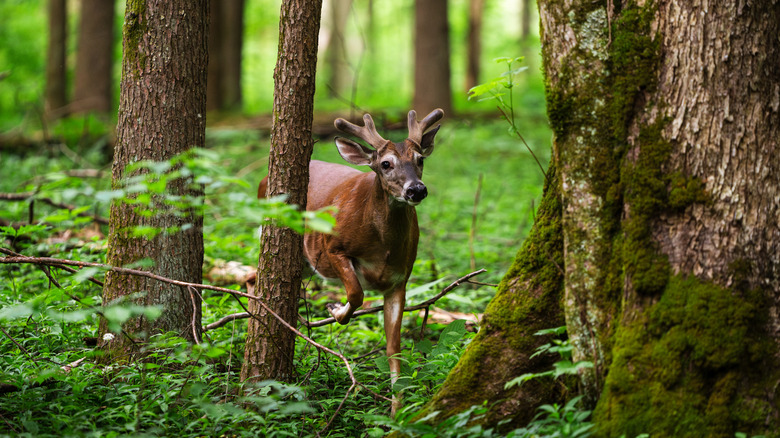
If a deer approaches you, your reaction should depend on the species. Some deer, like the white-tailed deer, are likely to run away at a sudden noise (like a clap or yell), but they do get territorial and aggressive when they're protecting their newly born fawns. In those cases, loud sounds might provoke a fight-or-flight response — and you really don't want them to choose fight. Instead, walk away very slowly while avoiding eye contact, as sudden movements can make them think you're a threat. Once you're out of their territory, they will likely lose interest and stop following you. In general, as you hike, you should always keep an eye out for signs that you're entering an animal's territory, avoiding dens and nests wherever possible.
For larger species within the deer family, like moose, aggressive behavior is far more dangerous, mostly because they're built like trucks. Most deer show common signs of aggression, like raised hackles, necks or antlers pointed forward, or pinned-back ears. A moose will also lick its snout or show the whites of its eyes as a sign of aggression. If a moose looks like it'll charge, run away or take shelter behind a tree or boulder.
The best way to avoid deer encounters is to make some noise as you hike. Talking aloud, singing, or hitting a stick on the ground tells animals there's a foreign creature in their area. Deer encounters rarely turn hostile in the wild, as most will choose to run — that's their instinct as prey animals. Avoid hiking deer-filled areas during fall and spring to limit the risk of potentially aggressive encounters.