
California's Once-Thriving Military Base Is Now A Peaceful Escape Brimming With Trails And Stunning Scenery
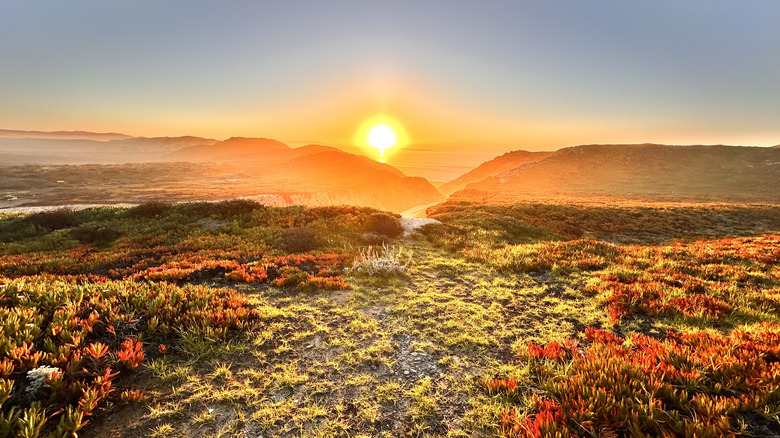
It's hard to reconcile California's Central Coast — famed for iconic landscapes like Big Sur, with cliffside views rivaling Italy's Cinque Terre and rolling hills of wildflower fields and Mediterranean-style vineyards — with the stark contrast of army barracks and artillery battlements. Yet Monterey, once the region's colonial capital, maintained a long military presence. One such site in Monterey County, now reclaimed by nature, is Fort Ord National Monument, designated by President Barack Obama in 2012. Formerly one of the largest U.S. Army training bases in the country, Fort Ord was decommissioned in the 1990s. Its lands have since been converted into residential and commercial areas, California State University, Monterey Bay, and protected lands, including a state park.
Today, Fort Ord National Monument is home to numerous endangered species, rare flora, 86 miles of trails, and panoramic views of the Salinas Valley that draw hikers, cyclists, and equestrians. Despite its proximity to San Francisco, San Jose — the nearest major airport – and Monterey, all 15,000 acres of Ford Ord stays relatively under the radar among California's many national monuments.
Monterey was a U.S. military outpost in the mid-1800s during the Mexican-American War. Although troops used the area's sand dunes for drills for decades, it wasn't until 1917 that the U.S. Army purchased a large tract of coastline and former ranchland for training as it prepared for World War I. In 1940, the site was officially commissioned as Fort Ord, becoming a key location for World War II amphibious training – including training troops who later participated in the D-Day landings. By the time Fort Ord ceased operations, an estimated 1.5 million service members had passed through, including notable figures Jimi Hendrix and Clint Eastwood.
Rare habitats as well as threatened and endangered species thrive here
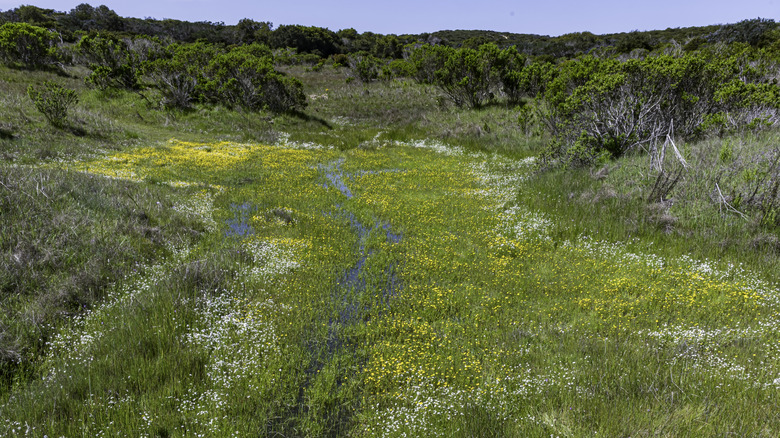
Fort Ord National Monument is managed by the Bureau of Land Management in coordination with the U.S. Army. It encompasses a range of ecosystems that define California's Central Coast, from rare vernal pools and wildflower fields to oak woodlands and coastal scrub. These habitats support an array of wildlife, from mountain lions to roadrunners, and are home to threatened and endangered species such as the western snowy plover, California tiger salamander, and Smith's blue butterfly. In this cool, coastal climate, rare flora, such as endemic maritime chaparral, thrive alongside endangered blooms like Contra Costa goldfields. Birders should keep an eye out for hummingbirds, warblers, and hawks. The monument also plays a role in broader ecological networks: Monterey is part of the Monarch Trail, providing sanctuary for migrating monarch butterflies. "It's rare to find this kind of open space where you're likely to see interesting wildlife almost every day," Eric Morgan, manager of the Monument, told the San Francisco Chronicle.
Rolling sand dunes along an adjacent 4-mile stretch of Monterey Bay shoreline are preserved within Fort Ord Dunes State Park, considered the monument's "coastal complement." "There's enough sand at Fort Ord to bury the pyramids," wrote one veteran. "I ran and marched through quite a bit of it." Indeed, the now-protected landscape still retains traces of its military past, including ammunition bunkers, buried landmines, a watchtower, and even alleged ghosts.
The fort also left behind significant pollution and environmental challenges. Cleanup efforts have addressed contamination from leaking underground petroleum storage, landfills, and unexploded ordnances, though some areas remain restricted. Despite this, ongoing restoration has made much of the monument safe and accessible to visitors who stay on designated trails.
Nearly 100 miles of trails serve sweeping vistas and diverse environments
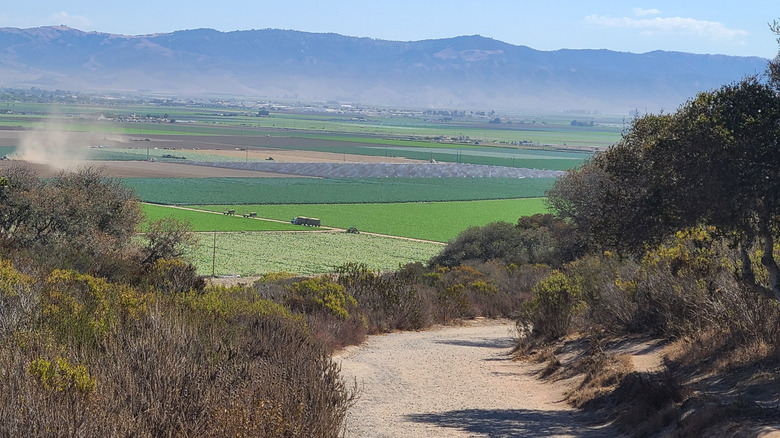
Fort Ord National Monument is roughly half the size of San Francisco, and its spacious 86-mile trail network is a major draw. While a central section remains off-limits during ongoing U.S. Army cleanup, the surrounding well-marked routes offer ample opportunities to explore on foot, by bike, or on horseback in relative tranquility. "At Fort Ord, one can pretty much avoid the dregs of humanity, get some big doses of nature, and get in a family bike ride/hike," wrote one Google reviewer. "Beautiful place to go to meditate," noted another.
Fort Ord is an off-road cyclist's dream, with beginner-friendly paths alongside steeper, more technical climbs. Nearby, Salinas — "the Salad Capital of the World" — hosts the annual Sea Otter Classic, attracting thousands of visitors for races and rides throughout the national monument's many trails. With multi-use, bi-directional trails and some sharp turns, visitors recommend that all trail users wear a bell. Other popular routes include the Guidotti, Skyline, Oil Well, and Toro Creek Loop for sweeping views, and the Jerry Smith Corridor, known for mossy oaks and seasonal wildflowers. For an easy outing, Badger Hills features rolling meadows where black-tailed deer and ground squirrels frolic, with more Salinas Valley views. Part of the Juan Bautista de Anza National Historic Trail also passes through Fort Ord's public lands.
Despite its restored lands and remaining military vestiges, some visitors criticize the monument for its lack of historical preservation. "I was a machine gunner in Vietnam 1971-1972," wrote one veteran who'd trained at Fort Ord. "Furious nothing is being done to preserve a single building as a museum ... for the many people who were garrisoned here." However, the California Central Coast Veterans' Cemetery in Seaside and the Presidio of Monterey Museum offer nearby opportunities to learn more.