
Chicago's 'Magic Hedge' Is Found At A Lake Michigan Bird Sanctuary With Beach Trails And Rare Sightings
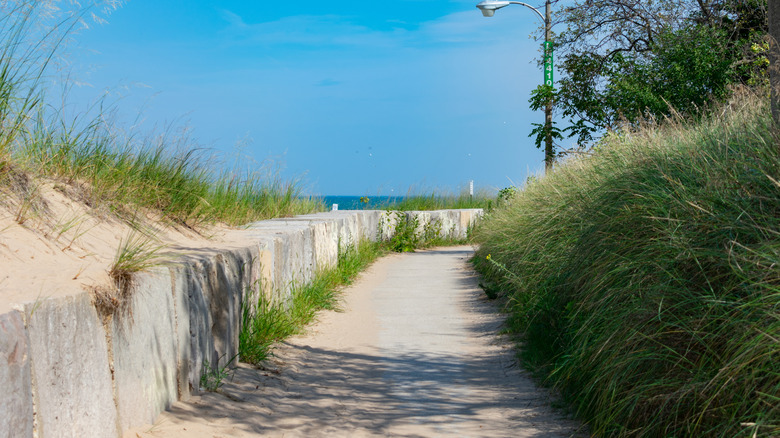
A few steps off Chicago's Lakefront Trail, one of the city's best wildlife spectacles unfolds in a tangle of low trees by Lake Michigan's shore. The Montrose Point Bird Sanctuary is one of the few places in the city where people's eyes are more often trained on the trees than the skyline. Along its shoreline and beachside trails, birds come in droves for migratory and wintering arrivals. The sanctuary has a strong reputation among birders and has been named one of the top 15 birdwatching spots in the U.S. by Bird Collective. Over 350 species have been documented here, including rare and endangered birds.
Made up of numerous habitats — including dunes, woodlands, and a beach — linked by lakeside trails, the sanctuary attracts a wide range of species. Much of the action, though, seems to gather around one specific stretch of shrubs known as the "Magic Hedge," a nickname given by avid birders. The spot took shape during the Cold War, when honeysuckle was planted in the area to shield army barracks from view, according to the Chicago Park District. Though the barracks are gone, the honeysuckle remains, forming a foundation for the 150-yard thicket that turns into one of the Midwest's busiest layovers for birds each spring.
Birds at the Montrose Point Bird Sanctuary and where to see them
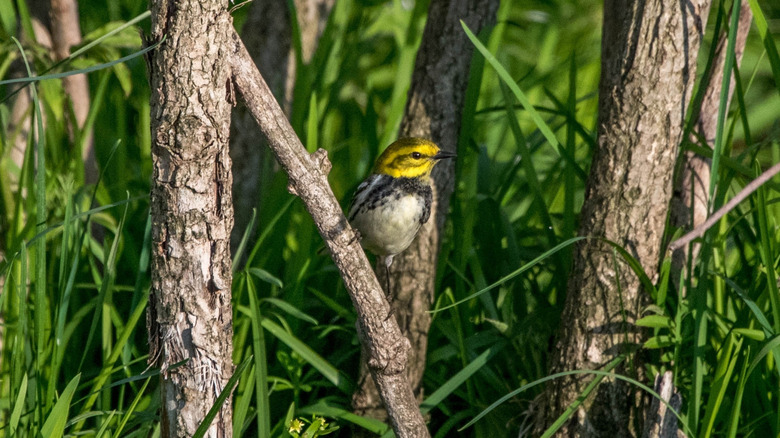
It might seem unlikely that a top birdwatching destination sits within a major city, but it's not without precedent. For example, at New York's Central Park, you can spot over a quarter of America's bird species. If you'll be visiting the Montrose Point Bird Sanctuary for the first time, the Magic Hedge is arguably the most reliable starting point because of its high concentration of birds. The Magic Hedge sits along the western side of the sanctuary, among a patch of brush and trees. The dense vegetation is a particular draw for migratory songbirds, making spring the peak season for visits. Birders have reported spotting everything from magnolia warblers to great crested flycatchers. As one Reddit put it, "From outside the Magic Hedge looks like a nice, small patch of wood but once you're in you really feel like you're in some beautiful wilderness."
Another spot in the sanctuary where you have a chance at sighting some rare birds is along the sandy lakefront. Rare sightings do happen here — including a black-tailed gull recorded once in the area via eBird, a species seldom seen in the U.S. There's also a pair of endangered Great Lakes Piping Plovers that have their own website and live around Montrose Beach, occasionally seen by the sanctuary's pier nesting in the sand.
Getting to and around Montrose Point Bird Sanctuary
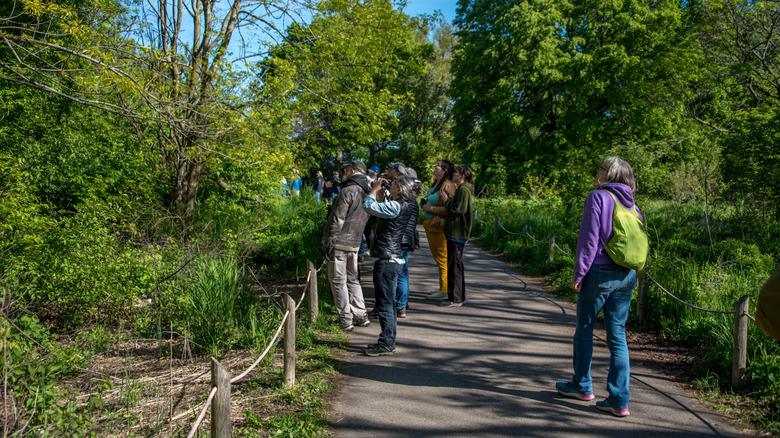
The Montrose Point Bird Sanctuary has a network of trails that fan out across its habitats, from its meadows down to the beach. Past visitors have noted that the paths are easy to follow, including an ADA-accessible paved loop installed by the Chicago Park District in 2021. The loop extends about one-third of a mile and runs past the Magic Hedge, while other trails are surfaced with wood mulch or crushed gravel. The Chicago Ornithological Society sometimes offers guided bird walks through the sanctuary — a good option if you're new to birding. If you're taking a longer walk along the lakefront of Chicago's sought-after Lincoln Park neighborhood, Montrose Point is also connected to the Lakefront Trail, which spans 18 miles along the shoreline.
Visitors coming from downtown Chicago can take the No. 146 bus to the Marine Drive and Montrose Avenue, though you'll have to walk almost 20 minutes from there to the sanctuary. By car, it's a 15- to 20-minute drive, with parking available near Montrose Harbor or along nearby streets. You may have to pay for parking, but entry to the sanctuary is free. While in the area, you can also explore the underrated Lincoln Park garden with picturesque photo opportunities, roughy a 20-minute walk away.