
Washington's Scenic Byway Is A Coastal Drive With Misty Beaches, State Parks, And Charming Villages
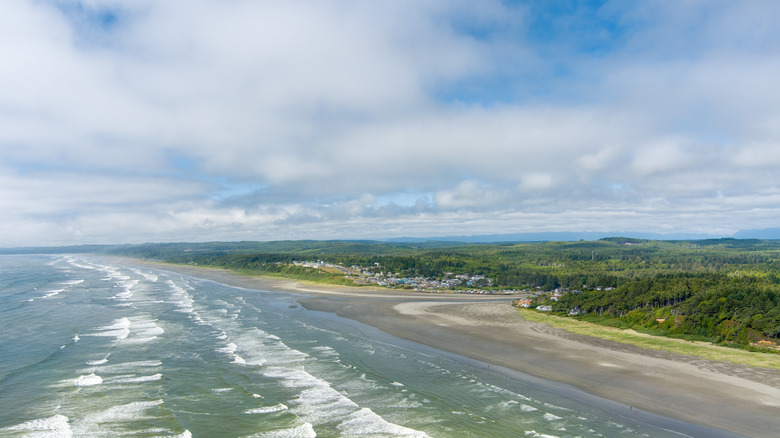
Secluded from Washington's main thoroughfares is a road trip that takes tourists past sweeping swaths of sand, several state parks, and mouths of rivers pouring into the sea. The aptly named Hidden Coast Scenic Byway, officially dubbed State Route 109, hugs the sparse Washington shores for 41 miles until the road's end in the Quinault Reservation. In between, you can stop at several villages overflowing with small-town charm, stroll across the shifting sands, or go clamming on misty beaches. Densely forested parks thick with conifers provide meandering trails that engage the senses.
The Hidden Coast Scenic Byway begins in Hoquiam, one of the most budget friendly towns along the Pacific Coast, and travels north 41 miles to Taholah, a scenic getaway full of unspoiled beaches and forests. Travelers can bring their four-wheeled accommodations with them and stay at several seaside campgrounds with full hook-ups. Multiple resorts also offer places to rest heads for the night.
Enjoy beach driving and ghost forests along State Route 109
Along the route, both beaches and state parks offer activities aplenty. Before embarking on the sea-hugging journey, learn about regional history at Hoquiam's Polson Museum, a National Historic Site, and see surrounding homes dating back more than a century. From here, turn left and drive 2 miles to explore the beach and Coastal Interpretive Center, or take the 1.2-mile loop trail in Ocean Shores. Turn right and you'll be on the byway headed to Ocean City State Park. Home for millennia to the Coast Salish Indigenous peoples, set up camp at one of nearly 200 sites found here — dozens with full hook-ups — and stroll through shore pines and over sand dunes to the expansive beach. When sand is hard-packed, go off-roading and cruise the beach at up to 25 miles per hour.
Next stop: where the Copalis River tumbles into the ocean at Griffith-Priday State Park. The park is located in a tectonically active zone where the Juan de Fuca plate slides under the Cascadia subduction zone. An earthquake happens here every 400-600 years or so, and one of these created the eerie Copalis Ghost Forest. To see this natural wonder, rent a kayak in nearby Ocean Shores and paddle up the Copalis River and witness the remains of thousands of trees killed by a tsunami hitting the coast in 1700.
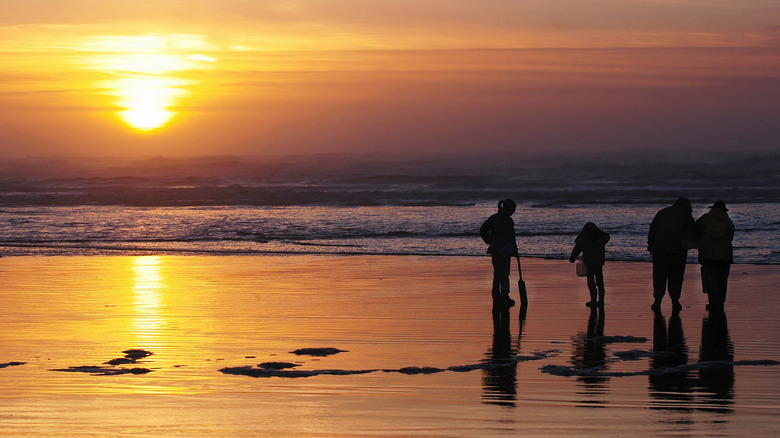
Another popular past time in this part of Washington from fall to spring is foraging for razor clams. Read up on the regulations, then grab a bucket and a small shovel or clamming tube and head to Copalis Beach. The Washington Department of Fish and Wildlife's helpful videos provide quick tutorials on catching these tasty bivalves. Cook them up in a kitchen-equipped resort room or bring a camp stove and become a beach chef.
The Scenic Byway offers sand, sea, and small-town strolls
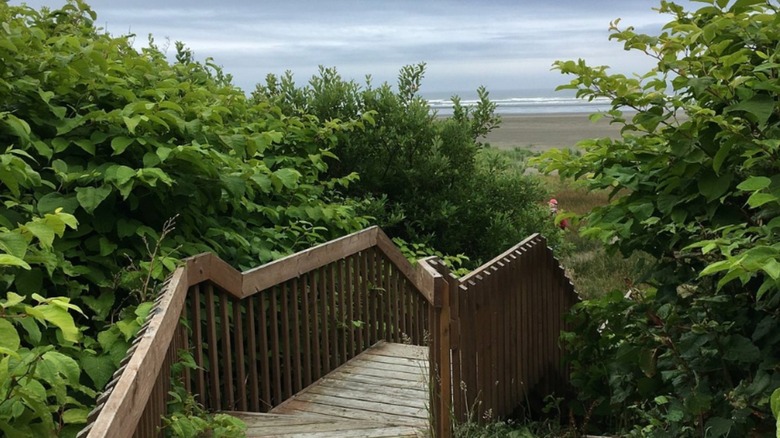
With the Olympic rainforest on one side and the rolling Pacific on the other, the Hidden Coast Scenic Byway offers things to see the entire way. When stopped, spot bald eagles, hunt for sand dollars, or simply watch the mist roll over the tide. Stretching legs is a necessity on road trips, and this one also offers a few tiny towns where you can explore, grab a quick bite, or stay overnight.
Past Iron Shores and Roosevelt Beach, you'll find little Seabrook and Pacific Beach. Both towns offer several shops, as well as places to grab a bite or beverage. You can also picnic, fish, and camp at nearby Pacific Beach State Park. 2 miles north, visit the sea-weathered structures lining the small streets of Moclips, which is one of the last stops on the byway. Check out Bad Wulf Studio and learn how to create art from glass. A Tripadvisor reviewer calls it a "Super fun must do on the coast." Grab burgers or a pizza at the Moclips Country Store and Deli, or stay at the Ocean Crest Resort, which boasts a spa and restaurant on-site.
The byway ends another 9 miles north in Taholah, part of the Quinault Indian Nation and home to its people for generations. Here, visit the Quinault Cultural Center and the fish hatchery, or spot wildlife in the surrounding forest. Afterwards, journey inland and visit Washington's Olympic National Park. Facebook comments suggest May, September, and October can be idyllic months to drive in the Pacific Northwest, when crowds are smaller and the weather is sunny but not too hot. Of course, this route proves scenic any time of the year.