
Mexico's Largest National Park Is Called 'Little Galápagos' For A Reason (And It's The Size Of Illinois)
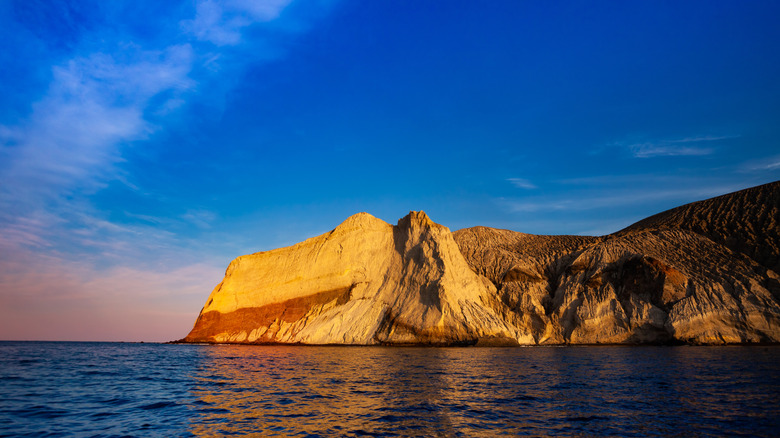
Mexico's Revillagigedo National Park doesn't do "small." Protecting a 57,000 square mile expanse of sea surrounding a chain of four volcanic islands southeast of the Baja Peninsula, it's roughly the size of the U.S. state of Illinois. Nor is there anything small about the creatures that this park home. The islands are protected in large part because of their importance to populations of marine megafauna, such as whale sharks, manta rays, and migrating humpback whales.
For divers, it's no wonder that it's often described by those who have been there as the "Little Galápagos" or the "Galápagos of Mexico." Isolated from Mexico's mainland by a wide stretch of the North Pacific Ocean and unusually rich in wildlife, the islands here are only reachable by boat — and it's quite a long trip because they are located 250 to 300 miles south of Cabo San Lucas. Revillagigedo is a big destination for big-ticket wildlife, and currently the largest Marine Protected Area in North America and a UNESCO World Heritage Site.
Though the park also protects four uninhabited islands, it's the underwater world that earns it a place among the world's great wildlife destinations. The park is home to large open-ocean species as well as critical populations of commercially important fish in an ecosystem totally unlike that of the mainland Mexican coast. And though they're by no means easy to reach (even for adventurous travelers), a dive into the rich waters of the Revillagigedo Archipelago is the adventure of a lifetime.
Revillagigedo National Park is an ecological stronghold where wildlife flourishes
Like the best Galápagos Islands cruises, Mexico's largest national park offers a once-in-a-lifetime, bucket-list-worthy adventure. And, as in the Galápagos, the extreme isolation of Revillagigedo National Park and the nutrient-rich waters of the subtropical Pacific make the islands a refuge for open-ocean species. Their location at the confluence of tropical and temperate biomes brings both unusual biodiversity and abundant nutrients to the area.
Sixteen species native to the archipelago are found nowhere else on earth, and Revillagigedo hosts some of the largest shark aggregations on the planet. To protect this wildlife hotspot, extractive activities like fishing are completely outlawed in most areas. Naturally, such a biodiversity hotspot is also many recreational divers' dream destination.
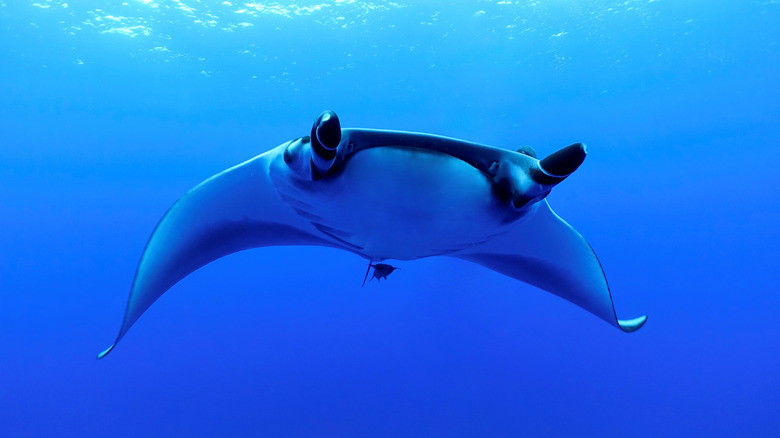
Diving in Revillagigedo brings with it the chance to see giant manta rays, explore the rocky reefs and seamounts, or take advantage of one of the best places in the world to swim with whale sharks. You might spot nearly a dozen species of sharks, whales, dolphins, or schools of tuna in numbers you're unlikely to see anywhere else. For big species, there aren't many better dive sites on earth.
Planning a once-in-a-lifetime diving adventure to Revillagigedo
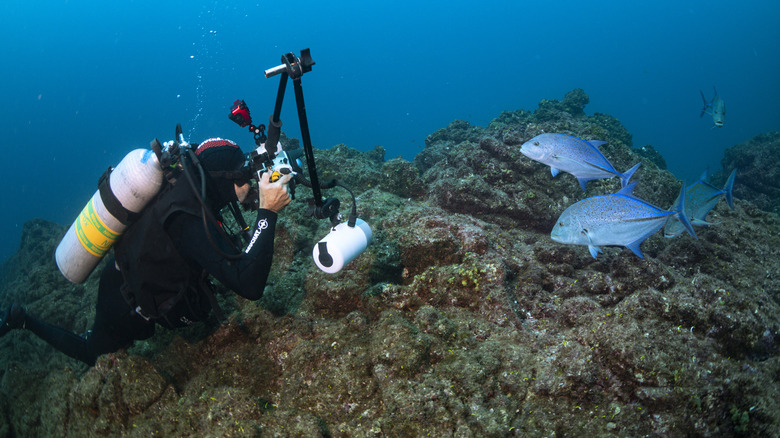
A diving trip to Revillagigedo requires time, patience, and a lot of skill. The Revillagigedo Islands aren't inhabited, so if you're hoping to dive in the area, your only option is a live-aboard diving expedition. These cruises, usually between seven and ten days long, access remote dive spots that are about 30 hours away from the mainland. There are several live-aboard operators that run trips to the park, usually leaving from Cabo San Lucas.
These trips are ideal for experienced and dedicated divers. The crossing doesn't tend to be notably rough, but it is a huge time investment, and it goes without saying that before you embark, you'll have to have gone through the process of learning to dive like a pro and getting the right certifications and experience — this is no average beginner's scuba diving adventure. The park's diving season runs from November through June, so divers will have to plan a trip in that window. Revillagigedo dives are, for many divers, an epic bucket-list trip years in the making.
Even so, such a trip is more than worth the planning, diving practice, and expense it could incur. In an increasingly developed world, you often have to go to great lengths to find abundant wildlife, and here in the true middle of nowhere is a place where some of the Pacific Ocean's most fascinating creatures flock in numbers seen almost nowhere else. And for the dedicated underwater adventurer, nothing could be better worth the trouble than that.