
Hidden In Cuyahoga Valley National Park Is Ohio's Once-Thriving Village Now Largely Lost To Time
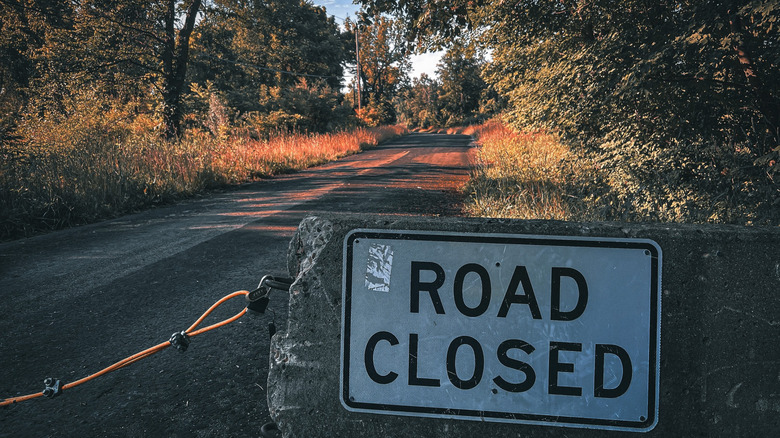
Cuyahoga Valley National Park is one of the most popular outdoor attractions in Ohio, logging over 3 million visitors in 2025. You might not expect a place that gets much attention to harbor any secrets, but with a total area of 33,000 acres, the park has lots of space for lesser-known corners beyond the stunning waterfall views that many people come to see. Among them is Boston, Ohio, a ghost town steeped in paranormal lore that has earned the ominous nickname "Helltown."
The park stretches narrowly east to west but runs a considerable distance north to south. The former town of Boston is located near the center, close to the Boston Mill Visitor Center, and just south of where Interstate 80 (the Ohio Turnpike) passes over the park. Its southern edge blurs into the village of Peninsula, which was first settled about a decade after Boston's founding and has now outlasted its one-time neighbor by decades.
For decades, abandoned homes and vehicles in Boston could still be found within the park, serving as an eerie time capsule of the 1970s, when residents were forced to leave. While nearly all physical traces of Boston are now gone, the many legends that brought it the Helltown moniker persist. For ghost hunters and cryptid lovers, even the diminished version of the site makes for a fascinating stop in the Cuyahoga Valley.
The legend of Helltown
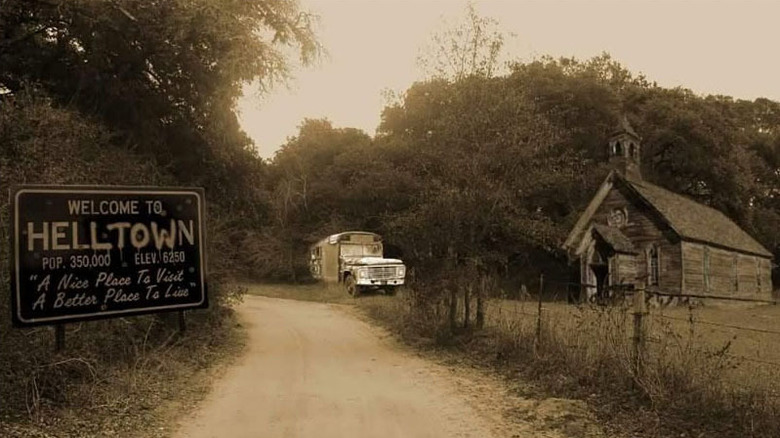
First settled in 1806, Boston Village grew into a thriving transportation hub after the construction of the Ohio and Erie Canal in the 1820s. The town started to shrink in the early 20th century as canal transportation became obsolete, but it hung on until the 1970s. The turning point came in 1974, when new legislation allowed for the use of eminent domain to acquire land for national parks. The area was designated a National Recreation Area, and residents were forced to leave.
The original plan was to tear down Boston, but the government fell behind on its demolition schedule. The town's buildings were boarded up and left standing — and Helltown was born. One of the earliest legends held that Boston was actually evacuated as part of a cover-up of a chemical spill that created a man-eating mutant monster. This merged with a 1940s legend of a massive snake from nearby Peninsula, an under-the-radar small town that survived the land seizures. The "Peninsula Python," as it was known, was said to devour those who dared to explore Helltown at night.
More haunted lore quickly followed. The design of Mother of Sorrows Church, which was said to have had upside-down crosses, spawned rumors that a satanic cult met in the basement. Cry Baby Bridge on Boston Mills Road was said to be haunted by a white-clad ghost and a baby whose cries could be heard at night, leaving tiny handprints on cars left in the area. An abandoned school bus was supposedly left empty after its passengers were murdered by a serial killer, while the closed portions of Stanford Road — sometimes called "Highway to Hell" – acquired multiple legends, from a lurking ax murderer to a trap set by satanists to an evil force that caused motorists to crash and die.
Visiting Helltown today
The long-delayed demolition of Boston was finally completed in 2016, at which point vehicles like the school bus were also removed. Still, traces of the former town remain. Visitors exploring Cuyahoga Valley's scenic trails can pass through the Boston area near the Boston Trailhead. The closed portion of Stanford Road is still there and surprisingly intact, considering how long it's gone without maintenance.
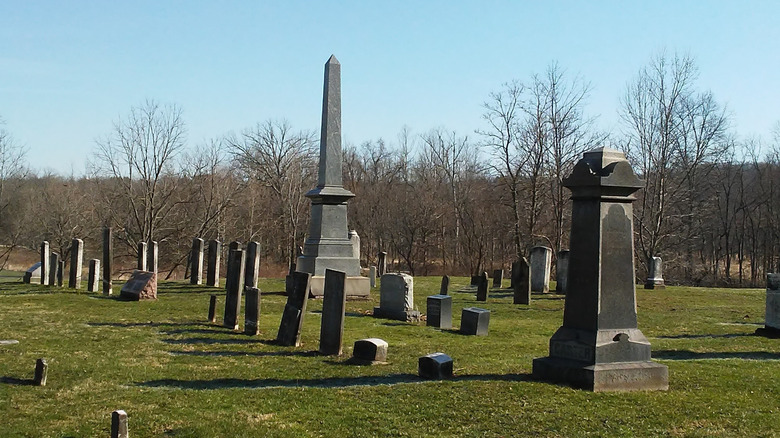
The most significant remaining landmark is Boston Cemetery, located at the end of the still-open Main Street. It contains graves for some of the township's earliest residents. Like most things in Helltown, it's rumored to be haunted, though this legend holds even less water than most. The main story describes a ghost who stares blankly from a bench, which is a tricky thing to do, considering there aren't any benches on the cemetery's grounds. The few other structures still standing from the old town, including a dilapidated barn and an old duplex near the cemetery referred to as the "Slaughterhouse," are private property and cannot be explored by visitors.
You can get more insight into the Helltown legend by visiting Peninsula. The Cuyahoga Valley Historical Museum, located inside Boston Township Hall, has exhibits on the region's history. It's open on Thursday, Friday, and Saturday afternoons, and admission is free during normal hours. In the past, the town held a Peninsula Python Day festival in July, though that hasn't been celebrated since 2018. The Northeastern Ohio Orienteering Club also holds a Python Adventure Race in Cuyahoga Valley National Park in September, featuring both on-trail and off-trail navigation for folks who want to explore the area and try to catch a glimpse of the local cryptid.