
Florida's Wildlife Refuge Is An Idyllic Island Haven For Bird Watching, Hiking, And Canoeing
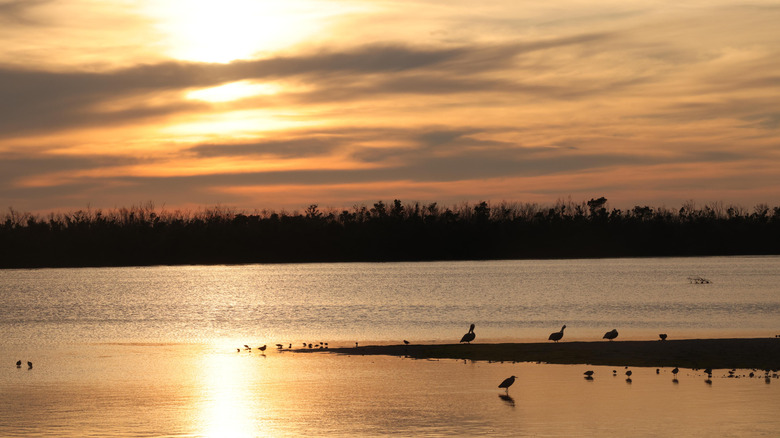
Southwest Florida is filled with natural wonders. Many of these, such as the iconic Everglades, are recognizable throughout the world. However, one of the top spots for nature and natural history in Southwest Florida is a wildlife refuge that may not be quite as well known on a global scale, but it offers seemingly endless outdoor adventures. Named after conservationist and cartoonist Jay Norwood "Ding" Darling, the J.N. "Ding" Darling National Wildlife Refuge is a tropical spot for bird and nature watching, as well as canoeing, hiking, and a variety of other outdoor activities.
The Ding Darling National Wildlife Refuge takes up 6,400 acres on Sanibel Island. It is bordered by Pine Island Sound and encompasses Tarpon Bay, along with a myriad of mangrove-lined wetlands and channels. In fact, despite the condominiums on the opposite side of the island, the refuge is part of the country's largest undeveloped mangrove ecosystem.
Given that Sanibel island is among the Florida beaches that could pass for the Caribbean, it's no surprise that a wide array of tropical and subtropical flora and fauna are found within Ding Darling NWR. The subtropical forest within the refuge largely consists of red, black, and white mangroves, along with gumbo limbo and a variety of other tropical trees. The lush vegetation and ample waterways also draw hundreds of bird species and aquatic animals, such as alligators and manatees.
Bird watching, hiking, and canoeing in Ding Darling National Wildlife Refuge
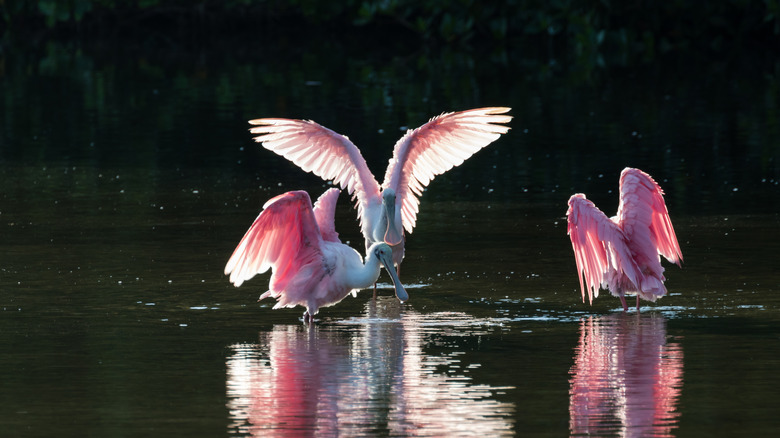
There is certainly no shortage of activities available at this natural subtropical playground. Bird watching is one of the most popular past times here, and for good reason — more than 245 avian species are known to spend time in the refuge. These include species such as the colorful roseate spoonbills and American bald eagles, along with a myriad of shorebirds, songbirds, and waterfowl. Some of these species are seasonal, while others inhabit the refuge year-round. Visitors can utilize eBird to log their sightings and help refuge staff track which species are seen each week.
One of the primary ways bird watchers traverse the refuge is on the numerous trails, some of which feature observation towers and lookouts. Of course, the trails aren't just for ardent birders. Hikers, sightseers, and those interested in wildlife watching will also enjoy spending time on these pathways, which range in length from a few hundred yards to 4 miles. They lead to features such as Pine Island Sound, Tarpon Bay, freshwater wetlands, and the Wildlife and Education Boardwalk. It is important to note that some trails are closed on specific days, and at times, others are closed for maintenance. It is best to check the park's website ahead of your visit.
Paddling is another great way to see what the refuge has to offer. Canoes and kayaks can be launched from two sites on the north side of Wildlife Drive, as well as in the Tarpon Bay Recreation Area. Tarpon Bay Explorers also rents kayaks and offers tours in Tarpon Bay and along the Commodore Creek Paddling Trail.
Planning a visit to Ding Darling National Wildlife Refuge
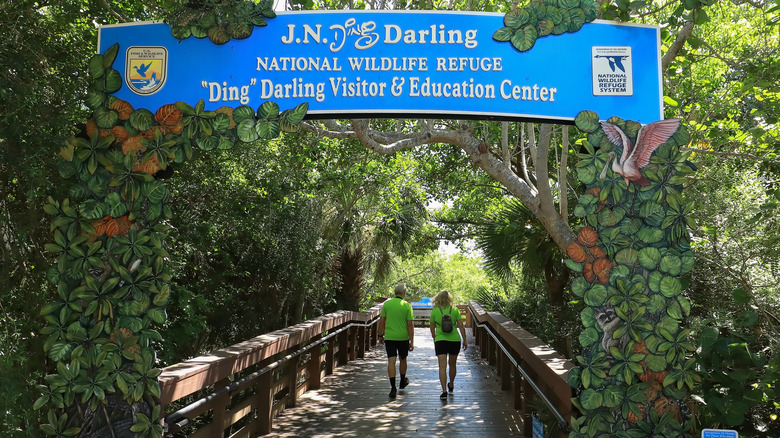
Ding Darling National Wildlife Refuge offers a variety of other activities, including fishing, biking, and ranger-led programs. Tram tours are also available. If you're interested in a guided tour, it's a good idea to make a reservation ahead of time in order to ensure your spot. Visitors can also take a self-guided driving tour along Wildlife Drive, which is 4 miles long and open to hikers and cyclists as well. This roadway is closed on Fridays, but it's open every other day from 7 a.m. – 5 p.m. The refuge's trails are open from sunrise to sunset, while the visitor center is open every day from 9 a.m. – 4 p.m.
While fishing, boating, and paddle sports are allowed in the refuge, there are some specific rules and regulations that apply to the areas and type of crafts which are allowed. Additionally, even though Sanibel Island itself is considered one of the best beaches for shelling, shell collecting is not allowed in Ding Darling NWR. Although there is no camping within the refuge, visitors will find plenty of accommodations on the remainder of Sanibel Island, ranging from hotels and condos to campgrounds.
To reach Ding Darling NWR, you must first make it to Sanibel Island, which is a little less than an hour's drive from Fort Myers. The entrance to the refuge is located at 1 Wildlife Drive on Sanibel Island. In addition to visiting Ding Darling, those staying on Sanibel have a great opportunity to stop in at some of the other facilities which are part of the Southwest Florida Gulf Coast National Wildlife Refuge Complex. One such spot is the nearby Pine Island National Wildlife Refuge on the under-the-radar, artsy Pine Island.