
2 Lovely New Jersey Suburbs Top The AARP's List Of Mid-Sized Places With Little Need For A Car
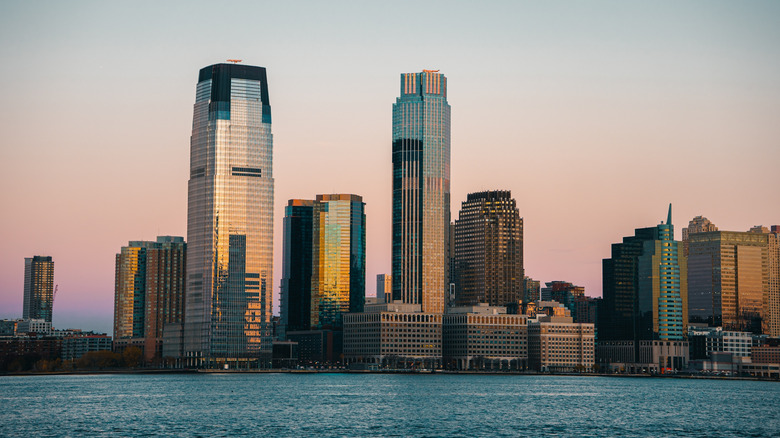
Two neighboring suburbs just across from New York City and the Hudson River, America's deepest river winding past charming towns, recently earned national attention after placing first and second among midsize communities on AARP's 2025 list of top places to live for older adults. While the list's scoring system took into account several factors — including housing availability, access to health care, community engagement, and more — many of the top-ranked midsize communities have one other thing in common: You don't really need a car to enjoy them.
According to the organization, the majority of the communities that made the "best midsize" list have "robust public transportation, including rail, light rail, metro, and buses, giving residents the ability to reach amenities without a car." That includes Cliffside Park and Fort Lee, which both sit in Bergen County along the Palisades cliffs overlooking the Hudson River. Their locations place them near Manhattan while still offering quieter residential streets than the Big Apple. In addition to New Jersey's public transit system, several jitney bus routes run through both neighborhoods, offering cheaper and more frequent service than NJ Transit buses.
Both suburbs stand out for their neighborhood accessibility and proximity to services, showing how smaller municipalities near major cities can be more livable and affordable alternatives to dense, traffic-packed urban centers. Together, the two towns offer Hudson River–adjacent living, where transit access, charming town centers, and riverfront parks make it easy to run daily errands — and even plan weekend outings into the city — without getting behind the wheel. Their proximity to Manhattan also gives visitors and residents wider access to the best car-free day trips from New York City.
Cliffside Park pairs neighborhood walkability with quick transit access to Manhattan
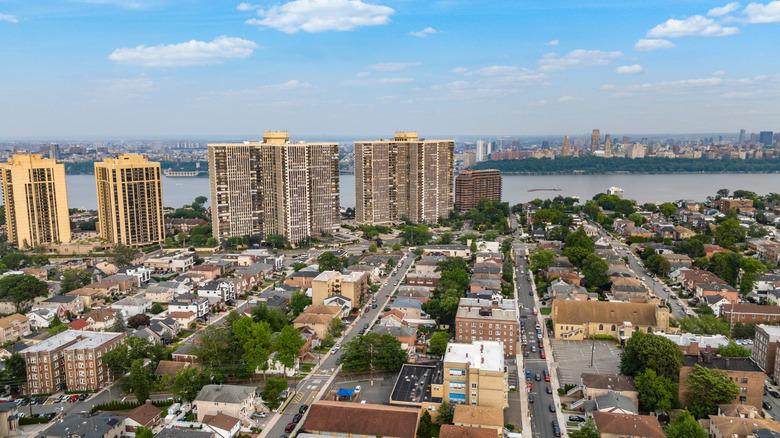
Cliffside Park came in first place in the midsize community group, with AARP noting that it "offers more convenient access to a diverse mix of jobs, libraries, groceries, parks, and farmers markets." Much of that convenience comes from its walkability and access to commuter transportation. Cliffside Park is considered "very walkable," with a Walk Score of 85 and a transit score of 55. For residents and visitors who want to get by without a car, this is great news — especially since some residents say parking in the commercial area near Anderson Avenue can be a pain.
Anderson Avenue runs north to south through the center of Cliffside Park, with its charming main street areas lined with restaurants, bakeries, grocery stores, and small businesses within walking distance of quiet residential blocks. And because the neighborhood sits directly across the Hudson River from Manhattan's Upper West Side, frequent regional bus routes provide straightforward connections to New York City without the need for a personal car.
Cliffside Park offers access to the Hudson River Waterfront Walkway, a multi-town path stretching along New Jersey's riverfront with skyline views and access points in nearby communities such as Edgewater. It's also not far from the Edgewater Ferry Landing. Combined with neighborhood parks and recreation areas along the Palisades ridge, the suburb's location gives residents easy access to outdoor space for jogging, skating, biking, and other car-free activities.
Fort Lee offers city and nature access along the Hudson River
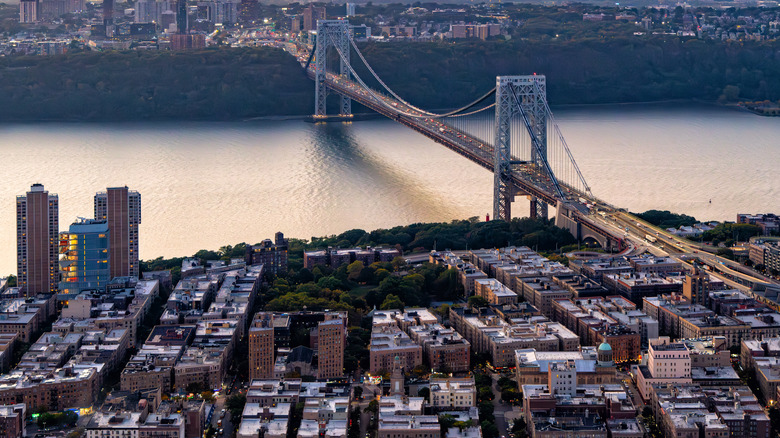
Immediately north of Cliffside Park, Fort Lee earned the No. 2 spot among midsize communities in the same AARP ranking, thanks to its strong transportation infrastructure and access to essential services within walking distance. Like Cliffside Park, Fort Lee is considered "very walkable," with a Walk Score of 86 and a transit score of 60. The borough's central business district along Main Street makes it easy to get to everything you need on foot or by bike, including restaurants, grocery stores, and everyday services. Older adults also have access to a free local bus service, making it even easier to get around.
Another reason Fort Lee stands out for people without cars is its position at the western end of the George Washington Bridge, one of the world's busiest bridges. That offers access to extensive regional bus service and makes it possible to commute into New York City quickly without driving yourself. Fort Lee also offers access to green spaces and natural areas, such as Fort Lee Historic Park, which preserves Revolutionary War–era sites along the Palisades while offering walking trails and panoramic Hudson River views. Nearby sections of the Palisades Interstate Park system offer even more recreation opportunities further north and south along the cliffs. Car-free foodies will be happy in Fort Lee, too — savvy New Yorkers even cross the Hudson into the suburb for delicious Korean food.
Together, these features help explain why Fort Lee ranked near the very top of AARP's list of best midsize places to live — especially for those looking to cut back on driving. Its mix of transit access, walkable streets with thriving businesses, and riverfront parkland makes it possible to live and visit with little need for a car, despite being located directly across from one of the country's biggest and busiest cities.