
Canada's Underrated Lake In Yoho National Park Offers Lovely Green Waters And A Scenic Hiking Trail
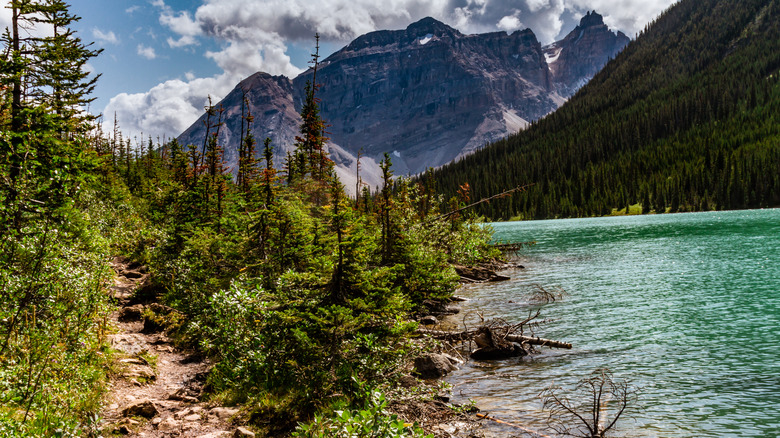
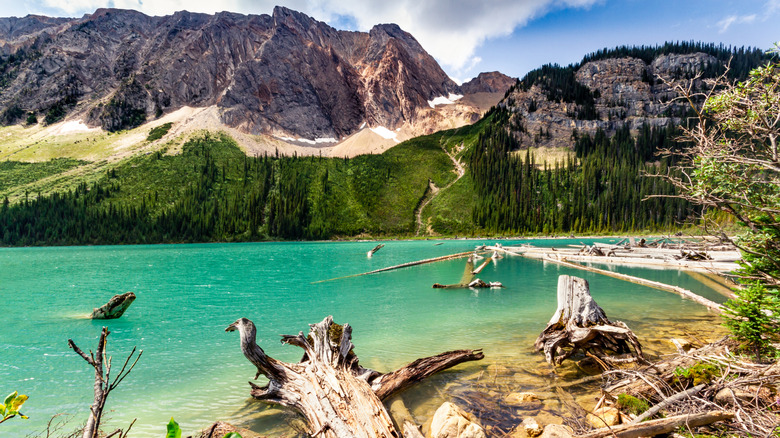
Sherbrooke Lake isn't just any shade of green. Depending on the light, its waters are turquoise, emerald, or teal. This is a majestic green, a deep and vibrant hue. If you hear "green water" and think of bogs and marshes, rest assured that Sherbrooke is much more pleasing to the eye. It matches the evergreens that rise all around, the gray cliffs and peaks of Yoho National Park. The natural splendor of Sherbrooke Lake demands to be photographed or even painted. There's no shortage of epic mountain scenery in British Columbia, and plenty of nearby lakes are more famous than Sherbrooke, but this underrated body of water is worth the hike — and you're more likely to have the place to yourself.
Indeed, part of Sherbrooke's appeal is how undeveloped it is. There are no buildings here, no boats, or even roads. Like so much of Yoho, Sherbrooke requires you to walk a healthy distance to reach the water's edge and enjoy its views. Hikers take an out-and-back trail for a total distance of 6 miles, with an elevation gain of over 1,200 feet. You'll need to budget at least three hours for your visit, though you'll probably want to spend more time to rest and take in the scenery. If you haven't hung out much in the Canadian Rockies, Sherbrooke is a great place to cut your teeth, as is all of Yoho.
How to enjoy Sherbrooke Lake
The trailhead for Sherbrooke Lake is located on the Trans-Canada Highway, about 45 miles northwest of Banff. Very few people live out this way, so it's important to bring supplies and a full tank of gas. You'll start your hike right next to Wapta Lake, another beautiful glacial relic surrounded by mountains. From the parking area, there's nowhere to go but straight.
"The trail is easy to follow, as there's pretty much only a narrow path the whole way," writes one reviewer Tripadvisor. "After about 3 km, you'll reach Sherbrooke Lake, which is just as beautifully turquoise as Emerald Lake. It's common to stop here for a swim, lunch, or a rest on some of the large logs." The reviewer notes that the trail keeps going, following the eastern shore of Sherbrooke, all the way to its northern end. Fallen trees float on the water like so many pickup sticks, and it's not unusual to spot mountain goats on the rocky slopes.
There is one side-trip, if you have energy to spare: The trail branches off toward Paget Peak, an 8,400-foot mountain that rises over Sherbrooke Lake. Take this trail about three-quarters of a mile, and you'll reach the Paget Lookout, a clapboard shelter with spectacular views of the adjacent range. Note that this is a very challenging route, with near-vertical scrambles over stony terrain. You're welcome to do this on your own, as the distances are reasonable, but make sure to know these safety tips before your first solo hike.
Getting to Sherbrooke Lake and where to stay
Driving is the only real option here, as there is no mass transit out this way. From Banff, you can drive to the Sherbrooke Lake trailhead in about 45 minutes. As you cruise down the Trans-Canada Highway toward Sherbrooke, you'll cross the provincial border into British Columbia; keep your eyes peeled for that huge welcome sign.
The closest town to Sherbrooke Lake is Lake Louise, about 35 minutes away, where you can find a number of hotels, along with the Lake Louise Ski Resort and a handful of cafes and restaurants. Accommodations are wide-ranging; it's possible to secure a room for less than $100, while more luxurious lodges will fetch hundreds of dollars per night. If you've brought your own tent or camper, Kicking Horse Campground and Monarch Campground are both located only a few miles from the Sherbrooke trailhead. These are basic, "unserviced" areas, but they're also affordable: A site will run $16 to $25 U.S. per night.
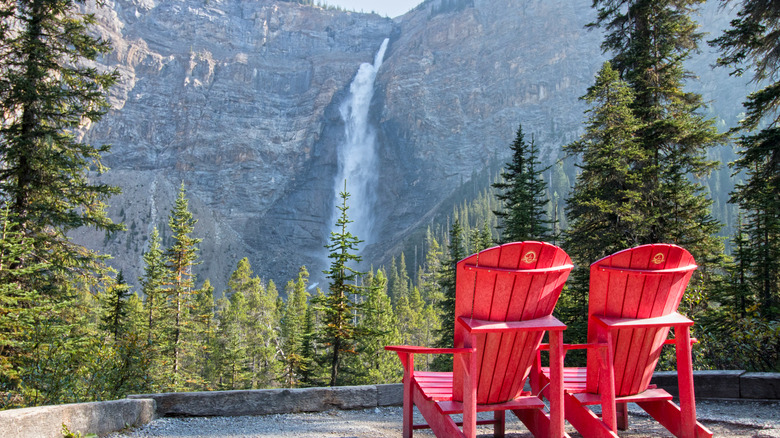
Sherbrooke Lake is also a great introduction to Yoho National Park, an alpine wonderland that covers 507 square miles, and an underrated national park with views as enchanting as Banff but without the crowds. Yoho doesn't have Banff's cachet, and you won't find the same abundant resorts and retail, but many outdoors enthusiasts will appreciate the quieter environs. You could spend weeks exploring this park's nooks and crannies — putting the "YOLO" in Yoho — with Takkakaw Falls serving as its most formidable sight. Standing more than 1,200 feet tall, Takkakaw is the second-highest waterfall in all of Canada. And it's not all wilderness out here: Hidden in Yoho National Park is a charming Rocky Mountain Town with cafes, trails, and lodges.