
My 5 Favorite Places In Oahu To Take Friends And Family
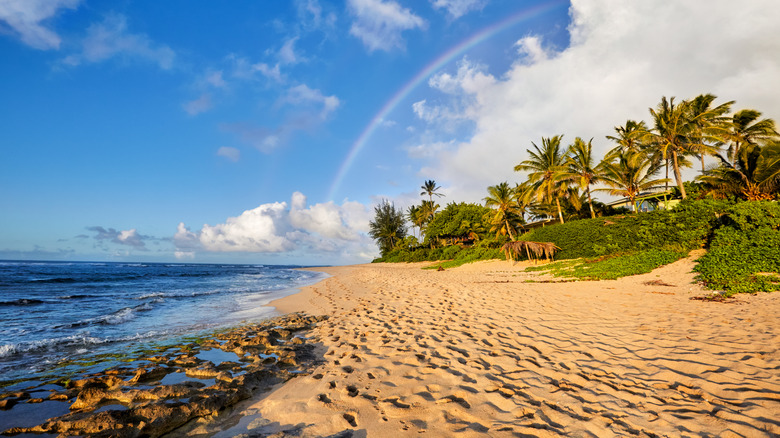
Oʻahu is a dreamy tropical destination and a magnet for beach-lovers, but with so much to offer, your vacation time can run out before you've covered everything you hoped to do and see. Waikīkī Beach is often the hub for visitors to this island paradise — it boasts a location in the bustling state capital Honolulu, with a wealth of attractions just steps from the shore. But venturing Oʻahu's 597 square miles outside of the touristy areas reveals much more about the island's history, culture, and cuisine. It just might be hard to decide where to begin.
As a child growing up on Oʻahu, my parents left few areas unexplored and few foods untasted. Before there were freeways and high rises we'd motor through seemingly endless swaths of green until we reached the blue of the ocean. At times we'd lose ourselves in the lush landscape. As an adult, bringing friends and family to some of my longtime favorite spots on the island lets me reminisce while helping them create lifetime memories of their own. So if you're wondering where to map out your must-see spots on O'ahu, let my locals knowledge help you narrow down that list.
Ala Moana Beach Park
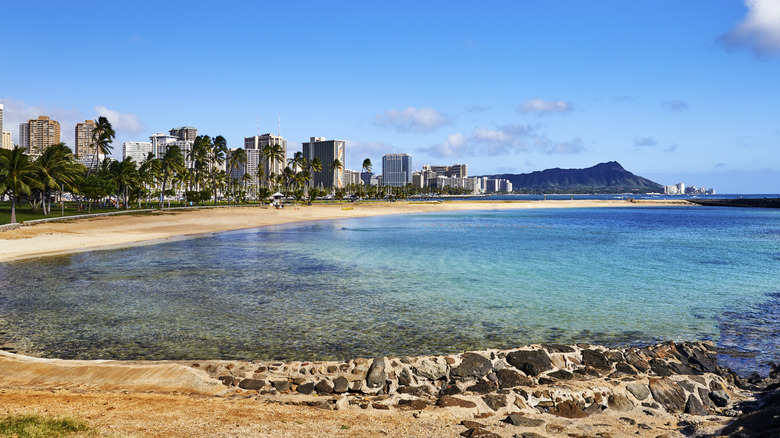
When it came time to learn to swim, my father took me to Ala Moana Beach Park where he playfully tossed me in the ocean to fend for myself, a right of passage for many kids in Hawaii and elsewhere, I'm sure. But I certainly learned quickly. Now, taking my loved ones here and avoiding the Waikīkī crowds is also a right of passage when on Oʻahu.
Ala Moana translates to "path to the ocean" in Hawaiian. Dubbed the "People's Park," you'll find more locals than tourists here on any given day relaxing on the sand or enjoying the beachside walking paths, event pavilion, and grassy fields. Gazing at the lapping Pacific here, Diamond Head rises to your left. Magic Island, a 47-acre peninsula created in the '60s, is adjacent to the beach and offers a protected sandy lagoon that's perfect for kids, or anyone preferring to lounge in calmer waters rather than play in the waves.
Just over a mile west of Waikīkī Beach and near the abundant hotels of Honolulu, it's not one of Oahu's most secret beaches, but Ala Moana Beach feels like it's a world away from its iconic yet heavily visited neighbor. Part of the 119-acre Ala Moana Regional Park, which ranked high on USA Today's 10 Best Readers Choice Awards for City Parks in 2024, the park and mile-long beach were manmade beginning in the 1930s and added to the Hawaii State Register of Historic Places in 1988. You'll find lifeguards on duty from 8:00 a.m. to 6:30 p.m. daily, plus plenty of free parking, as well as restroom facilities and showers from 4:00 a.m. to 10:00 p.m. daily. Otherwise, the park is open 24/7 for swimming, strolling, and watching kaleidoscopic sunsets.
Byodo-In Temple in the Valley of the Temples
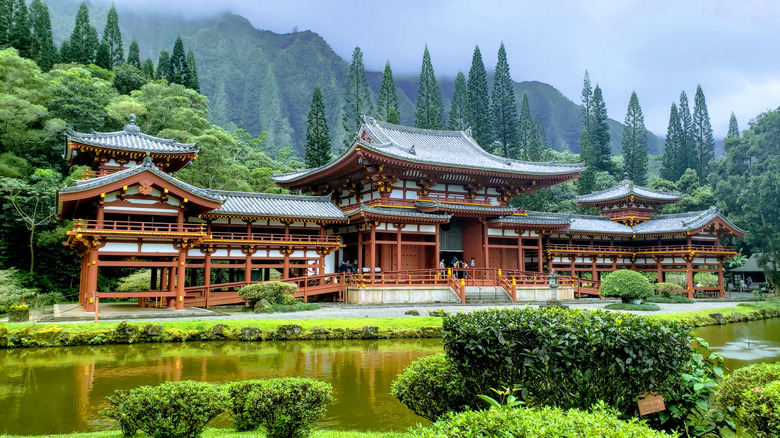
One of the most beautiful places on Oʻahu, in my opinion, is tucked into the base of the verdant, naturally chiseled Koʻolau Mountains on the island's windward side. Byodo-In Temple is a replica of a 1,000-year-old UNESCO Heritage Site in Japan, set amidst the Valley of the Temples' 240 tranquil acres. Here, peacocks roam the grounds, flame-colored koi fish swim lazily in a pond in front of the temple, and a meditation pavilion provides peaceful moments of reflection while immersed in exquisite greenery. At times, among the only sounds heard here is that of visitors striking the three-ton brass bell with a swinging log in the Bell House outside of Byodo-In. Legend says ringing it brings you blessings.
Not often on Oʻahu tour guide's must-see lists, I consider it one of the most stunning places on the island to take visitors. I may not have found it myself if my Grandmother Ludmilla wasn't buried in the cemetery near the temple grounds here. It's worth mentioning that surrounding the temple are thousands of gravesites, some demure, others grandiose. As final resting places go, this may be among the most beautiful and tranquil anywhere.
In a former tea house outside the temple, you'll find a shop with gifts and mementos that also sells bird and fish food. Throughout the week, local artisans and food purveyors also offer their wares here. Open from 8:30 a.m. to 4:30 p.m. daily, there are modest fees for entrance and parking — though you may not want to leave this tranquil locale.
Leonard's Bakery
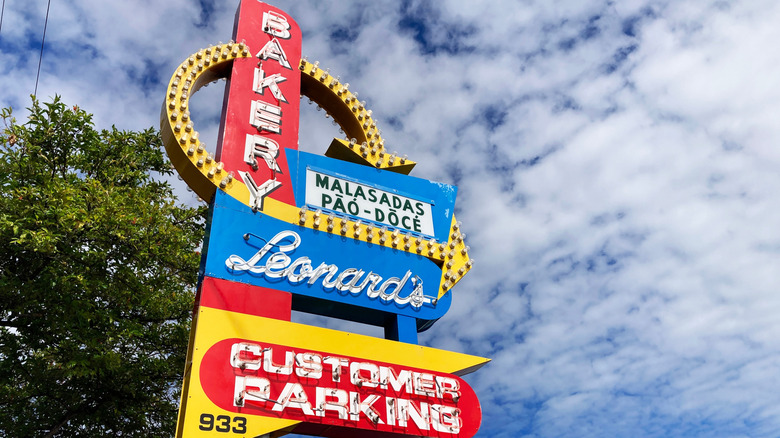
Dining in Hawaii can be a multicultural adventure. Myriad people from across the globe have landed on Hawaii's shores, each bringing staple foods from their homelands. Among them were plantation workers from Portugal who brought a beloved sweet: malasadas. Leonard's Bakery is credited with the large-scale introduction of malasadas when the son of immigrants from Portugal, Leonard DoRego and his wife Margaret, began making them at the their Honolulu bakery in 1953.
Malasadas are a must for my mother when she visits. Her eyes twinkle at the mere mention of them. As a flight attendant in the 1960s based out of Honolulu, she was a regular at Leonard's, and I love continuing the tradition and making malasada fans out of my visiting friends.
Originally a Portuguese doughnut sans hole made for special occasions such as Shrove Tuesday, malasadas were quickly adopted by Hawaii residents once introduced. These pillowy puffs of fried dough dusted with sugar are often stuffed with creamy or fruity fillings such as lilikoi (passion fruit), or haupia (coconut). Leonard's, still run by descendants of the original owners, is a go-to when a sweet tooth strikes on Oʻahu. It has 4.6 stars on Google (with 13,000 reviews!), and lines out the door.
Oahu's North Shore
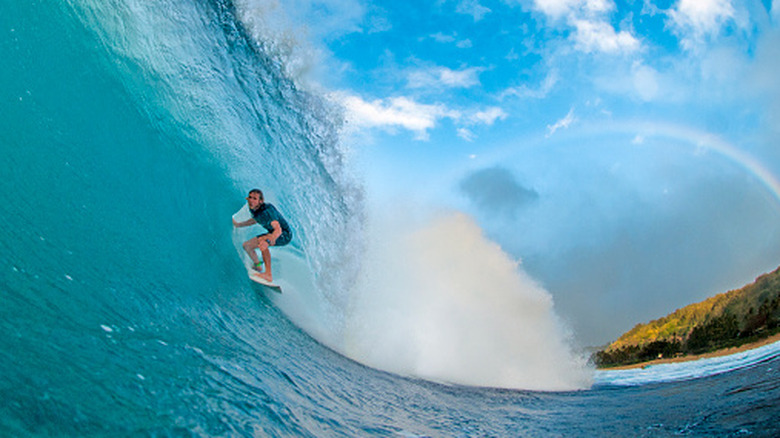
Back to the beach: On the North Shore, there are many, and they may or may not be swimmable depending on the time of year and conditions, yet they're always something to behold. It's a vibe. Plus, the colorful towns dotting the North Shore are teeming with restaurants, shops, and locals, making it one of my favorite areas of the island to bring visitors.
It's just a one-hour drive from Honolulu to Haleʻiwa, the gateway town to the North Shore, Oʻahu's surfing mecca. When winter conditions are ideal, meaning treacherous for most swimmers, Waimea Bay is home to The Eddie Aikau Big Wave Invitational, thanks to the surf reaching up to 100 feet between November and February. Surfing here can be dangerous for even the most proficient wave riders, but for visitors, it's hypnotizing to watch. From May to October, the waters at Waimea Bay Beach Park are generally calm and swimmable, and the area has restrooms, lifeguards, and picnic tables.
The North Shore also has world-class snorkeling, and just a mile from Waimea lies Shark's Cove's with its rocky shore, tidepools, and shallow waters teeming with colorful fish. At Chun's Reef, about three miles west, there are soft sands and a freshwater pool, and the snorkeling here is more welcoming for families. No matter the time of year, always check conditions at HIOceansafety.com before entering any waters.
When I'm in Haleʻiwa Town, I bring friends to Da Seafood Cartel for ultra-fresh ceviche and tostadas, and Google reviewers consistently give it five stars. Afterwards, we grab another sweet staple around the islands at the equally highly rated Kaimana Shave Ice. We then plant ourselves on the sand at nearby Sunset Beach Park, a spectacular spot to finish the day watching the sun drift down into the ocean.
ʻIolani Palace
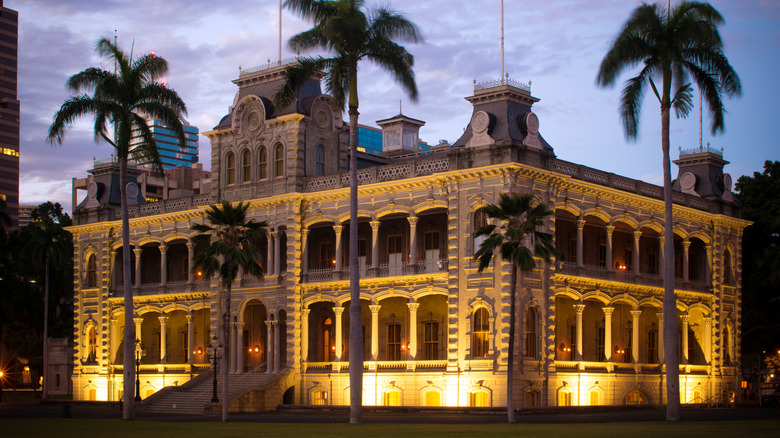
My father, a stateless immigrant whose family moved to Honolulu in 1958, was a history buff. Driving around Oʻahu, he'd regale me with stories from bygone days, including that of the Hawaiian monarchy and when Hawaii became a state the year after my family's arrival. I grew up entranced by history as well, which is why bringing visitors to monuments of Hawaii's past is critical in giving them a deeper sense of place.
Hidden in downtown Honolulu is America's only royal castle, ʻIolani Palace. A National Historic Landmark, the palace was completed by King Kalākaua in 1882. It remained the seat of the Hawaiian monarchy until it was overthrown in 1893 when a detachment of U.S. Marines invaded the lands. A marvel of its day with indoor plumbing and telephone system, ʻIolani Palace had electricity installed in 1886, even before The White House.
Tour the interior's impeccably restored and lavish two stories which include furnishings from multiple continents, velvet-laden and gilded décor, and a dramatic Koa-wood staircase. See the quilt made by Queen Liliʻuokalani in the room where she was imprisoned for eight months following the overthrow of the Hawaiian monarchy. Outside, the ʻāina, which loosely translates to "land" although its meaning is more attune to "that which feeds," was home to many kings before Kalākaua built the palace. Explore the emerald-colored grounds' coronation pavilion, barracks, and the Sacred Mound which may still be the final resting place of ancient Hawaiian chiefs. A variety of available tours range in price from $6 for self-guided general admission, to $127 for the private White Glove Tour led by a palace historian who takes you behind the scenes to restricted areas, sharing artifacts not viewed by the general public.