
New Jersey's Oldest City Has A Waterfront Walkway, Abundant Urban Parks, And Water Fun
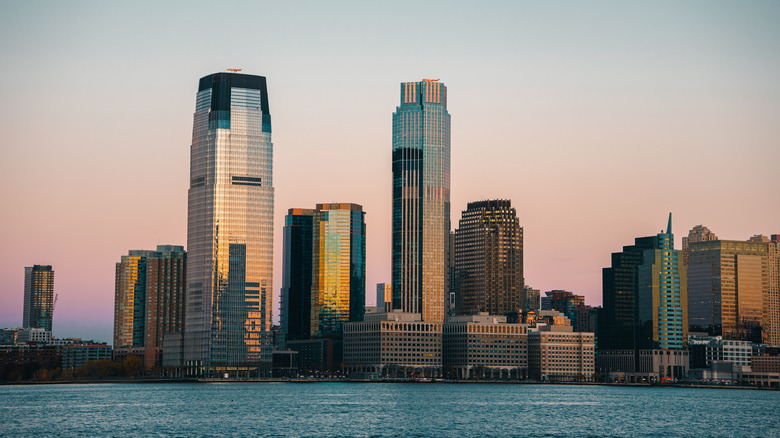
Often described as "New York's little sister," Jersey City is actually older than its famous neighbor — and older than most other major urban centers in New Jersey. Long before European arrival, the land was home to the Lenape people, who lived and traded along the shores and waterways of what was then called Mahicantuck (now the Hudson River). During the colonial period, the Dutch established some of the earliest European settlements in the area, including Paulus Hook, part of present-day Jersey City. By the late 19th and early 20th centuries, the city had become a major industrial and transportation hub, driven by railroads, ferry systems, and port activity. The Jersey City Terminal Train Shed — listed by Preservation New Jersey as an endangered historic site — was a key transit point during peak arrivals at Ellis Island.
Jersey City experienced industrial decline after World War II, followed by large-scale real estate and waterfront redevelopment investments in the 1980s. Since then, the North Jersey city has undergone a dramatic transformation, evolving into a dense, fast-growing urban center with a skyline that includes the Goldman Sachs Tower and the Journal Squared complex. The development of rapid transit systems such as PATH (Port Authority Trans-Hudson) trains and NJ Transit's Hudson-Bergen Light Rail has helped turn Jersey City into a major residential hub and a financial extension of the New York metropolitan area — hence the nicknames "Sixth Borough" and "Wall Street West".
Today, much of the social life of the over 300,000 residents revolves around the Hudson waterfront, the result of decades of large-scale renewal projects that transformed once-dull, industrial land into a lively public waterfront — or, a "Gold Coast," as some like to call it — lined with charming green spaces like Liberty State Park, scenic promenades, including the 18.5-mile Waterfront Walkway, and modern residential neighborhoods such as Newport and Exchange Place. There are also lots of opportunities to have fun on the Hudson's waters, including kayaking, paddling, or even cruising the river in a giant hot tub.
Exploring Jersey City's waterfront and green spaces
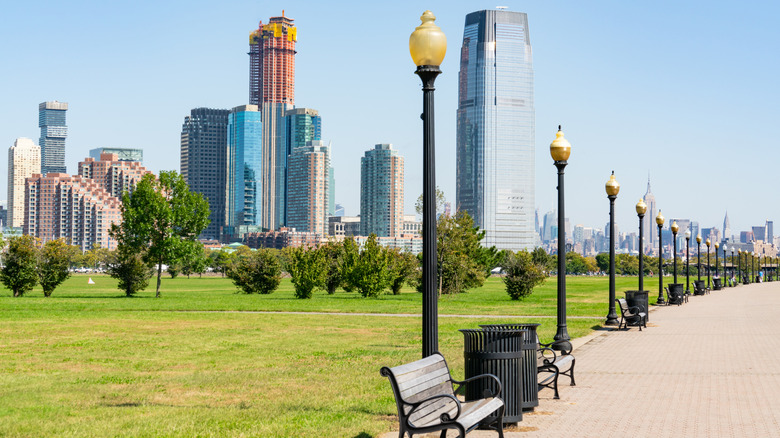
Jersey City is surprisingly easy to explore on foot. A 2025 study by footwear brand FitFlop ranked Chilltown as the second "most walkable" city in the United States. The study considered factors such as the average distance and walking time between a city's major landmarks. In Jersey City, those figures were about 3.5 miles and 90 minutes, respectively. For instance, the lively, walkable neighborhood of Journal Square, with its standout restaurants and artsy attractions, is just about a 45-minute walk (or 2.1 miles) from Exchange Place, the city's financial district, and 40 minutes (1.8 miles) from The Waterfront, a trendy neighborhood with iconic Manhattan views, a scenic walkway, and tasty food. Running along much of the city's shoreline is also a large portion of the Hudson River Waterfront Walkway, a continuous pedestrian and bike route that is part of a larger redevelopment project for the waterfront area. It passes through nine municipalities in Bergen and Hudson counties, from Bayonne to Fort Lee.
Jersey City also boasts charming green spaces that blend seamlessly into the city's high-density districts. Newport Green Park is one of them. Strategically located along the Walkway, near the entrance to the Holland Tunnel, it features a small urban beach, playgrounds, and curated lawns. Hamilton Park is another good example of this "community-forward" urban planning. It hosts a farmers' market and a range of seasonal events, including the beloved Mother's Day Celebration. The 1,200-acre Liberty State Park was once part of modern America's immigrant arrival system. It is also the only location in the state featuring direct ferries to Ellis Island and the Statue of Liberty.
And then there's the water itself. Kayaking and canoeing on the Hudson have become a local summer ritual, offering the rare opportunity to paddle beneath some of the world's oldest — and most legendary — skyscrapers.
A journey through Jersey City's vibrant culinary and cultural scenes

Alongside Cape May, one of America's first resort towns, full of local eats and beach bliss, Jersey City is one of the most multicultural places in the United States. This diversity is particularly apparent in the city's culinary offerings. Journal Square, for example — and, specifically that portion clustered along Newark Avenue, also known as India Square – is home to some of the state's most beloved Indian restaurants. Among the top-rated on Google and Reddit are Rasoi, Deccan Spice, Clove Garden of India, as well as more recent additions such as Swadist.
Just a short drive away, you can sample the Mediterranean and European cuisines of downtown Jersey's restaurants. Razza is a citywide reference for traditional Italian "pizza artigianale," often ranked among the best pizzerias in the state and, according to the Best Pizza Awards, even in the entire country. Choc O Pain Bakery brings French-inspired café culture into daily neighborhood life. The menu features all the French pastry classics (think freshly-baked viennoiseries, Proust's madeleines, and croissant aux amandes), as well as seasonal delights like the vegan rhubarb and strawberry tart. For a more upscale dinner with waterfront views, local favorites include Battello and ONDO.
The cultural and arts scene is equally dynamic. Loew's Jersey Theatre in Journal Square Plaza is a beautifully preserved historic building dating back to the "Roaring Twenties", and regularly hosts concerts, film events, and live shows. The area is also very lively during Indian festivals like Diwali and Navratri. Bergen-Lafayette is famous for its large, colorful murals, sometimes covering entire buildings. One notable example is BKFoxx's "Maybe It's Me," a mural that comments on the cosmetics industry's influence on young girls.