
Europe's 'Most Authentic' Food City Is An Underrated And Affordable Spot Known For Street Eats
When you think of a European vacation, classics like Paris, Rome, Barcelona, or London likely spring to mind. Most North American travelers still gravitate toward the same familiar hotspots, places that frequently dominate U.S. News & World Report's annual list of the top 30 European destinations. One remarkable place continues to be overlooked by many travelers: Budapest, the capital of Hungary. Not only does Budapest offer rich history, beautiful architecture, fascinating culture, and relative affordability, but according to a 2025 study, it's also the most authentic food destination in Europe.
Saga, a U.K.-based travel brand and agency, analyzed Google reviews from 5,000 restaurants across 125 cities across the continent, tabulating keywords like "traditional" and "authentic." It then scored cities based on overall review sentiment, with higher values awarded to more positive reviews. Budapest took the top spot with a score of 98 out of 100, with Saga citing Hungary's paprika, alongside the city's vibrant street food scene, where vendors and market halls serve some of the most affordable, authentic Hungarian dishes around.
Once the heart of the powerful Austro-Hungarian Empire — often called "the crossroads of Europe" — Budapest straddles the scenic Danube River and offers grand architecture, wide boulevards, and all the quintessential European charm you can picture, from castles to Christmas markets. As of this writing, $1 equals about 300 Hungarian forints (HUF). According to Numbeo, restaurant and grocery prices are lower in Budapest than in Paris and Vienna. With greater purchasing power, visitors can freely indulge in rich dishes like goulash and lángos, reflecting on the underrated country that has shaped global history.
Budapest is more than goulash -- though that's very good, too
The "crossroads of Europe" lives out in Budapest's food: from goulash to kebab, each dish offers fascinating historical context. Capsicum annuum pepper, or paprika, Hungary's "red gold," remains the country's signature spice. It originated in Turkey and was used as aristocratic decor before lower socioeconomic classes adopted it as a more affordable alternative to black pepper. Strings of red peppers still hang from market stalls throughout Budapest, and the flavor features prominently in regional dishes.
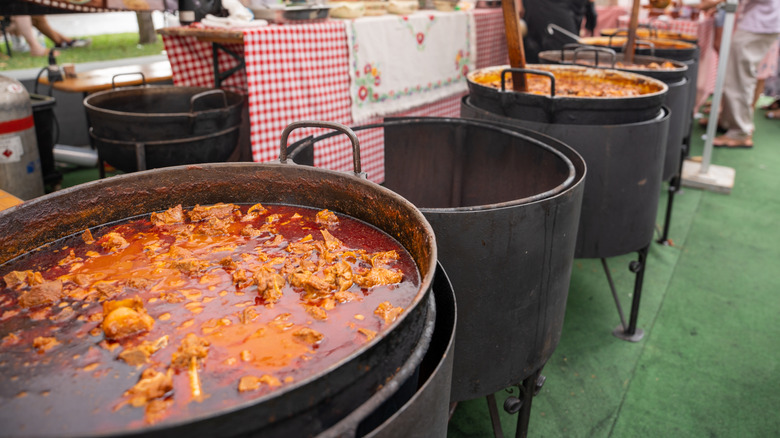
Hungarian goulash might be the country's most famous culinary export, especially if you're taking Samantha Brown's recommendation for a budget-friendly winter vacation destination (though it's appropriate any time of year). The dish traces its roots to rural Hungary, where shepherds and cowherds, known as gulyás, cooked over open fires (like American cowboys) and often made one-pot meals — thus, "gulyás" was born. It remains a national treasure, but is often mistaken for pörkölt, which travel blog Pieter on Tour describes as a thick, meaty stew finished with sour cream. "Ask for gulyás if you want soup. Ask for pörkölt if you want hearty stew," he writes. Paprikás Csirke, or chicken paprikash, is another favorite: a creamy braised chicken stew with onions, garlic, and paprika, served with noodles or dumplings.
For these classics, many visitors head to Budapest's Jewish Quarter, known for its nightlife, ruin bars, and street food. On Kazinczy and Király Streets, places like Frici Papa are a staple for affordable, authentic dishes. Street Food Karavan, a food truck court, has also become a destination in this area — ideal to accompany ruin bars pub crawls. Don't miss the Great Market Hall, one of Budapest's original markets and food courts. The top floor is an affordable food court where you can find options from sausages to nokedli (dumplings).
Other affordable, must-try casual foods abound
Hungarian food still has a relatively small footprint outside Central Europe, so Budapest is the place to try it all. Because the U.S. dollar stretches far in this tourist-friendly country, it's an even better opportunity to truly experience the cuisine (and one excellent way to stumble upon good street food is to find a free walking tour; Budapest has several).
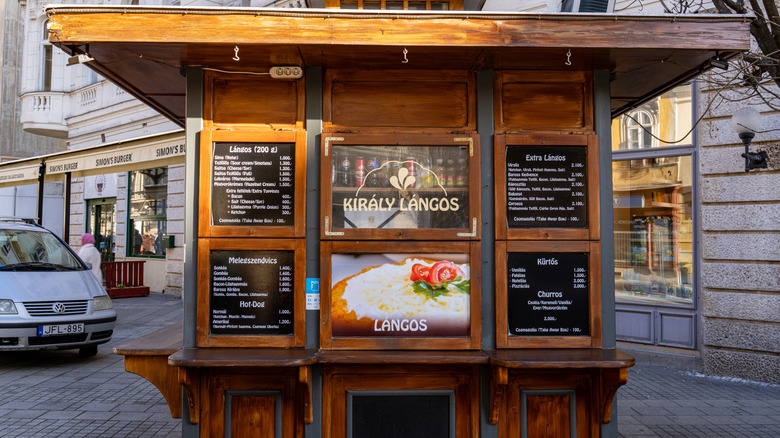
Lángos are a must-try. Deep-fried flat breads are topped with garlic sauce, cheese, sour cream, cooked cabbage, or sausage and onion. Done right, the texture is a little crispy on the outside and soft on the inside. Pieter on Tour says to expect to pay between $5 and $9 for this local goodness, and Offbeat Budapest and Vienna blog recommends trying them at Hunyadi Market (where you can also get palacsinta, aka crepes, and tea) and "Lángos Land" on the upper floor of Fény Utca Market. "Absolutely the best Lángos in Budapest, they're not lying," wrote one Google reviewer. "Nothing to do with touristic places full of overpriced Lángos, this is a typical Hungarian Lángos in a market." Another agreed, "[B]est lángos [for] taste-price ratio. I think lángos should be a simple dish with the simple prices and this place makes exactly that."
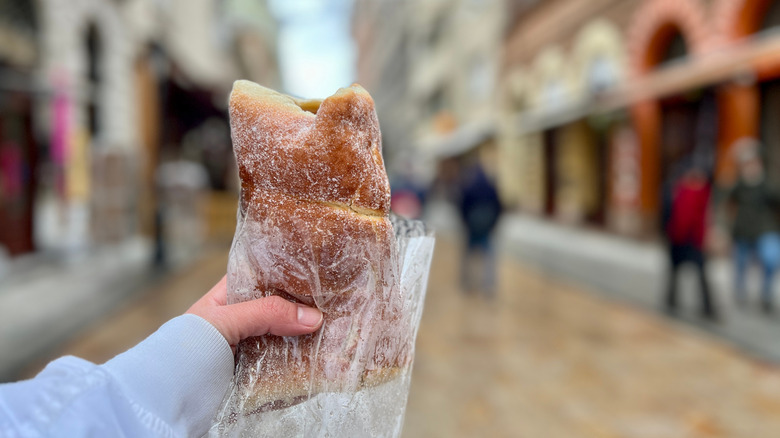
Váci Street is home to chimney cakes, or 'kürtöskalács' – caramelized-sugar-dusted, cone-shaped pastries filled with anything from ice cream to chocolate. They feel made for social media, though they weren't — these Transylvania-birthed treats are the oldest pastries in Hungary. Except to pay about $6 each. Some locals say the best are at random stands — like at the tram stop at Nyugati, and Nagyvárad metro station; others prefer shops like Kiraly Kalacs Kürtőskalács, where fresh chimney cakes cost only about $3.