
St. Lucia's Coastal Caribbean National Park Offers A Historic Fort, Trails, And Breezy Beaches
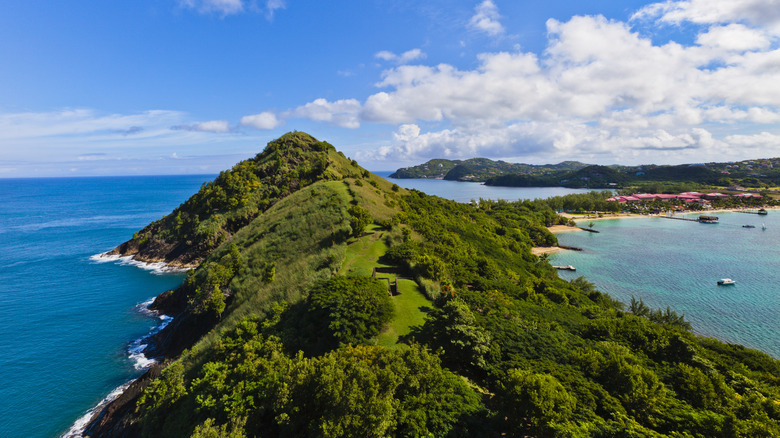
With its towering volcanic Pitons, azure beaches, and tropical rainforests, St. Lucia deserves a spot on every traveler's bucket list. And one of its must-visit destinations is its coastal national park, Pigeon Island National Park. Initially a separate island, and connected to St. Lucia's mainland in the early 1970s, Pigeon Island became the country's first official national park in 1979. Now, the 44-acre preserve is a coastal gem, with forested hiking trails and pristine swimming beaches — not to mention a unique history.
Originally home to Indigenous people, over the centuries, Pigeon Island became a base for pirates, and then the French and British militaries. Some of its most pivotal history came in the late 1700s, when the island played a key role in the Battle of the Saintes, leaving the British with control of Pigeon Island, and much of the West Indies. While visiting the national park, don't miss a visit to the Pigeon Island Museum and Interpretive Centre, open on weekdays, a small museum offering insight into the land's past.
According to the national park website, entry to the national park is $10 for everyone aged 13 and up, but prices are in the process of being adjusted. At the time of writing, the park is temporarily closed due to the Saint Lucia Jazz and Arts Festival, but it will reopen to the public on May 26, 2026. The park is typically open from 9:30 a.m. to 5:00 p.m., with last entry at 4:15. From Hewanorra International Airport, on the island's southern border, it's about a 90-minute drive to Pigeon Island National Park. Boat trips are also available from Castries and Rodney Bay.
Historic sightseeing and trails in Pigeon Island National Park

Pigeon Island National Park's lush jungle scenery makes it one of the most mesmerizing national parks in the Caribbean, and the best way to explore is by hiking on its two primary trails. One of the park's highlights is its unique history, like its 18th-century fort built by the British. Fort Rodney, overlooking Rodney Bay and the surrounding coastline, can be reached after a 20 to 30-minute, somewhat challenging hike. The fort is a reminder of Pigeon Island's colonial-era past, when it was the site of many battles between the French and British. While here, you'll also see historic cannons and take in a sweeping view of the Caribbean sea.
The park's other main trail leads to Signal Peak, the park's highest point, with an elevation of 330 feet. To reach Signal Peak, just keep following the pathway from Fort Rodney. As you make your way, you'll see the island's many palm tree species as well as colorful blooming shrubs and trees like hibiscus and bougainvillea. You may even see wildlife like tropical warblers, St. Lucia parrots, iguanas, or mongoose. When you reach the peak, you'll have a stunning view of the park, the sea, and even nearby islands on a clear day. For cooler temperatures (and less crowds), plan your hikes for earlier in the morning, or later in the afternoon. Be sure to also wear sturdy shoes, a hat to block the sun, and pack lots of water as stretches of these hikes are unshaded.
Tropical beaches in St. Lucia

From St Lucia's vibrant coral reefs to its dramatic coastal scenery, the beaches here are what draws most visitors to the island. And, two of its most stunning sandy stops can be found within Pigeon Island National Park. The park's beaches offer clear, turquoise water with consistently warm water temperatures ideal for snorkeling or swimming. The tropical breezes and surrounding views of St. Lucia's mountain landscapes add to the allure of Pigeon Island. Not to mention, you'll typically enjoy a quieter experience than what you may find at St. Lucia's mainland public beaches. Within the park, beach chairs and umbrella rentals cost just $3 each at the time of writing.
The park's main restaurant serves local cuisine and cocktails with stunning views of the water, but, Jambe de Bois is currently closed for renovations. If you plan to spend a few hours within the park, you'll probably want to pack a lunch. Of the minimal dining options across Pigeon Island and outside of the park's boundaries, many are not particularly well-rated. One exception is Agnes Heineken Bar, a casual beachfront spot also right next to the park, which serves dishes like barbecue and jerk chicken and has a 4.3 rating on Google. The Thirsty Parrot, rated 4.4 on Google, is another option offering seafood and meat dishes alongside beachfront views. If you're looking for an accommodation option for your trip, consider St. Lucia's all-inclusive resort, East Winds, located just 20 minutes outside of Pigeon Island National Park.