
The Country With The World's Shortest Coastline Is An Enchanting Mediterranean Escape With Jaw-Dropping Beaches
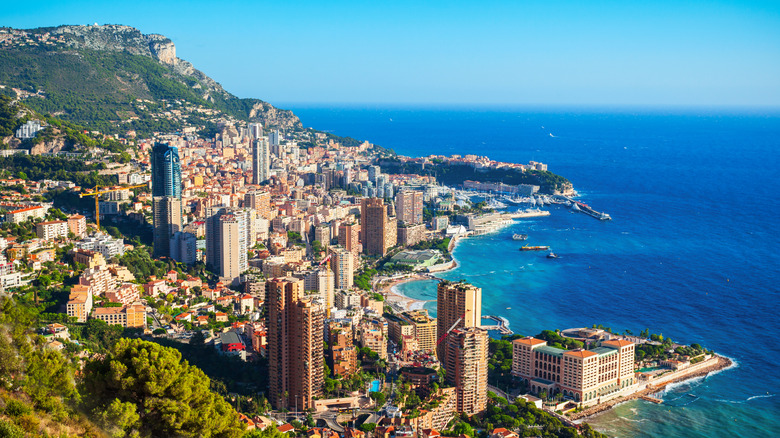
The city-state of Monaco is most known for being a multi-millionaires' playground — almost 30% of the country's residents have a net worth with far more zeroes than we average Joes can imagine, and they probably carry spare Lamborghinis in their back pocket (per DIARIO AS, S.L.). Luxury yachts and perfectly maintained beaches are a fundamental part of Monegasque vacations, and the country's famed shores have an almost irresistible pull. What's truly surprising is that, for a country famed for its high-class attractions and gorgeous beaches, Monaco doesn't actually have much of a coastline. In fact, the country has the smallest coastline in the world, spanning just about 3.5 miles (via Guinness World Records). For reference, that's the same length as Santa Monica Beach in California.
Yet, in these tiny pockets of coastline lie some of the Mediterranean's best waters and cleanest beaches. Monaco sits right next to France, on the gorgeous French Riviera, and benefits from the shores' famously beautiful waters. However, unlike other Mediterranean destinations like Greece or Italy, Monaco doesn't have any entirely natural beaches. Instead, its beaches were mostly man-made, using land-reclamation techniques. Even the city's famous Larvotto Beach was originally just a rugged, rocky outcrop by the sea, until an ambitious project turned it into the beach we see today.
Despite Monaco's glitzy, straight-out-of-a-Bond-movie image, the city manages to maintain a careful balance between modern luxury and old-world charm. Gardens and green spaces are sprinkled all over the city, adding some much-needed greenery to the packed buildings and streets. Plus, some of Monaco's most famous districts feature old-school Mediterranean charm, with historic architecture, characteristic narrow streets, and friendly marketplaces that proudly display authentic Monegasque culture and wares.
Explore Monaco's famous beaches
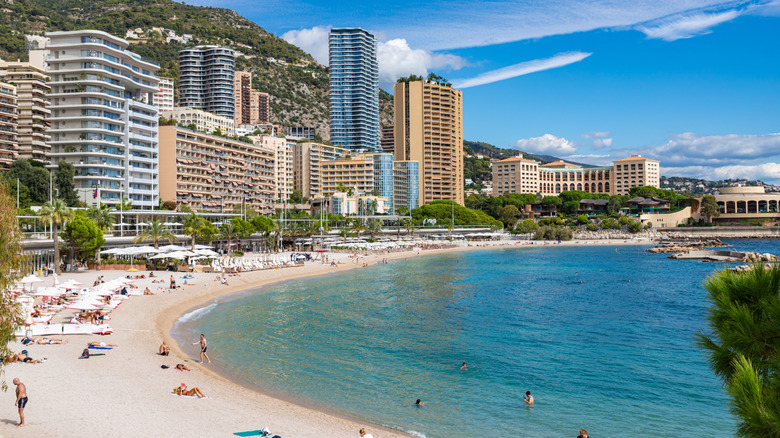
Even though Monaco is bordered by France on three sides and only has sea access on one, its beaches are nothing to laugh at. The second-smallest country in Europe is a Mediterranean coastal dream, just an 18-mile drive from Nice's Côte d'Azur Airport and with every possible luxury a few steps away. The city's main beach district is Larvotto, which includes a public beach with fine, imported gravel and access to the Monaco Marine Reserve, a protected area with spectacular snorkeling opportunities. Nearby, Le Meridien Beach Plaza offers luxurious, sea-facing rooms and access to a less-crowded private beach. In 2024, the hotel introduced 'La Plage and More!,' a program through which non-guests at the hotel can access its private beach for a fee.
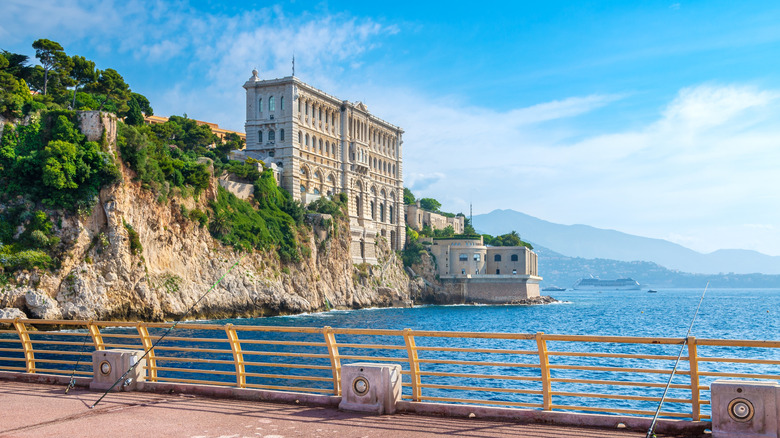
Larvotto Beach may be the largest beach in Monaco, but it's not the only one. From the Chemin des Pêcheurs walkway just outside the Oceanographic Museum in the Monaco-Ville district, a set of steep stairs leads to a hidden cove with a tiny beach. Known as Fisherman's Beach, this hidden gem provides fine gravel, an outdoor shower, and stunning views out into the Mediterranean Sea, without the crowds or noise of Larvotto.
Have you ever imagined a sunbathing and diving area without the annoying sand or gravel? Well, in Monaco you can find exactly that! Located in Port Hercule is Solarium Beach, a tiered dike turned into a sunbathing area beside the water. While it can be a popular diving spot on calm days, Visit Monaco notes that it's an unsupervised beach, and diving is prohibited when the sea is rough. Only attempt to go diving here if you're a real expert; otherwise, stick to the shallow, sandy shores of Larvotto Beach.
Explore Monaco's quaint streets filled with Monegasque culture and history
For a country that can fold itself into New York's Central Park, Monaco has a lot to offer. Most people assume that any vacation to the most expensive city in the world comes with an exorbitant price tag, and that's certainly true of some attractions in the city, like the famous Monte Carlo Casino, which is only open to foreign tourists. But Monaco's cobbled streets hold some budget-friendly gems, from historic palaces and museums to a lively marketplace.
The best place to experience the Monegasque take on Mediterranean cuisine is the La Condamine district, which houses the city's main marketplace. The market first opened in 1880, and retains much of its character, with carts full of fresh produce, food counters selling Monegasque pastries like Barbajuan and Socca, and cafés where you can chat with the locals while enjoying your morning breakfast. It normally has a covered food hall, but, as of this writing, the hall has been closed for renovations until early 2027. In the meantime, the stalls have been temporarily relocated to the open-air Place d'Armes square.
From Place d'Armes, climb to one of Monaco's most popular tourist attractions — the Prince's Palace of Monaco, in the Monaco-Ville district (aka Le Rocher or The Rock). Built in 1191 as a Genoese fortress, the palace has been the official residence of Monaco's royal family since 1297 and is open for tours from April through mid-October for €10 per adult. You can also grab a discounted €19 combined ticket to the Prince's Palace and the Oceanographic Museum of Monaco — also located in Monaco-Ville. Le Rocher is also the state's oldest district, featuring narrow winding streets, historic architecture, and street signs in the nearly extinct language of Monegasque.