
The Unexpected Reason Flight Attendants Greet You At The Boarding Door
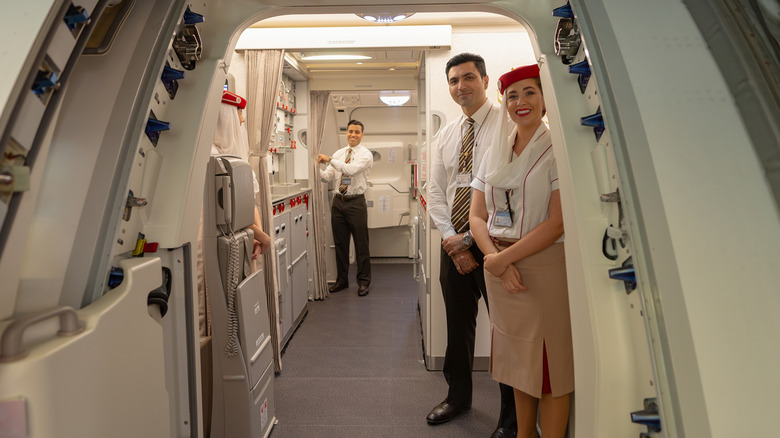
In many ways, the once-miraculous invention of flight has turned into something that could fit right into Dante's "Inferno," thanks to things like rising costs, smaller seats, and grumpier passengers. But there's one pleasant aspect of flying that has remained consistent over the years: being greeted by flight attendants at the boarding door. The greetings may vary, but they all mask one unexpected purpose before a flight: safety.
Of course, it's nice to start a flight with a polite greeting. Meeting passengers at the door also helps make the boarding process smoother, since flight attendants can point people to where their seats are. But the bigger reason for this small — yet significant — interaction is that crew members are making safety-related assessments of passengers as they board.
In those brief moments, flight attendants are looking to see who might need extra assistance, such as people traveling with small children, travelers with mobility issues, unaccompanied minors, or older adults. They're also watching for passengers who could help in an emergency, as well as those who appear sick or intoxicated. Unruly passengers are among the worst parts of a flight attendant's job, so if overly drunk or belligerent folks can be identified before takeoff, it can make everyone's lives easier since the flight crew can get extra support from airport personnel on the ground if needed.
Safety is key for flight attendants
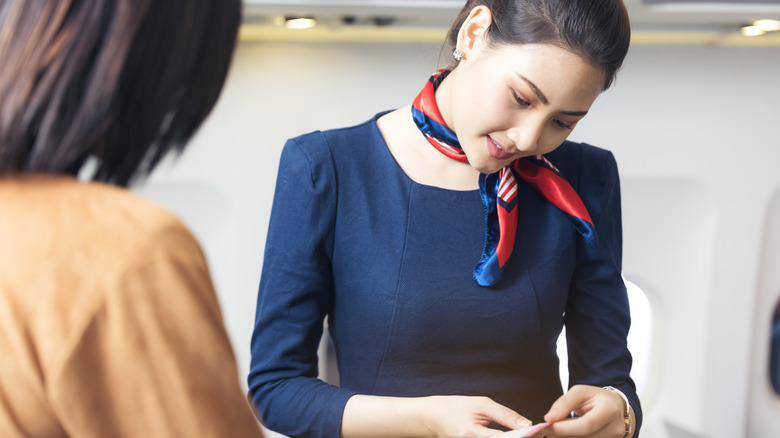
Even when there are no disruptive passengers on board, flight attendants must always be prepared for emergencies. That's another reason for the boarding-door check. With each greeting, crew members also identify travelers who may be physically able to help during an evacuation. These travelers are known in the aviation industry as "able-bodied passengers/people" or ABP, which is just one of the many terms that make up the secret language of flight attendants.
Besides that, flight attendants are also noting who may need additional assistance and making sure passengers with small children or mobility limitations are not seated in exit rows, where emergency doors may need to be opened quickly during an evacuation. Think of the boarding door greeting as an overall assessment. Crew members may also notice travelers who appear especially anxious about flying or passengers wearing sunflower lanyards, a symbol used internationally to indicate a non-visible disability or condition that may require additional support.
Ultimately, flight attendants are trained first responders whose primary job is to keep passengers safe. They go through extensive safety training, during which they run a number of emergency simulations. Plus, they're trained in CPR, first aid, self-defense, de-escalation, and conflict resolution, so they can handle a range of emergencies while staying composed and keeping passengers calm. It's not surprising, then, that flight attendants begin their safety check as soon as the airplane door opens. Considering all the ways these crew members keep things running smoothly and safely, some passengers might want to make this small but meaningful gesture to thank flight attendants and make their day.