
East Coast Vs West Coast: Which US Coastline Has The Best Beach Camping?
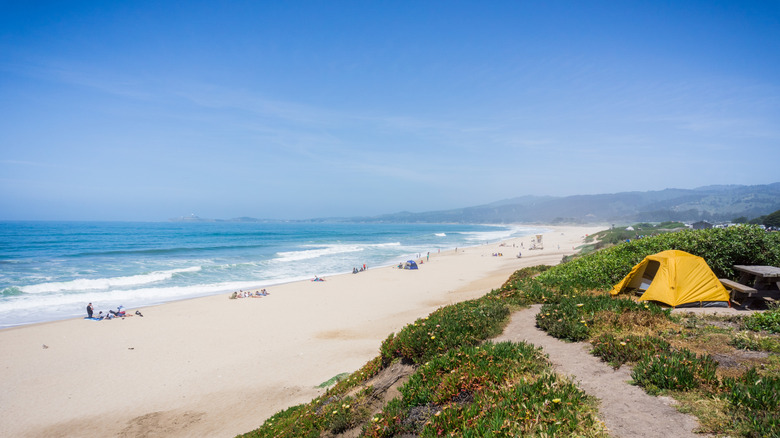
When it comes to beach camping in the U.S., both the East and West Coasts have a lot to offer the avid outdoorsman or occasional camper. Each coast has its distinct appeal, so choosing between the two really comes down to personal preference, with factors like cost and the overall vibe shaping your pick. Beach camping on the West Coast means you can watch the sun set over iconic surfing spots and rugged scenery, while back East, you'll get to swim all day in the warmer water at an affordable campsite that might be a short drive from home. So, which one suits your style? Read on to discover whether the East or West Coast is the better fit for your next seaside camping adventure.
Ultimately, both coasts offer numerous opportunities to breathe in the salty ocean air and fall asleep to the sound of crashing waves, which, after all, is what a good beach camping experience is all about. In 2020, U.S. News ranked the "17 top beach camping spots in the U.S." On that diverse list of beautiful destinations, the results were almost evenly split, with seven from the East Coast and five from the West (the remainder were in Hawaii, the Great Lakes, and the Gulf region). And if you look at Tripadvisor's listing of the best beaches in the country, you'll find a similar story: Out of the 15 spots ranked, three are on the East Coast, and three are on the West.
The West Coast: Rugged natural scenery and better surfing
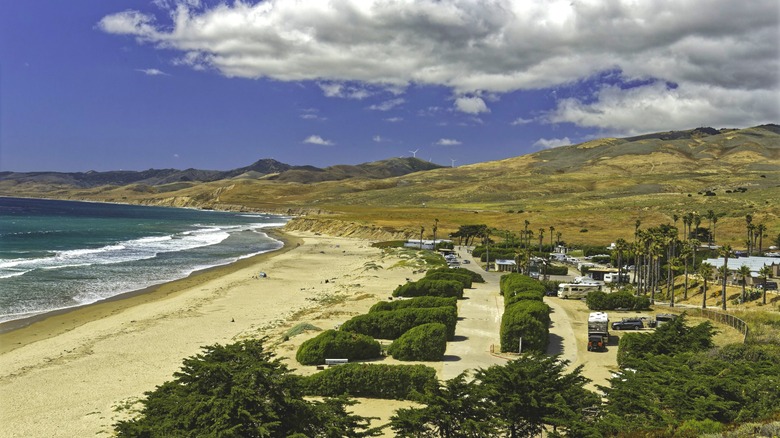
The beaches on the West Coast range from crowded urban playscapes with twinkling amusement parks to remote, windswept shorelines where sea lions outnumber people. You can pitch your tent overlooking a misty bluff in Northern California or get cozy in an island cabin off the Washington coast. Standout mentions from the U.S. News list include Kalaloch Campground (Olympic National Park, Washington), where you can fall asleep with the beach right outside your campsite amid a backdrop of thick forest, and Jalama Beach County Park (pictured above), where you can swing in your hammock in the shade of palm trees as you watch the Santa Barbara surfers paddle into the sunset. When it comes to spectacular natural scenery, the West Coast is hard to beat.
Some of the best West Coast beach camping destinations, including those famous spots along Highway 101, might cost you a bit more than they would on the East Coast. The best deals can be found if you're willing to backpack in, with most drive-in tent and RV sites starting at around $45 per night. In contrast, campgrounds on the East Coast have affordability on their side, with some ocean-view campsites in Florida and North Carolina starting at less than $30 per night.
If you like to surf, the West Coast generally has larger waves, making the beach campsites in Southern California and elsewhere up the coast more popular with surfers. However, the water on the East Coast is generally warmer, so if you enjoy swimming or bodyboarding and would like to avoid having to wear a wetsuit, the beach campsites on the East Coast may be your better bet.
The East Coast: Warmer water and a more lively beach culture
One of the biggest differences between camping on the two coasts is the distinct beach cultures, which means a day at an East Coast beach can look and feel very different from a day at one on the West Coast. Top spots chosen by U.S. News include tropical vibes in the Florida Keys, the windswept dunes of North Carolina's Outer Banks, and the iconic sands of Massachusetts' Cape Cod. Like the West Coast, camping out East lets you choose between protected natural areas and spending time near big cities, such as Virginia Beach, with its long stretch of boardwalk, activities, and cocktail bars.
The many historic beach promenades, classic arcades, and bustling restaurants along these East Coast beaches help contribute to a lively, party-like atmosphere, which can be a positive if you're looking for a more boisterous camping experience packed with opportunities to socialize. Beaches here are widely popular with millions of Americans, so there are campgrounds of every description to suit travelers. One example, the Ocean Lakes Family Campground in Myrtle Beach, South Carolina, has 859 campsites along the oceanfront. It's the largest campground on the East Coast, offering mini-golf, a water park, and golf cart parades with a live DJ.
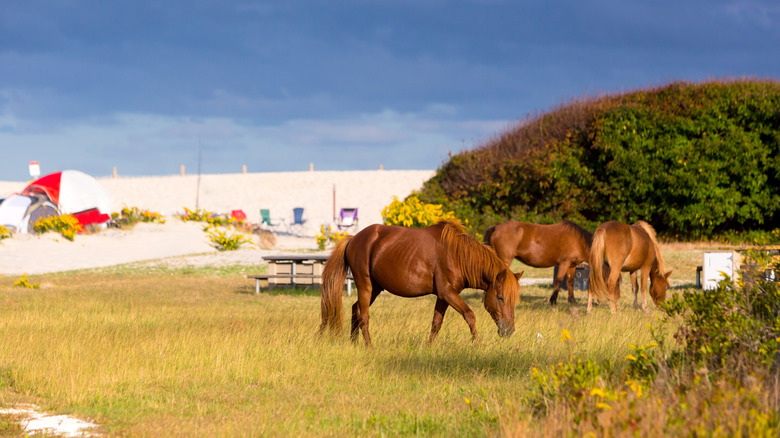
Of course, the East Coast has its fair share of wild and off-grid campsites, too, like Assateague Island National Seashore in Maryland (pictured above), where you can camp right on the sand among herds of grazing wild horses. One of the upsides of camping on the more densely populated East Coast is that even backcountry campgrounds are often conveniently located just outside of urban areas, often within a two-hour drive of a major city.