
Florida's Oldest Wildlife Management Area Is A Fishing Paradise Near The Gulf Coast Full Of Trails
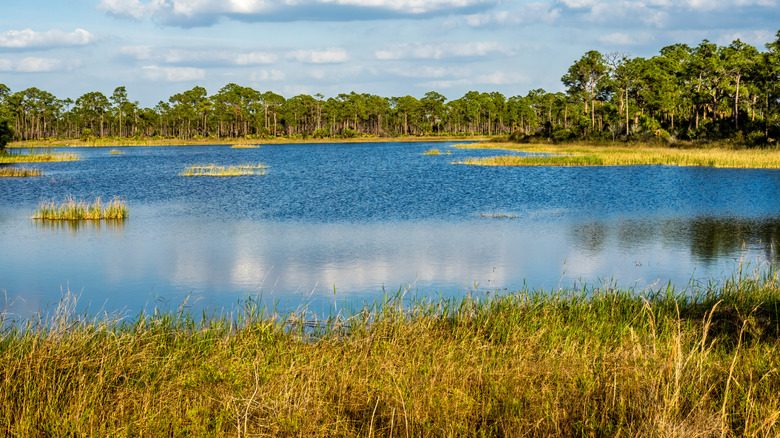
When it comes to expansive natural areas, Florida has no shortage of options. From Everglades National Park to Blue Spring State Park, the Sunshine State is home to a diverse array of ecosystems and wildlife. One of the state's oldest and largest publicly owned wildlife management areas is tucked inland, less than 10 miles from Punta Gorda, a Gulf Coast town where the beaches often get the most attention. The Fred C. Babcock/Cecil M. Webb Wildlife Management Area offers a natural haven for native flora and fauna, along with rustic opportunities for hiking, camping, fishing, birdwatching, boating, and even hunting.
The Florida Fish and Wildlife Conservation Commission (FWC) manages 6.1 million acres of public land throughout the state, including nearly 85,000 acres within the Fred C. Babcock/Cecil M. Webb Wildlife Management Area. Wildlife management areas are typically more rustic than state or national parks and tend to have fewer developed amenities. Even so, this area's ecosystems are carefully managed through prescribed burns, native replanting, and other healthy control measures to preserve the property. This allows visitors to Southwest Florida to take a closer look at the region's natural beauty and wildlife, including some of the last remaining undeveloped wet pine flatwoods, freshwater marshes, dry prairie, and marl ponds.
The area requires a day pass for entry ($3 per person or $6 per vehicle per day, as of this writing). Additional state fishing and hunting licenses are also required for those planning to partake in those activities. For those looking to stay overnight, weekend-only tent camping is permitted on the site at Webb Lake, with primitive sites and pit toilets. Though it's open year-round, camping is sometimes reserved for hunters during particular seasons, so check availability before you go.
Boat, bird, and fish across the wildlife area
This wildlife management area is named in part for the Babcock family, 20th-century tycoons, conservationists, and ranchers who once owned over 90,000 acres as well as adjoining land used for diverse ranch operations from citrus to timber to cattle and hunting. In 1941, Fred Babcock sold nearly 20,000 acres of the ranch to the Florida Game and Fresh Water Fish Commission, where conservationist Cecil M. Webb served in a leadership role at that time. After Babcock's death, the state acquired 71,000 acres of the ranch, preserving much of the land that now makes up the Babcock Ranch Preserve, one of the most underrated, scenic places for unique wildlife viewing in the area.
One of the area's most notable features is the 400-acre, 5-mile-long freshwater Webb Lake, rife with largemouth bass, freshwater snook, bluegill, channel catfish, sunfish, and perch — though bass are catch-and-release only. "Most of us that fish Webb have a love/hate relationship with it and at least one story of the one that got away," quipped the Punta Gorda Bass Club, but other reviewers love the lake. "We go fishing here often," wrote one Google reviewer. "Catch all kinds of fish. It's an amazing natural resource [they] have for us in Southwest Florida." Another agreed. "My mom and I frequently go fishing at Webb's. We absolutely love it! No matter what we catch we release!
Motorboats aren't allowed, but three boat ramps provide opportunities to bring your own kayak, canoe, electric motor, or rowboat for a quiet day on the lake, which opens 1.5 hours before sunrise year-round. Pure Florida suggests going early for the best fishing conditions, and SheFishes2 recommends spring for the most abundant largemouth bass. Though the shoreline is fairly vegetation-heavy, there is a pier on the lake's west bank.
Explore the trails but watch out for gators -- and hunters
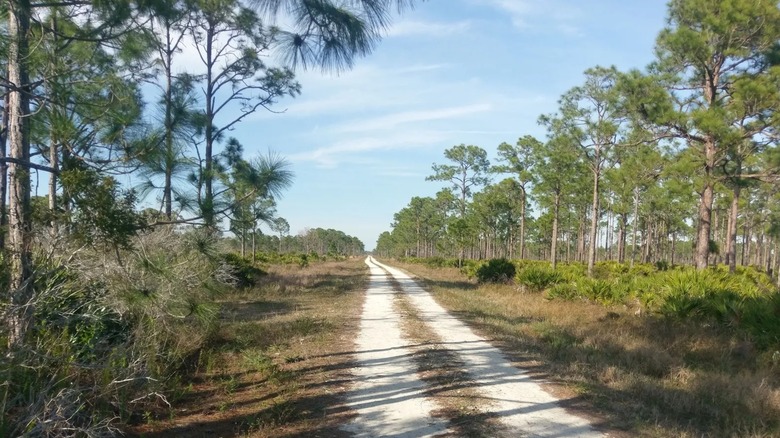
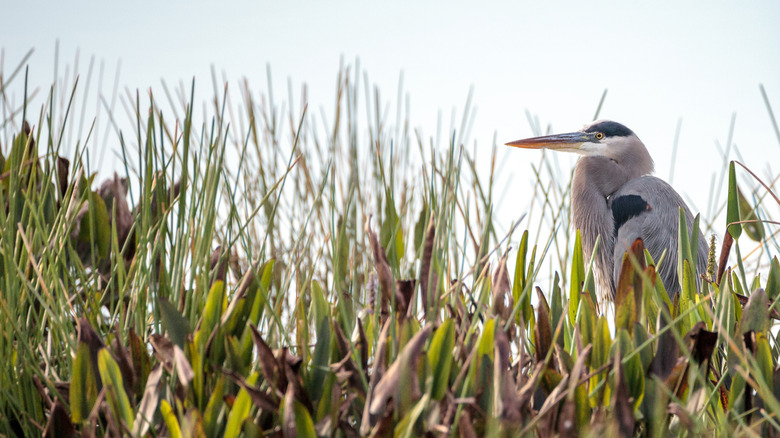
About 37 miles of paved and dirt roads — often used by off-roading hunters in season but also great for biking and scenic drives — offer opportunities to explore deeper, and maps are available at the area's entrance kiosk. Tram Grade and Truckers Grade are parallel, multi-use gravel roads that follow former railroad tracks through the wildlife area, intersected by Seaboard Grade. Flag Pond Loop and Cowhunter Trail are easy loops, and equestrian trails trace old cattle ranch-era paths. The area's part of the Great Florida Birding & Wildlife Trail, and nearly 200 bird species have been recorded, including the threatened red-cockaded woodpecker. The critically endangered Florida Bonneted bat and the gopher tortoise also inhabit the area, as do plenty of alligators: add this to your list of best Florida locations for viewing wild gators. The wide, paved Webb Lake Road runs along the southwestern shoreline, creating a 10-mile round-trip bike-perfect path. "Wonderful wildlife sightings, including a pair of mating Sandhill Cranes," wrote one Tripadvisor reviewer. "Egrets, deer, gators (far away) — bring your bikes and binoculars."
The property also includes a supervised shooting range with rifle and handgun ranges, offering opportunities to practice in a controlled environment. "Great place to shoot," a Google reviewer wrote. "Facilities are great, the staff is very friendly and professional, safety is always first." The area's also busy during multiple hunting seasons for those looking to bag quail, deer, dove, opossum, and more.
Fred C. Babcock/Cecil M. Webb Wildlife Management Area is located off Exit 158 on Interstate 75. Fort Myers, a renowned Gulf Coast city with great beaches and access to barrier islands, is a major hub with an international airport, just 20 miles from the wildlife area. Punta Gorda also has a regional airport less than 10 miles away.