
Forget The Colosseum, Visit Italy's Lesser-Known Roman Ruins In An Ancient Coastal City
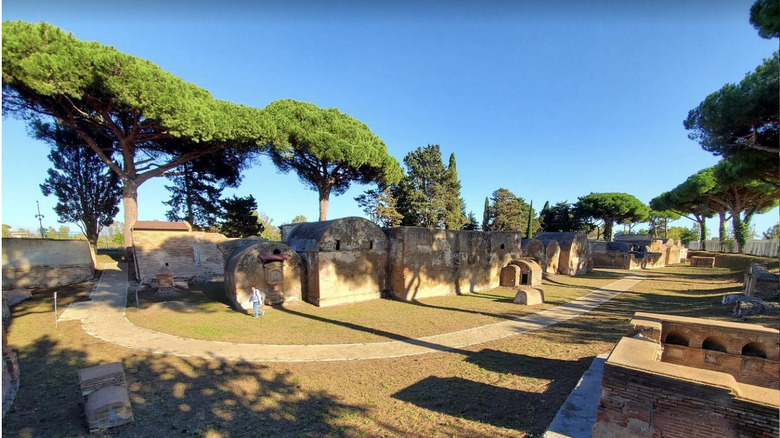
Italy consistently ranks as one of the most-visited countries in the world by international arrivals, and indeed, its reputation for crowds isn't exaggerated. That said, Italy's wealth of historical and artistic riches ensures that there are less-crowded alternatives if you know where to look. Isola Sacra is a perfect example of this as the ideal option for anyone who is wary of the staggering crowds in the capital.
The Colosseum makes it onto virtually every Rome itinerary for good reason, but that also ensures it's always crowded and tickets must be booked far in advance. Instead, consider Isola Sacra, a man-made island with significant Roman ruins and essentially none of the Colosseum crowds. It's located in Fiumicino, the coastal town 20 miles from the center of Rome that's best-known as the location of the city's international airport. Though its ancient Roman necropolis and harbor aren't household names, it's every bit as fascinating as the better-known Roman monuments in the city center.
Isola Sacra was once the site of a vital Roman port known as Portus. The best-known archaeological site is the Necropolis of Portus, an expansive Roman cemetery, but you'll also find the ancient Harbor of Trajan, a vast complex built to manage goods entering Rome. These sites are impressively well-preserved because the flooding of the Tiber River buried the island in sediment, protecting it from the elements, and thus offer a rare up-close look at the lives — and deaths — of the ancient Romans.
Isola Sacra hosts vibrant relics of a once-thriving ancient port
Though Fiumicino gets little tourist buzz except as the best airport at which to begin your Italian travels, the area around the airport was strategic during the heyday of the Roman Empire. It directly abuts Ostia Antica, an ancient Roman port city that's less crowded than Pompeii, and was itself Rome's most important marine port for several hundred years.
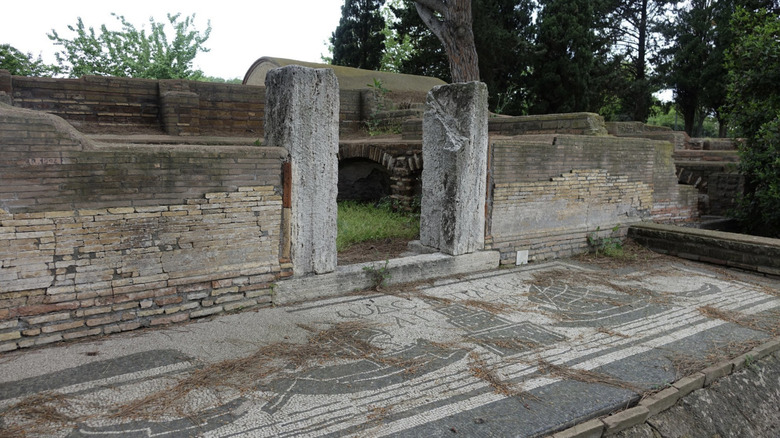
The Necropolis of Portus is the best-known of Fiumicino's archaeological sites. As a cemetery, the site was in active use between the 1st and 4th centuries as the final resting place of citizens from a variety of social classes, and the structures and artwork of its tombs are stunningly well-preserved in a park-like arrangement bisected by walking paths. Many tombs are marked with sculpture and mosaic artwork that frequently depicts the deceased at work, hinting at the kind of lives those buried in the necropolis might have lived.
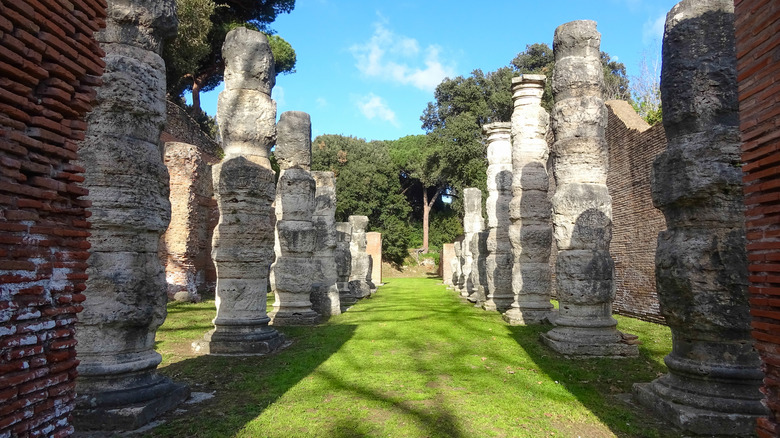
Although the Necropolis of Portus is the best-known historical site in the Isola Sacra area, it's far from the only one. Other remnants of the area's past as a buzzing maritime hub are evident in the ruins of the Harbor of Trajan, an extensive complex including defensive walls, warehouses, and a hexagonal harbor where up to 200 ships could dock at a time. That harbor is now the Oasis of Portus, a nature preserve, and in the absence of the busy shipping traffic that once filled the harbor, it's become a haven for migratory birds. So as not to disturb the wildlife, visitors are driven around the lake in horse-drawn carts. Though these sites aren't nearly as impressively preserved as the necropolis, they're worth a look if you're interested in the workings of an ancient Roman port.
Isola Sacra makes an easy, crowd-free day trip from Rome
If you're flying into Rome, you'll actually be quite close to Isola Sacra without knowing it: it's just under three miles from the Leonardo da Vinci International Airport. As such, it makes a convenient long-layover activity, with a free shuttle to the Portus archaeological sites available from the Terminal 3 departures floor. If you're hoping to visit from the center of Rome, the fastest way to do that short of driving or hiring a car is to take the 32-minute express train service from Roma Termini station to the airport, then connect to Isola Sacra from there.
Once you arrive, the sites are spread across several miles, so it's easiest to navigate the area if you have a car or can use taxis. Because the sites are so dispersed, you could spend all day in Isola Sacra if you wanted to see every archaeological site, but if your interest is more casual, you'll likely want to prioritize the Necropolis and stick to a half-day visit instead.
Hours and admission can vary across sites as well. Each of these three sites has separate opening hours, seasonal and weekday closures, and admission fees, so check before you go for the most up-to-date information and don't assume you'll be able to visit all of the sites on the same day. And while there are few tours in the area, guides are available at the Oasis, and you can follow along with an interpretive audio guide at the Port of Trajan.