
Forget Banff National Park, Visit British Columbia's Second-Oldest Park With Mountain Trails And Turquoise Lakes
There is no question about the popularity of Canada's very first national park. Banff National Park, in fact, is the most visited park in Canada, counting as many as four and a half million visitors during the 2025-26 year — increasing from the year before. Those who want to avoid the crowds that the Alberta natural haven attracts may consider neighboring British Columbia. Canada's westernmost province has several natural parks to rival Banff, featuring epic mountain trails, hiking routes with exceptional views, and pristine lakes — all spread across the Canadian Rocky Mountains.
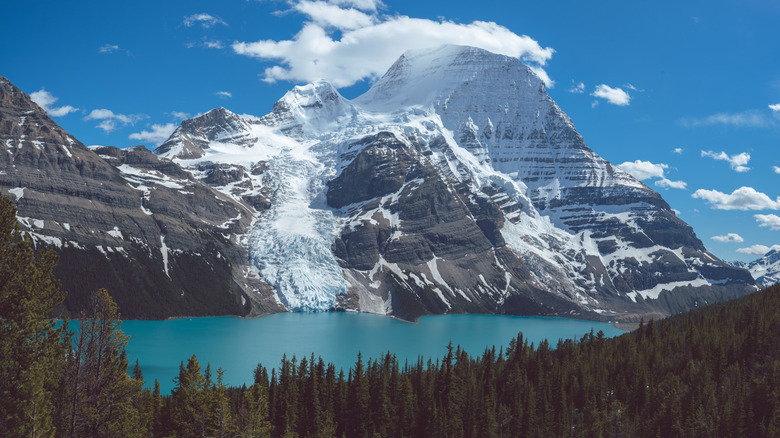
Of the three Canadian Rockies provincial parks British Columbia looks after, Mount Robson Provincial Park is the second-oldest in British Columbia. First established in 1913, the park was created two years after the very first national park in B.C. was inscribed, Strathcona Provincial Park. It is named after the highest peak in the Canadian Rocky Mountains, ca. 13,000-feet-tall Mount Robson, which is a focal point of the scenic landscapes you can experience throughout the park.
Indeed, Mount Robson's ecological and geological marvels have even granted it a place in UNESCO's Canadian Rocky Mountains Parks. Plus, from glaciers melting into crystal lakes to wildflower meadows and sunshine dappling snow-capped, craggy peaks, Mount Robson Provincial Park can be enjoyed during different seasons. In 2024, Mount Robson received about 170,000 visitors (via BC Parks), compared to Banff's 4.2 million the same year, making it a significantly less congested option.
Hike Mount Robson's mountain trails
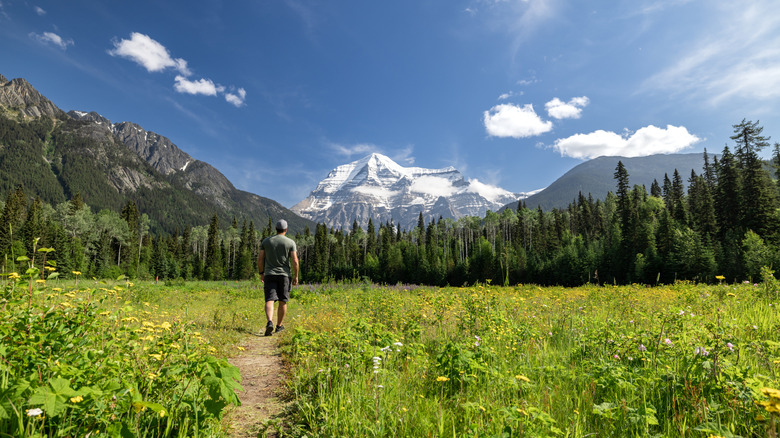
Of the park's several hiking trails, Berg Lake Trail is the best known. Starting near the park's main Welcome Center, the trail provides some of Mount Robson's most spectacular views, from peaks like Whitehorn Mountain to lakes, rivers, and waterfalls, including Emperor Falls, and Berg Lake itself. Though the entire trail is about 25 miles out and back (ending at the Robson Pass), hikers can focus on individual sections. A segment of the wider trail, the 12-mile-long Snowbird Pass Trail features vistas of the Robson Glacier embracing the homonymous mountain, as well as views of the massif itself. It's best to set aside an entire day to complete the Snowbird Pass Trail comfortably, and have time to rest and enjoy the alpine meadow waiting at the end.
Hikers who want to climb Mount Robson Peak should consider the skill level and the specialized equipment required to reach the summit; before venturing out, they should also self-register at the Berg Lake trailhead. Unlike the Via Ferrata, Banff's safe yet exhilarating climbing adventure is open to all skill levels. Climbing Mount Robson Peak is best attempted by the pros. It is still possible to enjoy other epic treks. For example, the 7-mile Mountain Fitzwilliam Trail offers breathtaking panoramas of alpine lakes and meadows, and it is a good gateway to several day hikes.
Alpine glaciers, lakes, and road trips through unspoiled greenery characterize the wider area. Made of eight interconnected parks, including Jasper, the largest park in Canada, and brimming with vibrant blue lakes, this cross-province protected region is recognized by the UNESCO Heritage Canadian Rocky Mountain Parks.
Marvel at the turquoise lakes in Mount Robson
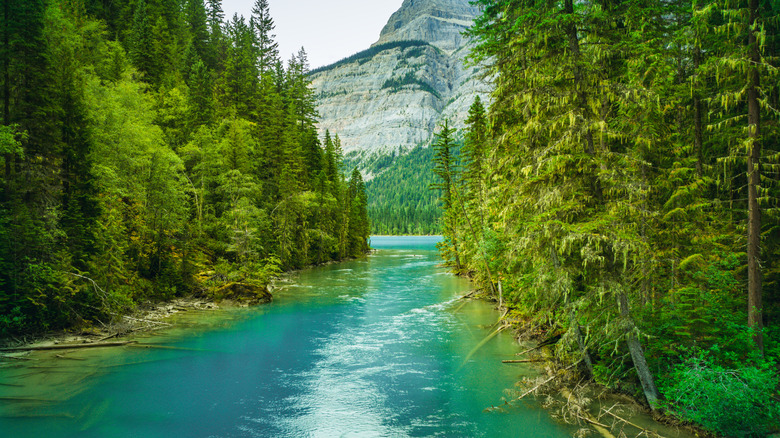
As the most lake-filled country in the world, it should come as no surprise that Canada has a large inventory of alpine, glacial, freshwater, and volcanic lakes. Mount Robson Provincial Park is home to a handful of famous water bodies, including the Berg, Kinney, Hargreaves, and Moose lakes. Visitors who don't want to commit to the challenging Berg Lake Trail can head to Kinney Lake instead. Aside from turquoise waters, Kinney Lake also boasts scenic views of Mount Robson itself. The trail to the lakeshore is considered easy-moderate, and suitable for kids and adults. Plus, Kinney Lake is open year-round.
For a trek including serene alpine lake views and unspoiled natural conditions, head to Moose Lake. You can reach it by following the unpolished, rustic Moose River Route. The lake is best appreciated for its tranquility, wildlife watching opportunities, and water sports; visitors can fish, kayak, or paddle on the glistening waters.
While visiting Mount Robson in spring has blooming wildflowers, summer is considered an ideal time for hitting the trails. The highest temperatures are usually during July and August, by which time the lakes and trails are also free of snow. On the other hand, the final months of the year are ideal for enjoying fall colors and foliage, and early winter snow is great for snowshoeing, cross-country skiing, and dog sledding. You can reach Mount Robson Provincial Park in about one hour from Jasper (54 miles), or take a longer 3 hour and a half route from Kamloops (220 miles).