
This Serene Wisconsin Botanical Garden Feels Like It Was Teleported Straight From A Palace In Thailand
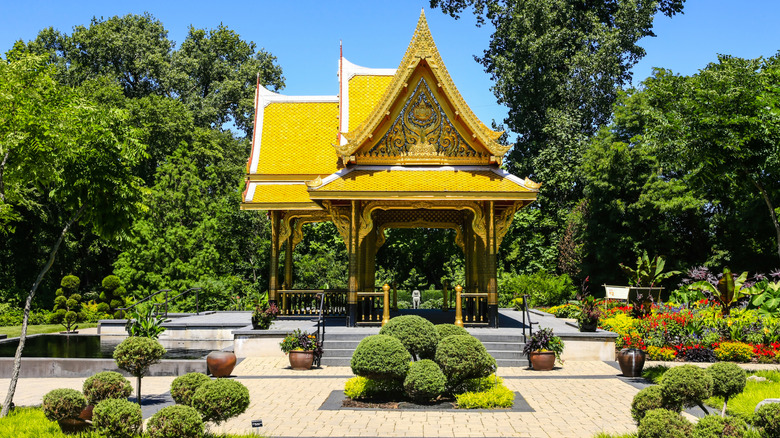
It's not often the Midwest's Dairy State is compared with a kingdom in Southeast Asia, but one corner of Madison, Wisconsin, feels plucked straight from a royal Thai garden. Situated amidst two municipal parks along Lake Monona, Olbrich Botanical Gardens is a lush, tranquil respite in the heart of Madtown. It features not only a conservatory of tropical botanicals, outdoor herb gardens, and native Midwestern meadows, but also a strikingly ornate Thai sala — or pavilion — carefully constructed from interlocking Thai-crafted teak with delicate gold-leaf trim around its pointed gables.
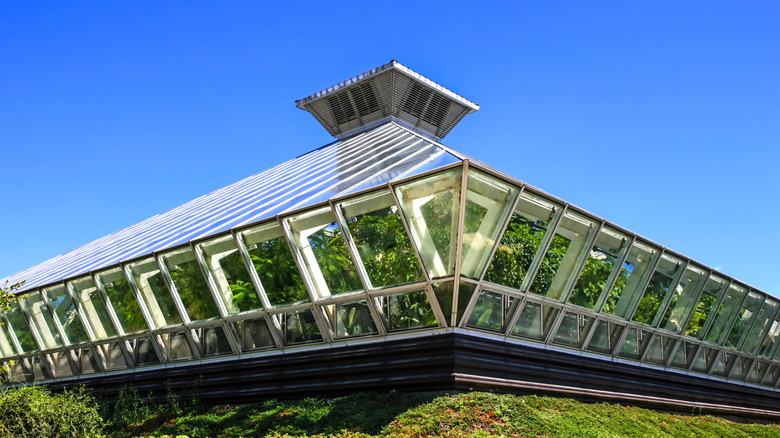
The gardens were originally designed in the 1920s by University of Wisconsin-Madison law school graduate Michael Olbrich and Prairie School landscape designer O.C. Simonds, and have continued to evolve ever since. In 1952, Olbrich Botanical Gardens officially opened, complete with a rose garden, now known as the English-style Sunken Garden. A greenhouse was added a few years later, and the indoor tropical conservatory opened in 1991. Today, visitors can stroll 16 acres of spacious outdoor grounds cultivated in distinct landscapes, from an herb garden to the "Moonlight Meadow" to the Royal Thai Garden with its unique pavilion, or take guided tours aboard an electric tram. While admission to the outdoor gardens and Thai pavilion is free, weather permitting, the year-round indoor conservatory costs $6 for adult entry.
The Thai pavilion was gifted to the University of Wisconsin-Madison by the government of Thailand and a Thai alumni group from UW-Madison in 2001. The university has long hosted one of the largest Thai student populations among universities in the U.S. (thanks to a strong international student program), and the gift was formally approved by the Thai Royal family. The lush lakeside botanical gardens, already a beloved city attraction, were a natural fit to become the pavilion's permanent home.
The Thai pavilion is a multimillion-dollar handcrafted relic
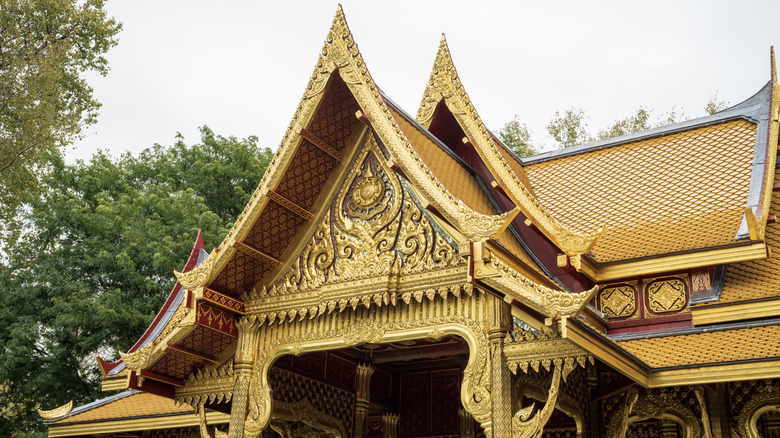
In Thailand, salas are national symbols; they've become timeless architectural structures and a recognizable element of the country's landscape. They're carefully crafted using interlocking wood joints rather than screws or nails and used as temporary respites, from garden oases to roadside food stands. The sala gifted to UW-Madison and housed at Olbrich Botanical Gardens is no exception to the careful craft and art of these structures.
The pavilion is nestled within a Midwest garden carefully cultivated to emulate the tropical Thai environment — no small feat for a city that enjoys four distinct seasons and cold, snowy winters. Tall grasses, bamboo plants, glazed pots, and junipers pruned in an Asian style called "mai dat" help elevate the aesthetic, and an ornamental footbridge over Starkweather Creek connects this slice of Southeast Asia to the rest of the gardens.
The structure looks as ornate as any you'd see at Bangkok's Grand Palace complex, albeit on a smaller scale. It measures 40 feet long by 22 feet wide and stands 30 feet high. Contrary to some assumptions, it's not a religious structure. The pavilion is carved from Thai-cultivated teak with a lacquered finish, adorned with intricate carvings inlaid with delicate gold leaf, and roofed in ceramic tiles. Artisans constructed it in Thailand before disassembling it for travel to the U.S. Nine Thai craftspeople then traveled with the pieces to Madison and meticulously reassembled the pavilion over the course of 3 weeks. Valued between $1.5 and $2 million and bearing the Royal seal of the Crown of Thailand, it's one of just four such pavilions outside Thailand and the only one on the U.S. mainland. After almost a quarter-century of Wisconsin winters, the pavilion underwent award-winning renovation work from 2023 to 2024, ensuring the royal sala remains pristine.
The gardens frequently celebrate Thai culture and other events
Thailand may be a highly recommended, once-in-a-lifetime vacation destination, it turns out that Madison shares a few surprising similarities with the Southeast Asian nation despite the differences in climate and culture. If a trip to the Land of Smiles is not in the budget, Madison is known as one of the happiest cities in the Midwest, with markets, indie shops, and plenty of outdoor space and trails.
Although Wisconsin winters can feel long, visitors say Olbrich Botanical Gardens — which boasts 4.8 stars across almost 5,000 Google reviews — can feel like a tropical oasis, particularly during cold, gray months. "We went in the off-season and it was still absolutely beautiful," wrote one reviewer. "The conservatory feels like stepping into a mini jungle—lush greenery, colorful orchids, and that warm, humid air that makes you forget it's winter outside for a minute." Another visitor called the Thai pavilion "the standout," adding, "It felt so serene and unique ... Perfect if you're looking for a calm outing that doesn't take a lot of time or energy."
Olbrich Botanical Gardens also hosts events celebrating Thai culture, including the Sala Thai Festival, presented in partnership with the Royal Thai Consulate-General and the Thai Cultural and Fine Arts Institute. The festival incorporates Thai music, dance, and food to create a memorable slice of Thai culture, set against the backdrop of the gardens' own pavilion. Other events throughout the year include light shows, after-hours concerts, and specialty flower exhibits. Madison is the 'Biking Capital of the Midwest' thanks to its many scenic trails, and Olbrich Botanical Gardens is conveniently located just off the Capital City State Trail, roughly 3 miles from downtown. Route C on the city bus also stops at the gardens; alternatively, parking is free.