
Colorado's Southernmost National Forest Is An Adventure Hub With Mountains, Desert, And Tons Of Trails
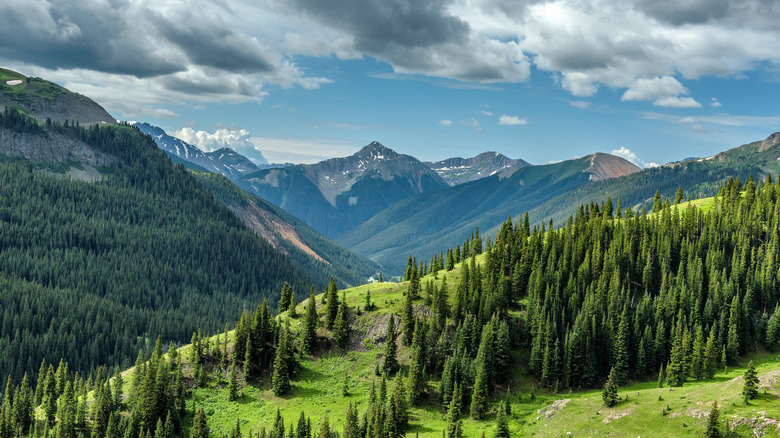
Colorado has one of the most dramatic landscapes in the U.S., between the jagged Rocky Mountain National Park in the north and both Great Sand Dunes and Mesa Verde National Parks down south. However, one of the most beautiful wonderlands in the state is San Juan National Forest. Spanning roughly 1.8 million acres across the southwestern corner of the state, the forest has a remarkably diverse landscape with everything from alpine peaks to rugged desert canyons.
Many Colorado travelers gravitate toward trending mountain destinations like Aspen and Estes Park, but the San Juan National Forest is an adventure enthusiast's paradise, packed with an extensive network of trails, scenic driving, campgrounds, and even historic mining structures. Due to its dramatic landscape, the forest offers recreation during all four seasons, from hiking in the warmer months to cross-country skiing when snow blankets the forest.
The national forest offers year-round recreation, so the best time of year to visit is highly dependent on the type of adventure you're looking for. Snow can linger at the highest peaks into July, but the best time to visit for warm-weather recreation is in June through September. Most mountain passes should be open at this time, providing full access to the highest peaks in the forest. "Golden Season" in the fall kicks off directly after, where the glorious aspen groves burst with yellow and gold hues. If snowy adventures are your thing, head to the park in December through March, but be advised that some roads will be completely inaccessible at this time — and others will be very difficult to navigate.
Mountains, deserts, and trails in San Juan National Forest
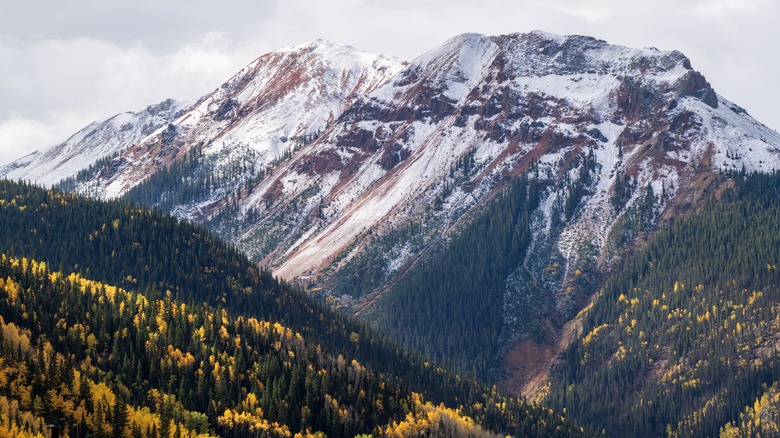
The mountains in San Juan National Forest are characterized by sharp peaks, dense pine forests, and alpine views. One of the best ways to see the dramatic mountain landscape is by taking the Million Dollar Highway from Silverton to Ouray. Also known as Route 550, drivers can expect brilliant mountain passes, cascading waterfalls, and even abandoned mine structures. Beyond scenic driving, other wheeled recreation in the forest includes mountain biking and off-roading.
The mountains may be a highlight of the forest, but the lower-elevation terrains, like the desert, should not be overlooked. The Chimney Rock National Monument is one of the most notable high desert stops, as it represents a historic Pueblo community and is among Colorado's nine national monuments worth visiting. Past visitors love the park, too, as it has earned a 4.6-star rating on Google with over 700 reviews.
One of the biggest draws to San Juan National Forest is its seemingly endless expanse of hiking trails from the mountains to the desert. The most highly rated on AllTrails is Island Lake and Ice Lake via Ice Lakes Trail. This 7.5-mile loop isn't easy with 2,647 feet of elevation gain and multiple stream crossings, but reviewers note that the jaw-dropping views make it worth it. It has a coveted 4.9-star rating on AllTrails. If you're looking for something a little easier, the 1-mile Treasure Falls trail ranks as the third best in the park. The 3,100-mile Continental Divide Trail also goes through the park, perfect for backpackers looking to trek endlessly through the mountains.
Diverse landscapes and historic towns in the region
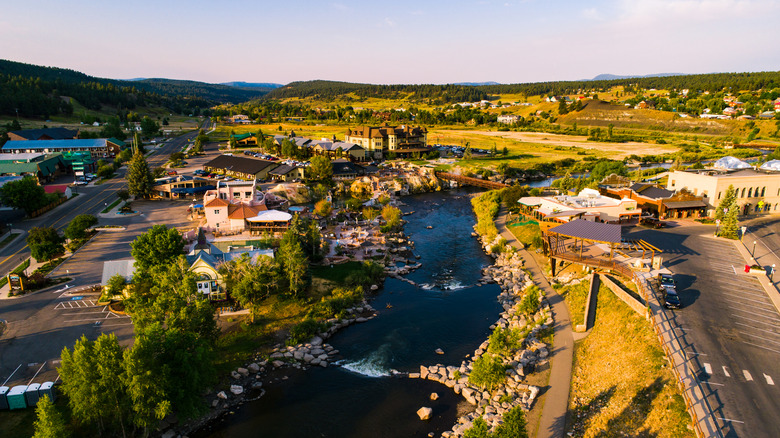
Beyond on-land activities, the San Juan National Forest is a popular destination for water sports. The San Juan River flows through the region and is a perfect spot for fishing, rafting, kayaking, and even riverside camping in the warmer months. Vallecito Reservoir is another popular summer destination for boating and paddlesports. One of the most unique assets of the San Juan National Forest is its nearby hot springs, where visitors can relax after a long day of hiking and other recreation. Pagosa Springs, which is among 5 affordable getaways to the Colorado mountains, is one of the most popular destinations.
The national forest has a range of places to base your adventure. Durango and the underrated mountain west town of Silverton are some of the most popular choices, as they both have a historic downtown with plenty of accommodations and dining. They are also connected by one of the most scenic train routes in the country, the Durango & Silverton Narrow Gauge Railroad. The train takes passengers through narrow canyons only accessible by car and has sprawling views of the nearby mountains.
The closest airport to San Juan National Forest is Durango-La Plata County Airport, which offers direct flights to nearby cities such as Denver and Phoenix. From Durango, visitors can easily access the forest by car at multiple entry points. There is no fee to enter the forest. However, if you plan to camp, a campground should be booked in advance.