
Between Orlando And Ocala Is Florida's World-Class Biking And Paddling Trail From The Gulf Coast To St. Johns River
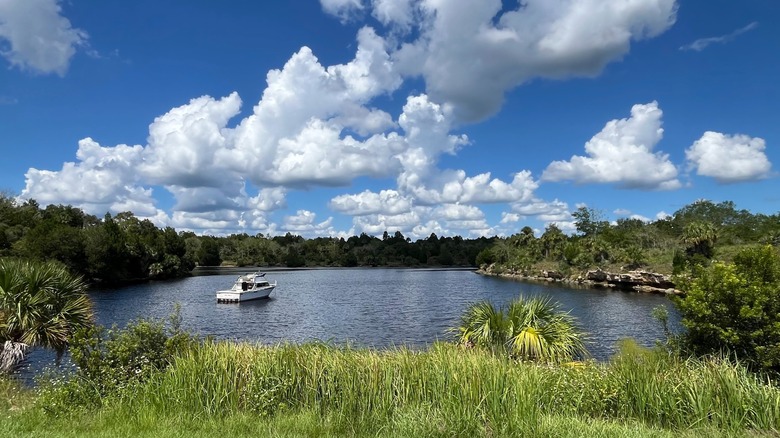
What began as a monumental engineering effort to cut a shipping channel through Central Florida has evolved into a world-class greenway stretching from the river to the sea. The Marjorie Harris Carr Cross Florida Greenway is not only a state park but is also a vital wildlife corridor. Yet this transformation was almost never realized, as a plan to bring container ships and barges through the heart of Florida would have nearly changed the state's geography forever.
Work began in the 1930s to dredge a canal deep enough for ships to cross the state, bypassing the long route around Florida's southern tip. After just three years, funding ran out, and the project stalled. Work resumed in the 1960s on what was then called the Cross Florida Barge Canal. In 1971, President Nixon stopped the project, and in the early 1990s, after years of fierce pushback from environmentalists and dwindling support, Congress officially deauthorized the project.
Eight years later, the state of Florida established the greenway along the planned canal route, naming it after Marjorie Harris Carr, who led the fight against its construction. The greenway has since transformed a once-controversial federal project into a destination for paddling, hiking, biking, fishing, and more.
The hiking trails of Cross Florida Greenway
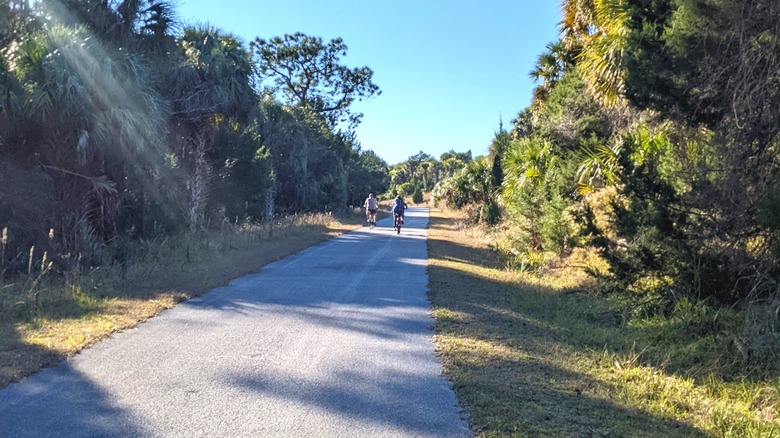
The greenway officially begins near Yankeetown, a friendly and scenic Gulf Coast hamlet, and ends at the St. Johns River near Palatka. Along the way, over 300 miles of various trails traverse the corridor. The first you'll encounter is the Withlacoochee Bay Trail. This trail follows the path of the would-be barge canal, taking hikers through salt marshes, hammocks, and along a berm created during the canal's excavation.
Where the greenway crosses Interstate 75, it features a unique land bridge. Built in 2000, this land bridge was the first of its kind in the United States and allows wildlife to safely cross the busy roadway. Another interesting feature along the way is The Island, a park named for its location in the median of U.S. Highway 301. Here, you'll see concrete remnants of the canal project — towering supports that were once intended for a bridge over the canal, but were abandoned after the project stalled.
Also nearby is the Santos Trailhead, a popular destination for mountain biking with over 80 miles of single-track bike trails covering all difficulty levels. The main draw is the Vortex, a trail built exclusively for experienced riders that features a 20-foot vertical drop. If you're not into mountain biking, the trailhead also offers 16 miles of paved trail for a calmer ride within the park.
Paddling the Cross Florida Greenway
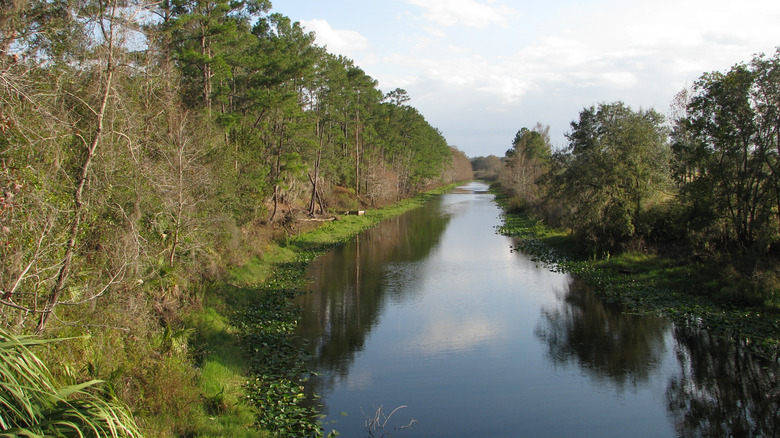
In addition to hiking and biking trails, there are also numerous areas within the greenway where you can paddle, and countless boat launches you can use. Near the western end, the Withlacoochee Bay Trail offers opportunities to paddle the canal and explore the barrier islands and salt marshes nearby.
Further east is the Ocklawaha River, a tributary of the St. Johns River that flows for approximately 85 miles from the popular paddling at Lake Griffin State Park to the St. Johns. A stretch of the lower Ocklawaha between the Eureka West Recreation Area and the St. Johns River lies within the greenway corridor, with access available at the park's boat ramp. From there, you'll paddle down the lower Ocklawaha River, passing landmarks such as Davenport Landing, a historic Native American burial mound, a former riverboat stop, and the site of three primitive campsites for paddlers.
You can also paddle up the canal from the St. Johns River to the Buckman Lock. The Gnarly Gar Marina & Bar in Satsuma serves as a launch site. Before entering the canal, you'll pass the Seven Sisters Islands, popular for wildlife viewing. The St. Johns is a serene spot for water fun and is Florida's longest river. There are also plenty of fishing opportunities within the greenway, ranging from saltwater fishing at Felburn Park on the Gulf to the numerous dams and locks originally built for barges, but that now provide areas for freshwater fishing and other water activities.