
New York City's Abandoned Military Fort Is Now Part Of A Scenic Area With Hiking Trails And A Secluded Beach
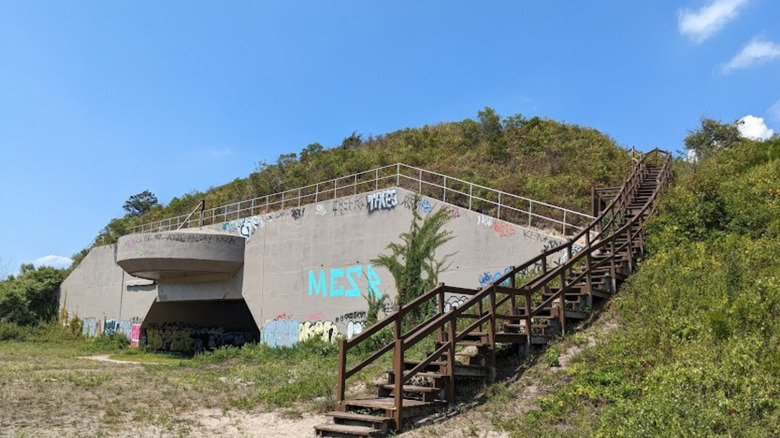
When travelers think of New York City, they likely envision iconic landmarks and elite food and drink among skyscrapers and crowded streets. However, most people might not expect to encounter white-sand beaches amid all the concrete, but locals know that there's one destination at the edge of Queens that defies all expectations of what a New York experience should be like. Located just a subway ride from Manhattan on the Rockaway Peninsula, Fort Tilden is a former military installation that once protected New York Harbor. Today, the site has been transformed into a destination where abandoned structures, a scenic nature trail, and a quiet beach coexist.
Fort Tilden's military history dates back to World War I, when the East and West Batteries were built. During World War II and the Cold War, the site was expanded to include missile batteries equipped with Nike Ajax and, later, Nike Hercules missile systems to help defend the harbor. Military operations continued until the fort was decommissioned in the late 1970s.
In 1974, the National Park Service acquired the site, and it became part of the Gateway National Recreation Area. However, traces of its military history remain throughout the landscape. Visitors can still spot the surviving magazine of Battery 220, along with Battery Kessler's reinforced-concrete ammunition magazine and firing platform. Other notable remnants include Battery Harris and the former Nike Missile Launch site.
Fort Tilden's quiet beach shows a different side of New York City
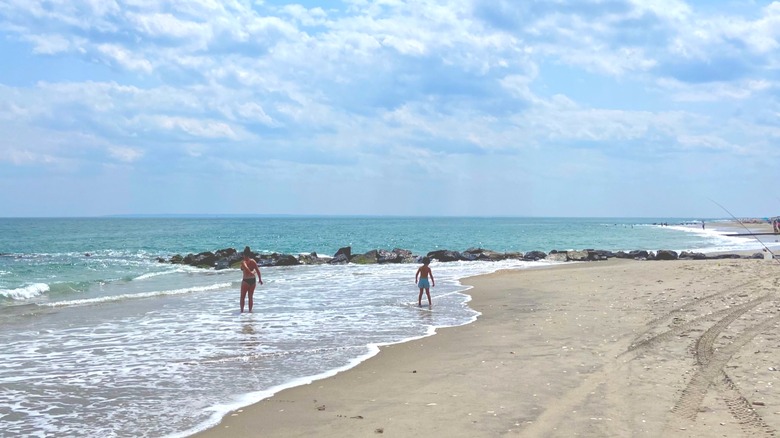
Located just under 2 miles from Jacob Riis Park (one of the best New York City beaches accessed using public transportation), Fort Tilden beach offers a dramatically different experience from many of the city's more popular shorelines. Its white sand shore is bordered by dunes and a maritime forest on one side and the sparkling blue-green Atlantic waters on the other. The beach's rugged atmosphere adds to its appeal, with weathered pilings extending into the water and aging wooden structures rising behind the dunes. But its undeveloped character also means fewer amenities compared to destinations like Gansevoort Beach, Manhattan's only public beach.
Since there are no lifeguards on duty, swimming is prohibited. Even so, Fort Tilden Beach is a great place to relax on the sand or take a leisurely walk along the shore. One Google review described it as a "peaceful getaway — quiet, clean, and not as crowded as other NYC beaches." Other reviewers also note that the beach is known to attract unclad sunbathers when the weather gets warmer, which families may want to keep in mind when planning a visit.
Fort Tilden is also a popular destination for saltwater fishing. Anglers can cast from the shoreline in search of a variety of fish species found in the waters off the Rockaway Peninsula, including bluefish, fluke, and striped bass. No fishing license is required. However, visitors must register with the Recreational Marine Fishing Registry. Additionally, fishing permits are required if you want to park at certain locations in the Jamaica Bay Unit, including Fort Tilden.
Explore Fort Tilden's hiking trails and wildlife
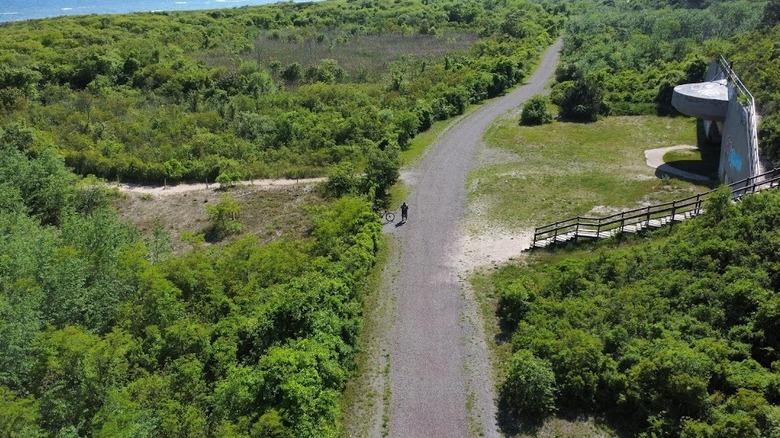
Beyond the beach, Fort Tilden provides opportunities to explore on foot. The 1.5-mile Fort Tilden Loop Trail is an easy walk through some of the site's most notable landmarks. Visitors can complete the route in 30 minutes to an hour, with AllTrails reviewers noting that the first half of the loop is a gravel path, while the second half is paved. Along the way, you can explore smaller walking paths that connect to Battery Harris East as well as Battery Harris Magazines 1 and 2, which once stored ammunition for the fort's coastal defense guns. However, there are no restrooms along the trail, and street parking is the only option for those without a permit.
Past visitors have said on Google that Fort Tilden is "a wonderful place for long quiet walks and bird watching," as it attracts a variety of species year-round. Spring visitors walking along Fort Tilden Loop Trail may spot northern gannets and flycatchers, while fall migration brings falcons, buteos, and warblers. During the winter months, birdwatchers may also encounter sea ducks, loons, and purple sandpipers around the shoreline. After a day of viewing Fort Tilden's wildlife, walking its trails, and relaxing on the beach, travelers interested in exploring another former military site repurposed for outdoor recreation may also want to check out Camp Hero State Park on Long Island.