
What Nobody Believes About Pompeii Until They See It For Themselves
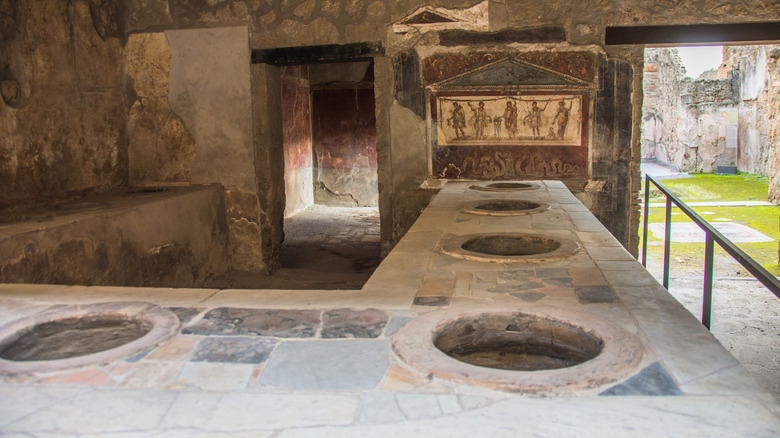
Before there was McDonald's, there was a thermopolium. The term might sound strange and lofty, but it refers to an easy-to-grasp concept: a food counter serving up ready-made meals in Ancient Roman times. Some of the most well-preserved examples of thermopolia have been excavated in Pompeii. Over 80 have been uncovered at the archaeological park under the city's cloak of ash, according to Smithsonian Magazine. As surprising as it may sound that the ancient residents here had their own version of fast-food joints, the evidence is easier to believe when you see the 2,000-year-old counters for yourself.
Although images of decadent feasts, golden goblets, and fountain-fronted villas may come to mind when thinking of Ancient Rome, the average, lower-class Roman lived a humbler life, and the thermopolia are a testament to that. These Romans didn't have kitchens in their apartments, which was a luxury at the time, according to Business Insider, so thermopolia served as spots where they could get something quick to eat, typically on the go. Stephen Dyson, a classics professor at the University at Buffalo, described these spots as hybrids between "Burger King and a British pub or a Spanish tapas bar" in Discovery News (via ABC Science).
A thermopolium usually looked like a counter with holes cut into it, and in these holes were clay jars (called dolia) filled with foods that could be heated or taken home. In place of a glowing menu board, there were painted frescoes, and instead of a soda fountain, you'd find a row of smaller pots filled with everything from wine to hot stews and fish, according to The New York Times.
Thermopolia that visitors can see at Pompeii today
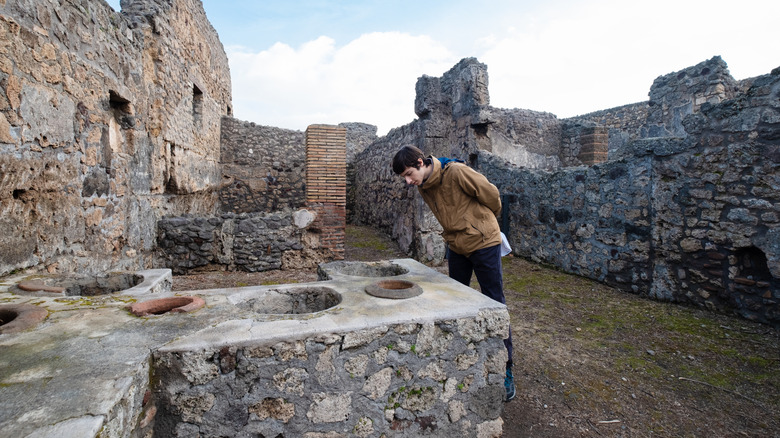
Given that dozens of thermopolia have been unearthed in Pompeii, it's not hard to come across at least one on a visit to Pompeii, which is more like a must-see than a tourist trap for Ancient Rome fanatics. One of the most significant examples of a thermopolium is in Pompeii's Regio V excavation site. This thermopolium was found just in 2019, as The Guardian reports, and features an intricately painted counter, showing various animals and a Nereid (a type of sea nymph). You can see the thermopolium from outside, but can't go in, as of this writing.
Don't fret, though — there is a thermopolium open for visitors to walk directly into, located in Regio VI, according to Pompeii Sites. The ruin has an intact L-shaped counter with holes for the dolia, as well as a couple of small rooms adjoining it. There are also preserved clay jars stationed near the counter, so you can see where food would have been stored.
To visit Pompeii, you can buy an admission ticket at the archaeological park's entrances or online (tip: entry is free on the first Sunday of each month). Pompeii sits within Italy's Campania region, which was 2025's top trending summer destination, and is about 30 minutes by train from Naples. After a walk through Pompeii's ancient takeout joints, you could head to Mount Vesuvius, one of Europe's largest volcanoes, to scale the peak that eventually led to Pompeii's demise.