
This Abandoned Military Fort In Nebraska Is Now A Historic State Park With Original Structures Ready To Explore
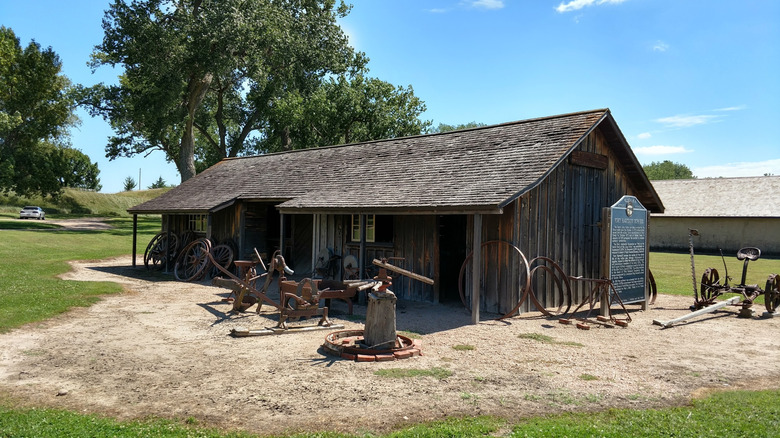
Scattered across the Great Plains are traces of the settlers who once staked their claims here — sometimes in the form of living villages that appear largely unchanged for centuries, sometimes as outposts that have long been left behind. In central Nebraska, you find one of these abandoned frontier posts at the Fort Hartsuff State Historical Park. For travelers interested in military history, the fort offers insight into frontier military operations and the threats they were established to address. For history lovers, it's a unique window into the past, with original buildings still standing and outfitted to look much as they did before abandonment.
Fort Hartsuff was built in 1874 as settlers moved westward across the Great Plains. It was intended to protect both settlers and the Pawnee people from attacks by their longtime enemies, the Sioux. During the fort's seven years of operation, however, there was only a single minor stand-off. By 1881, the fort had been abandoned as the perceived threat of attacks had largely subsided, rendering the post's original purpose obsolete. Today, visitors can walk among the surviving buildings and around the parade ground to get a sense of what life was like for soldiers stationed on the edge of westward expansion.
Step inside original frontier buildings at Fort Hartsuff State Historical Park
When you think of a frontier-era military fort, an image of log blockhouses surrounded by an enclosure of wooden posts might come to mind. That's not what you'll see at Fort Hartsuff, nor was it ever part of the fort's setup. Instead, the post was surrounded by a simple picket fence that was primarily intended to keep animals away, and its structures were made of grout (a mix of concrete and lime), not wood.
That construction method lent Fort Hartsuff a historical distinction over other outposts like Fort Robinson, another educational Nebraska state park with natural beauty. Unlike many historic forts that have been reconstructed, several of Fort Hartsuff's structures survived because the grout has weathered the test of time. You can explore nine historic buildings at the park today.
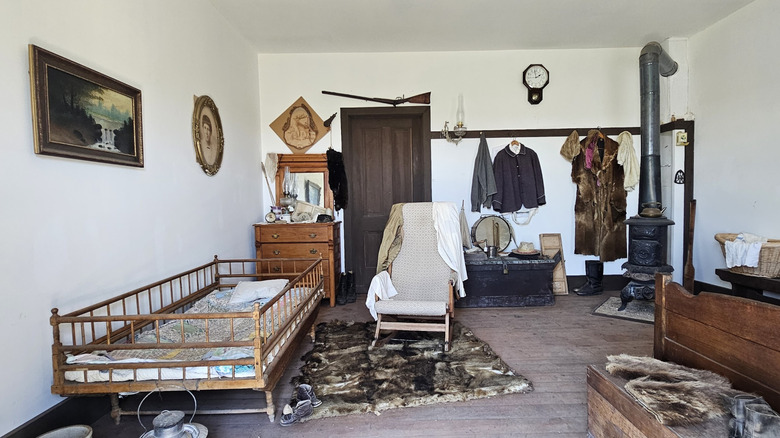
The buildings are arranged around a rectangular parade ground, with a walking trail that follows its perimeter. They include military facilities such as barracks and officers' quarters, along with infrastructure that supported daily life, like a carpenter shop, bakery, and storehouse. Many are furnished to look as they did during the fort's active years, complete with cast iron stoves, barracks beds, and wagons.
How to visit Fort Hartsuff State Historical Park
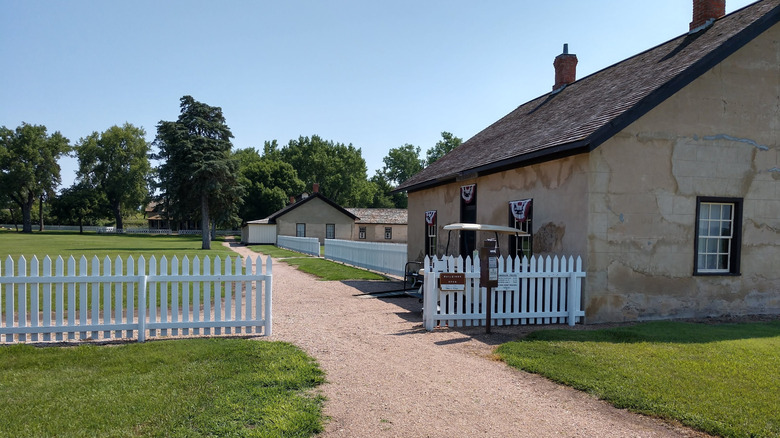
Visits to Fort Hartsuff's buildings are open May through September, though the grounds are open all year. You can explore the fort on your own, or come when there's a living history demonstration. On select living history weekends, the grounds are permeated with reenactors. You might get to see soap-making by hand or try bread from the fort bakery. When you arrive at the fort, you'll enter through the post headquarters, which doubles as the office and gift shop. Admission is charged for the historic buildings, and a Nebraska state park vehicle permit is also required.
Fort Hartsuff lies in a relatively remote pocket of Nebraska. The closest commercial airport is the Central Nebraska Regional Airport, about 1.5 hours away by car. From Lincoln, the Midwest beauty with endless outdoor fun, it's close to a three-hour drive. It's not unreasonable to travel to if you pair it with some nearby attractions. The fort sits between the towns of Elyria and Burwell, the latter of which hosts Nebraska's annual Big Rodeo. As Fort Hartsuff sits at the margin of Nebraska's Sandhills, it also makes a worthwhile stop on a road trip along the windswept Sandhills Journey Scenic Byway.