
Georgia's Once-Thriving Waterworks Facility Is Now An Abandoned Beauty With Graffiti-Covered Buildings
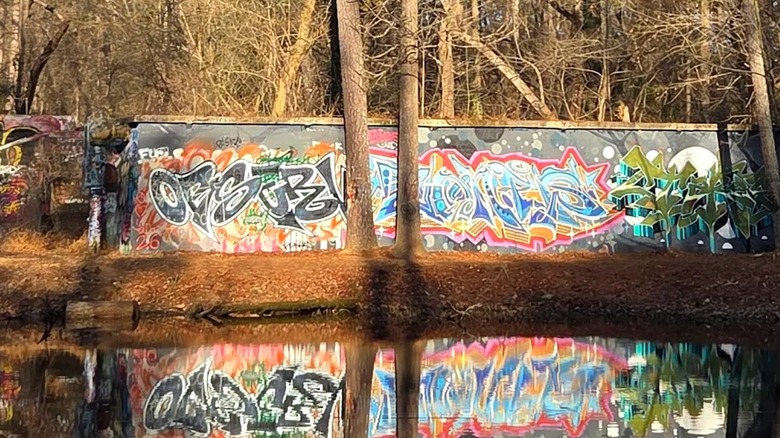
Decatur – a family-friendly suburb of Atlanta – has one of its most unusual attractions tucked inside the ruins of a former waterworks facility. Decatur Waterworks, about a 35-minute drive northeast of the Hartsfield-Jackson Atlanta International Airport, supplied water to the area from the early 1900s until the 1940s, before being abandoned. Today, the property functions as a public park where hikers wander through wooded trails, and graffiti artists have transformed the remaining structures into a sprawling outdoor gallery.
The site was once a much more conventional recreational space. In the 1930s, benches, grills, and a stone bridge crossing Burnt Fork Creek were added, turning the area into a popular gathering spot for locals. After the waterworks shut down, DeKalb County leased the property to help fund the construction of a newer water treatment plant in Dunwoody.
Over time, the abandoned buildings deteriorated, and graffiti artists began using the empty structures as canvases. What could have remained a neglected industrial site gradually became something more visually striking: decaying architecture, colorful murals, and forested paths. In 2008, the PATH Foundation helped formalize public access by funding the construction of an official trail through the property (via Atlas Obscura). It's clear that abandonment doesn't always mean the end, but sometimes the beginning of something wildly unique.
What to expect at Decatur Waterworks
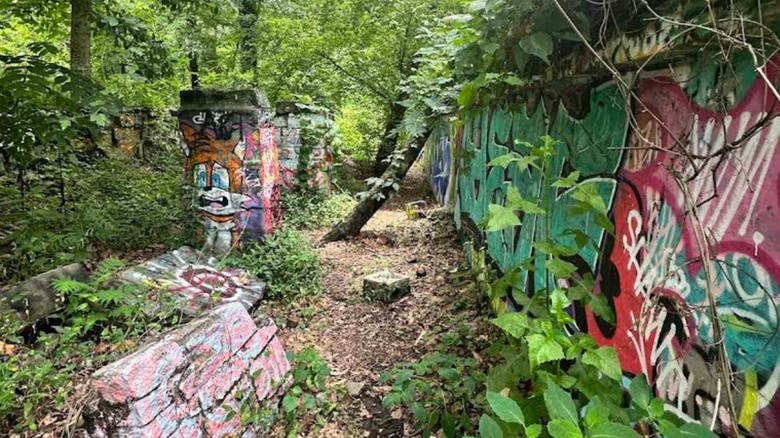
Georgia has many off-the-beaten-path hikes that blend art and scenic views, and Decatur Waterworks fits squarely into that category. The site is connected to the Three Creeks Trail at Melton Park and is accessible from the South Peachtree Creek Trail, making it an easy outing for anyone looking for a peaceful alternative to the region's busier parks.
More than a dozen structures remain on the property, so it feels less like a hike and more like a discovery. For a place considered to be ruins, it has received multiple five-star reviews on Google. One reviewer shared their experience, "super cool ruins with graffiti in a lovely suburban park. Definitely worth the visit!"
For the best experience, visit in the spring or fall when temperatures are milder and the surrounding foliage adds more contrast to the painted walls. Wear sturdy shoes to get you through sections that involve uneven terrain or creek crossings. Additionally, since the area is largely unmonitored and the structures are abandoned, it's best explored during daylight hours — some reviewers mention keeping your wits about you when wandering the trails. It's a very different kind of Georgia park experience, one shaped as much by creative recycling, so to speak, as nature itself. Interested in more graffiti parks? Check out Baltimore's abandoned military fort that is now a graffiti-covered urban gem.