
Baltimore's Abandoned Military Fort Is Now A Graffiti-Covered Urban Gem With Fishing And A Local Park
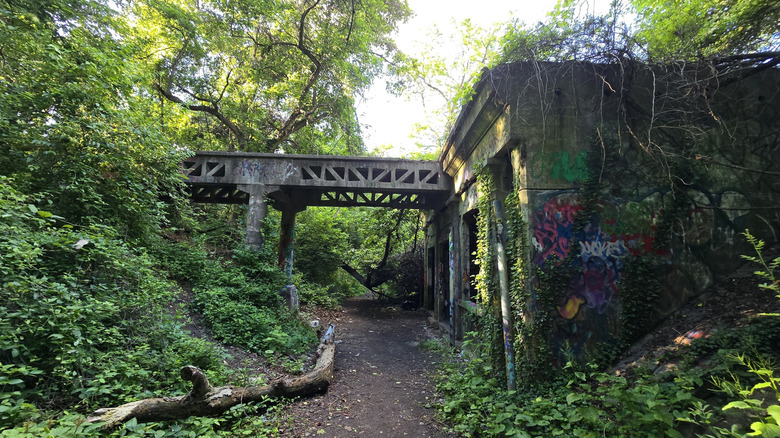
The Port of Baltimore is rich in military history. Its first defensive structure, Fort Whetstone, was built during the Revolutionary War. The city's defenses were upgraded with the more substantial Fort McHenry in 1794, which proved a valuable addition during the War of 1812. More forts were constructed along the Patapsco River through the 19th century, including Fort Armistead on Hawkins Point. Fort Armistead is no longer active, but its structures can still be explored today.
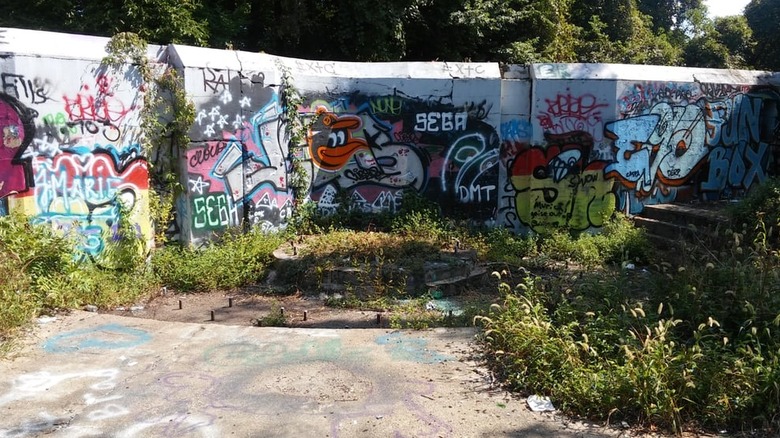
Fort Armistead is a little over 10 miles south of Baltimore's Inner Harbor, along the eastern shore of Hawkins Point, just south of where the Francis Scott Key Bridge once stood. What makes Fort Armistead unique among Baltimore's maritime landmarks is its blend of nature, history, and art. It's been a popular spot for local graffiti artists to practice their craft since the city stopped maintaining the grounds in the 1960s, turning the 130-year-old concrete walls into a colorful, ever-changing canvas. It has also been home to a feral cat colony, with up to 30 living there at any given time. It provides a similar refuge for water birds like cormorants, gulls, herons, and several species of ducks.
Fort Armistead's evolution from defensive outpost to public park
Construction on Fort Armistead began in the mid-1890s as part of the Endicott Defense Program, which aimed to modernize coastal defenses. The fort was named for Major George Armistead, who commanded Fort McHenry during the War of 1812. However, its active years were short, similar to Fort Mott, an abandoned military fort which is now a state park on the Delaware River. Artillery was removed from Fort Armistead and shipped to Europe for use in World War I, and the fort's remaining defenses were dismantled in 1920. It was briefly used as an ammunition dump by the Navy during World War II, but after the war, it was turned over to the city of Baltimore.
With the area abandoned, locals would come to explore the abandoned fort's tunnels or fish and swim along the shore. While the city did little to maintain the grounds, allowing them to mostly revert to their wild state, the park did host community events like Easter egg hunts. Starting in 1999, Fort Armistead became the site of the yearly Starscape electronic dance music festival, which grew over the next decade into a massive event with five stages and more than 40 performers. The Starscape Festival was held for the last time in 2012, and Fort Armistead Park has reverted to the eerily serene atmosphere you'll find if you visit today.
What to see and do in Fort Armistead Park
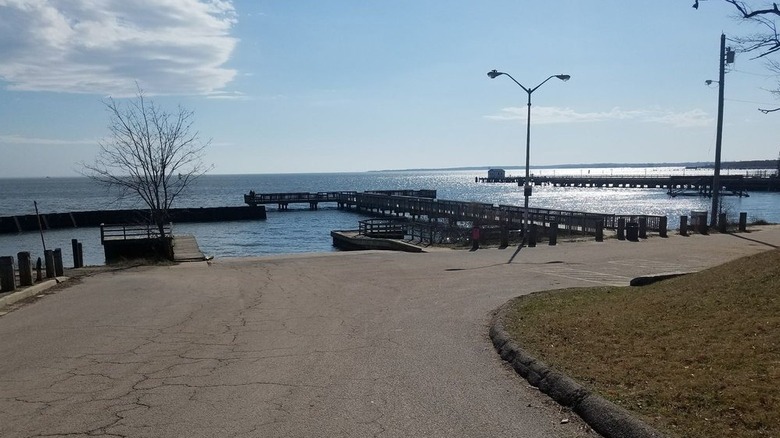
Fort Armistead's location along the water is its main appeal for many. There is a free public boat launch in the parking lot at the end of Fort Armistead Road, as well as a long wooden pier for fishing and a small rocky beach. Anglers can catch species like striped bass and channel catfish from the pier, and it's also a popular place to take in scenic views of the water.
One thing to note is that, while the views from Fort Armistead are beautiful, the park itself is a bit rough around the edges. The most common complaint from visitors is the high amount of litter and trash, which often includes broken glass, so you may not want to bring dogs here, and it's smart to wear closed-toed shoes when you visit. Or, if you're looking for a cleaner place to catch water views, the free floating Harbor Wetlands park in Baltimore's Inner Harbor might be more your speed.
For history buffs and urban explorers, the park's main attraction is Fort Armistead itself. The fort's exterior is a veritable graffiti gallery, and the impromptu art continues inside. The fort's entrances are open to the public, and there are lots of tunnels to explore within. Just make sure you bring a flashlight — with no windows or electric lights, it's completely dark inside. Rumors say some of Fort Armistead's tunnels connect to Fort Carroll, but these claims have never been verified. If connecting tunnels ever existed, they're likely capped off or flooded and inaccessible. People seeking another fort-turned-park to explore can head a few miles north to Fort McHenry, which is a favorite stop for birders, thanks to its reputation as one of the best national parks to see bald eagles.