
What Happens When Your Plane Can't Land (And Why You Shouldn't Panic)
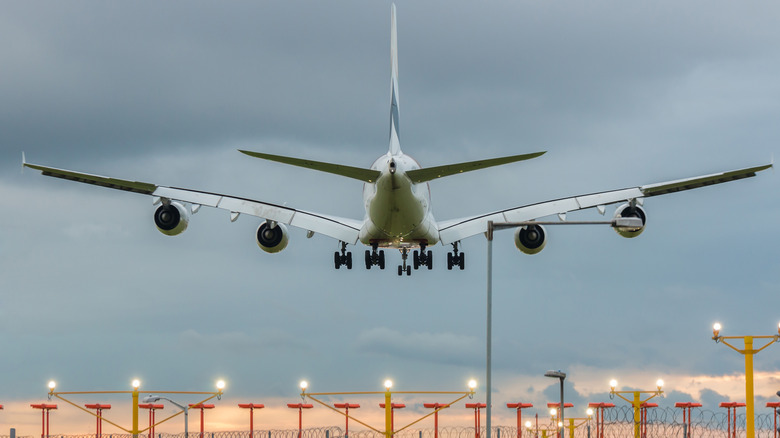
You're on a flight, and getting excited to arrive at your destination. You may start gathering your things, wrapping the cord around your headset, or turning off the in-flight entertainment system. The plane begins its descent, and you're anticipating the landing. All of a sudden, something changes, and your plane starts to rise in altitude again. Clearly, something has happened, and, particularly if you have a fear of flying, it might cause you to worry. However, there is no reason to panic, even though this isn't how it usually works. When your plane can't land, a pilot may execute a move called a "go-around." This is when a landing is aborted, sometimes even rather close to the ground, and the plane ascends to get enough altitude to try another approach or wait for further instructions.
When a pilot executes a go-around, it's a safety measure, though it may not feel like that at the time. You may see the wing flaps retract, or hear noises like the landing gear moving back up into the body of the plane. The engine can get louder as the pilots increase the power. (That can feel especially upsetting if you don't know what all the weird airplane noises mean.) However, there are good reasons for the go-around maneuver, and knowing what they are may make you feel better in the unlikely circumstance that it happens during a flight you're on.
Why a pilot may execute a 'go-around' maneuver
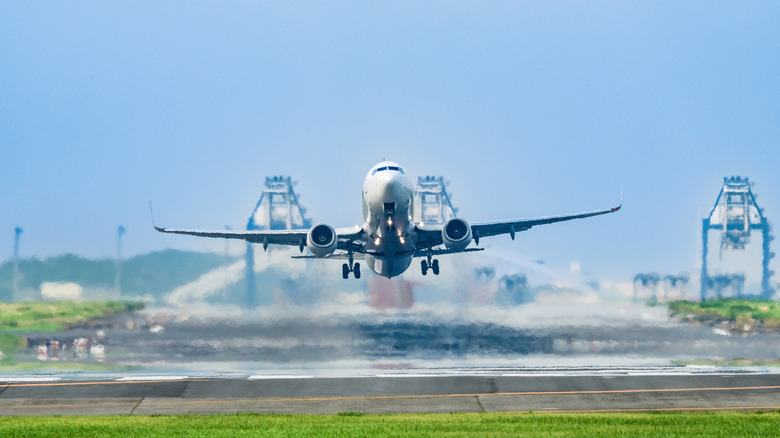
According to the Federal Aviation Administration (FAA), a go-around maneuver can be initiated either by a request from an air traffic controller or by the pilot themselves. It happens if one or both parties don't think the landing can be done safely. It may be that there is low visibility from something like fog or low clouds, or that crosswinds are making a safe landing difficult. It can happen because the plane may not be in the right alignment for a landing, coming in at the wrong speed, or even for something on the runway, like a vehicle, an animal, or another plane that needs more time to take off or move. It's not something that happens often. In fact, according to a 2024 NASA report, go-around maneuvers happen between one and three times for every 1,000 attempts to land.
You may never experience a go-around, no matter how often you fly, though I have personally been on several flights where this has happened. It does feel odd (and I was freaked out the first time as well), but remember that this is being done for everyone's safety. Finally, if the idea of a go-around (or any other in-flight maneuver) makes you nervous and you're already dealing with a fear of flying, the Flying Calmly app can be a game-changer. You can also check out this veteran pilot who does one-on-one consultations for anxious fliers.