
Rick Steves Says This Underrated City Is An 'Ideal Taste Of Small-Town Hungary' With A Vibrant Culture
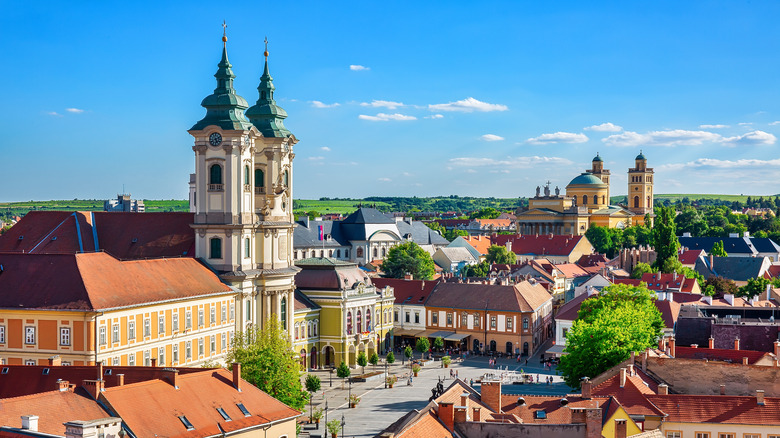
Just two hours from Budapest is a small, vibrant city known for its history, culture, and wine. For these reasons, Rick Steves calls Eger a hidden gem that's "an ideal taste of small-town Hungary." While it's lesser known than Budapest, Eger is the site of one of Hungary's most significant moments of resistance against the Ottomans in the 1500s. Its imposing medieval castle, with origins in the 13th century, has become a symbol of Hungarian pride, and for visitors, it's a fantastic way to learn about Hungary's history (while enjoying some amazing views).
You could easily spend a day strolling around and taking in Eger's colorful Baroque and Gothic buildings mixed in with Communist-era ones. There are Ottoman remnants too, including one of the northernmost Ottoman-era minarets in Europe. It was built around 1596 and offers panoramic views of the town. According to Rick Steves, this underrated city has a healthy dose of charm without the crowds, allowing visitors to feel its cozy ambiance. So, do as the locals do, and dip a toe into the thermal bath culture since Eger has some of the best thermal baths around, including an old Turkish one.
Eger brings together many key elements of Hungarian culture. Besides history and thermal baths, Eger is known for its traditional folk dance festival and, above all, its wine. Order a glass in town or head to the nearby Szépasszony-völgy ("the Valley of the Beautiful Woman"), which has hundreds of wine cellars in natural and artificial caves. Some are historic, dating back to the 18th century, while others are more modern. Either way, you can expect an unpretentious experience and the chance to try Bikavér ("bull's blood"), Hungary's most famous red wine.
History and culture meet in Eger
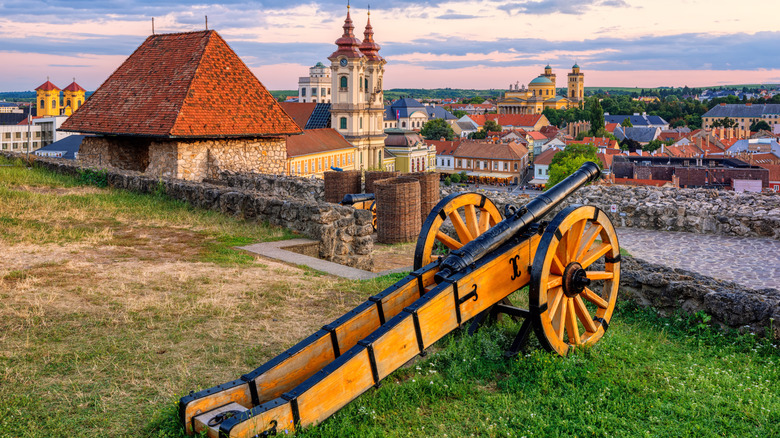
The city's pièce de résistance (literally) is Eger Castle, which holds a powerful place in Hungarian history. In 1552, the Ottomans laid siege to Eger. The Hungarians successfully defended the town, reportedly doing so despite having only 2,000 defenders against 60,000 Ottoman attackers. These days, you can visit the castle to see the casemates, an underground defensive network that the Hungarians used to defend the city, explore the ruins of a late Gothic cathedral, and check out the museums that showcase different periods of Hungarian history. Or, you can follow Rick Steves' suggestion and just wander the grounds while enjoying the views.
The heart of Eger is its central Dobó Square (named for the leader of the Hungarian resistance in 1552). The 18th-century Minorite Church, one of the finest Baroque churches in Hungary, is the centerpiece of the square with its ornate double towers. Culture and tradition come to life in the square with the Szederinda International Folk Dance Festival, usually held at the end of June. This annual three-day festival includes folk dances from Hungary and other countries, plus live music, costume displays, and parades.
One could make an entire itinerary around Hungary's famous thermal baths (these are the best times to visit the beautiful baths in Budapest). Rick Steves notes that Eger has "some of the best and most beloved spas in this hot-water-crazy country," and you'll find a historic one right in the city center: the Eger Thermal Bath, established in 1932. While you may have already checked out the alternatives to Budapest's most popular spas, Eger's thermal bath is a must-do if you want a real taste of the local and small-town experience. Its pools include the Ottoman-era Turkish Bath, so be sure to take a relaxing soak here.
Eger's famous wineries
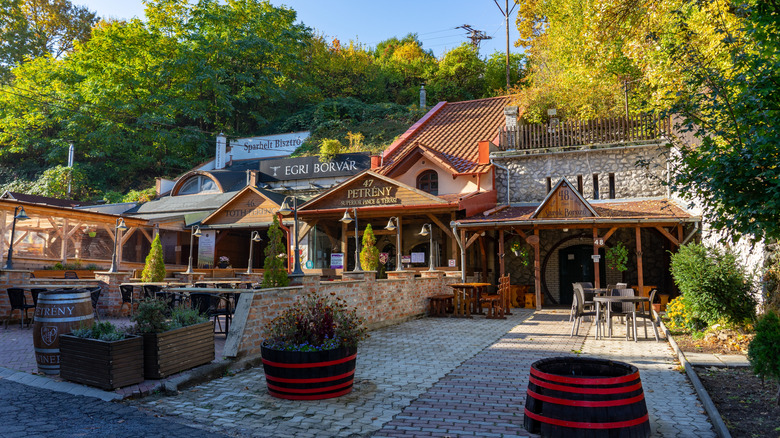
Bikavér or "bull's blood" is a red wine made from a blend of several grape varieties. Some say that the name refers to the 1552 siege of Eger, when the Hungarians mixed their wine together to get liquid courage and beat back the Ottomans (who saw their red beards and thought it was bull's blood giving them strength). But that's just a story. Regardless, bikavér and a visit to a wine cellar are essential Eger experiences. The most renowned are in caves in the nearby Szépasszony-völgy (pronounced SAYP-aw-soyn-vuhldj). Translated as the "Valley of the Beautiful Woman," this lush and lively valley is said to be named for a pagan love goddess with an appreciation for sacrifices.
Nowadays, the sacrifices have been replaced with wine cellars. Wine has long been integral to Eger's culture, so even if you don't drink alcohol, it's worth visiting at least one cellar (many offer non-alcoholic options). Many visitors stop at multiple cellars in an Eger-style cellar crawl that Rick Steves describes as "a fun scene ... with food, picnic tables, and tipsy tourists spilling out into the street." St. Andrea is one of the region's most well-known cellars, while Bolyki Pincészet stands out for its unconventional approach and dramatic setting of a winery carved into a cliff. Demeter Winery Eger has a 4.9 rating on Google because of the cozy vibes and good wine.
Eger is just under two hours from Budapest, either by car or by train. Although you can visit it as a day trip, some suggest spending the night. That's a good idea if you're interested in doing multiple wine tastings, which can last an hour or more. Whether you stay for a day or longer, you'll see why Rick Steves raved about this charming city, one of Hungary's best hidden gems.