
Japan's Highest Elevation Lake Is A National Park Beauty With Trails, A Volcano, And A Waterfall
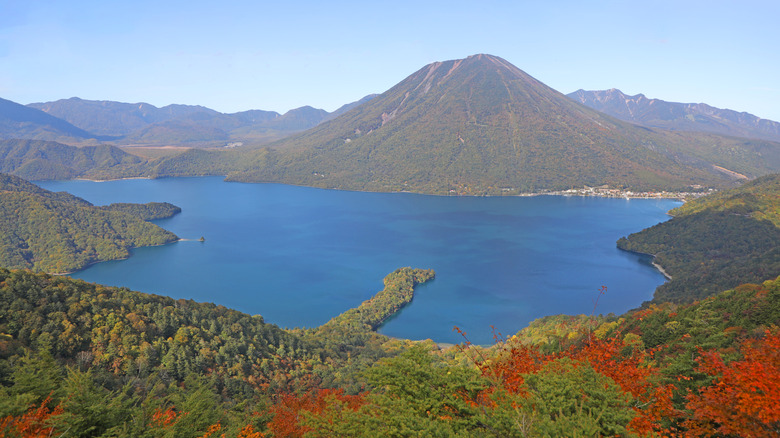
One of the beautiful things about traveling in Japan is that even in the most sprawling megacities, natural beauty is never far away. Case in point: You'll find the mountains of Nikko National Park, an area as historically rich as it is scenically breathtaking, within day-tripping distance of Tokyo. And hiding out in this temperate mountain escape from the stultifying midsummer heat is a lake surrounded by forests, flanking a volcano that couldn't more sharply contrast the buzz of nearby Tokyo: Lake Chuzenji, Japan's highest-elevation natural lake.
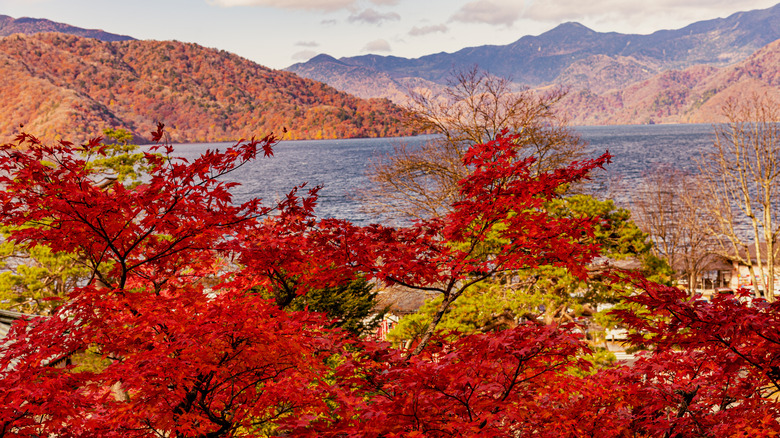
Lake Chuzenji is a large mountain lake at an altitude of just over 4,000 feet, with hiking trails surrounding its entire 15.5-mile perimeter. This is a boon for hikers, because the lake's surroundings are colorful with foliage in the autumn, lush and green in the summer, and serenely snow-dusted in winter. And with the volcanic peak of Mount Nantai looming in the distance, the miles of trails around the perimeter offer varied views of these spectacular surroundings. Depending on the section of the perimeter trail that you choose to hike, those views might include surprises like a detour to Ryuzu Falls, an impressive waterfall where one of the lake's sources, the Yukawa River, drops over a cliff into the lake.
It's not all leisurely strolls around the lake, though, and hardcore hikers will likely find themselves wanting to take on the volcano. The Mount Nantai hike is a steep, challenging, 5.5-mile round-trip route that begins and ends at Futarasan-jinja, a UNESCO-recognized Shinto shrine, and cuts through a forest that gives way to a bare stretch of volcanic rock near the volcano's summit. While it's not recommended for novice hikers due to the elevation gain and difficulty of the terrain, it's a rewarding challenge for fit travelers with hiking experience.
Waterfalls and rich history make Lake Chuzenji worth the trip
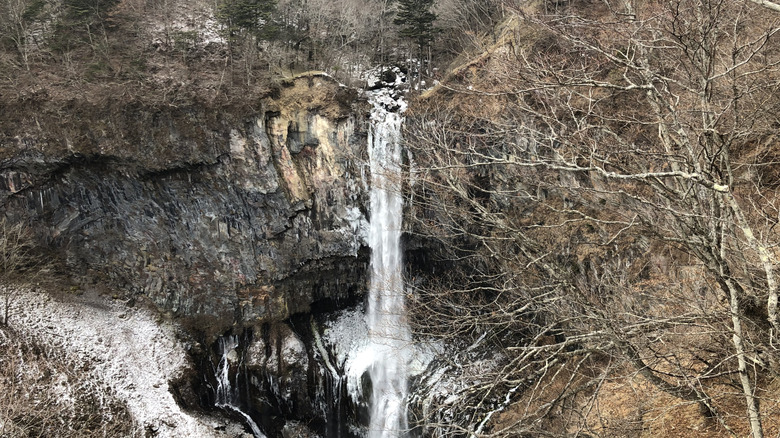
It isn't only the hiking trails that make Lake Chuzenji a worthy destination. Like much of Nikko National Park, it's packed with both natural and historical sights, even if you're not a hiker. Chuzenji Temple, for instance, is a peaceful place to observe the lake. And if you're not going to hike to Ryuzu Falls, there's an even more impressive waterfall in the area: Lake Chuzenji spills over a cliff at its outlet to form the dramatic Kegon Falls, a 318-foot waterfall that is considered one of Japan's most beautiful. It's easily accessible with a brief walk from the Chuzenji Onsen bus stop, one of several that serve the area around Lake Chuzenji.
That said, this peaceful lake is just a taste of what the expansive surrounding national park has to offer. Most notably, three religious sites within Nikko National Park – Nikko Toshogu and Futarasan-jinja shrines and the Rinnoji temple — are inscribed as UNESCO World Heritage Sites. (If you're wondering what it means for a place to be designated as a World Heritage Site, it means that these three religious sites are among the most historically and artistically significant in Japan.) Both ornate and designed to harmonize with their natural surroundings, these colorful, gilded places of worship are enjoyable to visit for their visual beauty alone.
Nikko isn't all hikes and history, though. The area also has several hot spring (onsen) resorts (note that you may be barred from entering if you have tattoos) and the opulent Ritz-Carlton Nikko for an elegant stay in stunning surroundings. That's the beauty of Lake Chuzenji, and of Nikko more broadly: With a mix of natural and cultural attractions, a visit can be whatever you want it to be.
Experiencing Lake Chuzenji on a day trip
While it might be intimidating to plan a trip outside of the city, Lake Chuzenji is an easy escape from Tokyo, which was named the best overall destination for 2025. Tobu-Nikko Station is only about two hours by train from Asakusa Station in Tokyo, and from there, it's a 50-minute bus ride to the lake. While this will mean spending about 2.5 hours in transit, it still makes a day out at the lake doable. Leaving early and prioritizing shorter hikes or only a few surrounding attractions will help you make the most of your time at Lake Chuzenji before you return to Tokyo.
If you want to explore Nikko National Park more widely or visit one of the local hot spring resorts, you should plan to stay at least one night. Nikko's attractions are spread out, and while transit in the area is excellent, you'll need to build in extra time to get around. The World Heritage Sightseeing Bus will get you to most of the area's notable sites. Local trains serve many of the small hot springs towns around Nikko, but departures can be infrequent, and journeys can be long. It also pays to remember that transit in rural Japan often stops running early in the evening, so whether you're day-tripping to the lake or planning a multi-day stay in the area, you'll want to know when the last bus or train home departs before you head out.
While Lake Chuzenji can be a great day trip, it takes smart planning to make it happen. But it's one of your best bets for a tranquil day out, so with a little research, you'll have a retreat from the city that will be well worth the effort.